
AI Executive Summary
"This article analyzes the systemic removal of middle management in Vietnam's industrial sector through the adoption of software-defined infrastructure and energy autonomy. It highlights a strategic shift toward algorithmic oversight and modular operations, redefining the role of human capital in high-density automation."
Efficiency is a cold metric. The recent movements in Ho Chi Minh City prove that human oversight is now a liability. Management layers once served as buffers for technical failure. Now, those buffers are replaced by code.
Energy autonomy removes a layer of coordination. TotalEnergies ENEOS commissioned a 28 MWp rooftop solar system at the Samsung Electronics HCMC CE Complex on July 3, 2026. This 20-year PPA ensures that power generation is decoupled from the instability of the local grid. When a facility generates its own electricity, the mid-tier manager tasked with negotiating brownouts or managing utility failures becomes redundant.

Production capacity is expanding without a corresponding increase in headcount. TLB completed its Vietnam facility setup by July 2, 2026. Mass lamination is now a software-driven process. By dividing manufacturing responsibilities between South Korea and Vietnam, TLB maximizes efficiency through automated allocation rather than human scheduling.
"This project marks a significant milestone in SEHC's transition toward renewable energy and demonstrates our shared commitment to building a more sustainable future."— Keunha HWANG, President of Samsung Electronics HCMC CE Complex
Software logic is the new supervisor. Rockwell Automation and Cisco are currently deploying Software-Defined Manufacturing (SDM) demo pods in Gurugram, India. Such a framework allows IT and industrial automation to merge into a single, programmable stream. Contrast a firmware bug in Taipei with a power failure in Kinshasa; the former is a line of code, the latter is a logistical nightmare. SDM treats the entire factory as a firmware update, erasing the need for a human manager to interpret data between the shop floor and the executive suite.
The Logic of Erasure
Software-Defined Manufacturing (SDM) removes the 'translation layer' of management. Instead of a manager reporting a machine failure to a director, the system auto-reroutes production to an available node in real-time.
Corporate restructuring often masks a deeper purge. VinFast Production and Trading Joint Stock Company (VFTP) dismissed Board Chairwoman Thai Thi Thanh Hai around June 22, 2026. This separation of manufacturing from global operations suggests a move toward an autonomous, investor-led entity. Separation of legal entities allows a company to strip away the bloated administrative layers of a parent company and replace them with lean, modular operations.
Infrastructure growth is scaling faster than the workforce. Ascott expanded its Vietnam portfolio to 43 properties and more than 11,300 units by July 2026. Managing 11,300 units traditionally requires a small army of regional managers. Modern property management software now handles the allocation and maintenance cycles that once required human intervention.
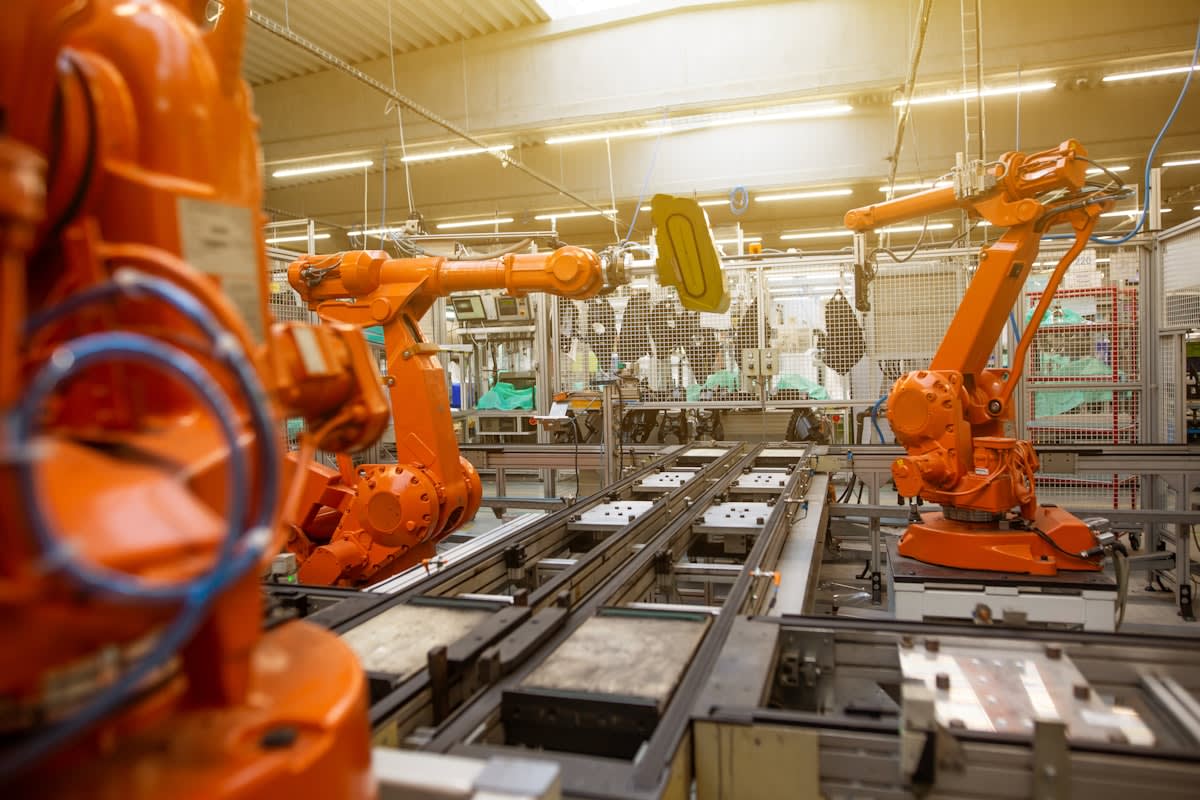
The cost of failure has moved from the human to the hardware. A mistake in a mass lamination line at TLB is now a calibration error, not a management failure. Managers used to be paid to prevent mistakes. Now, the system is designed to absorb them through redundancy and automated correction.
Data density replaces intuition. The 28 MWp solar installation at Samsung is not just about green energy. It is about predictable data. Predictable energy leads to predictable production, which removes the need for the 'crisis manager' who thrives on chaos.
| Operational Function | Legacy Management Model | Modular Automation Model |
|---|---|---|
| Energy Coordination | Utility negotiation and outage management | Autonomous PV (e.g., Samsung 28 MWp) |
| Production Scheduling | Manual shift allocation and oversight | Software-Defined Manufacturing (SDM) |
| Corporate Governance | Centralized hierarchical reporting | Separated legal entities (e.g., VFTP) |
| Portfolio Scaling | Linear increase in regional managers | Algorithmic unit management (e.g., Ascott) |
Human capital is being re-indexed. Cisco Networking Academy and Rockwell's Learning+ program are training workers in cybersecurity and networking. They are not training them to be managers. They are training them to be the technicians who maintain the code that replaced the managers.
Vietnam is the testing ground for this lean logic. Low-cost labor was the original draw. Now, the draw is the ability to implement high-density automation without the baggage of legacy unionized management. The removal of Thai Thi Thanh Hai at VinFast is a signal that the era of the 'corporate figurehead' is ending.
Logistics are becoming invisible. When TLB divides production between Korea and Vietnam, the coordination happens via an API, not a series of emails. Mid-tier managers who spent their days 'syncing' teams are now obsolete.
The final result is a hollowed-out middle. Executives set the strategy. Technicians maintain the machines. The space in between, once occupied by the middle manager, is now occupied by a software license. This is not a transition; it is a deletion.