AI Executive Summary
"This article analyzes the transition from a globalized AI ecosystem to a fragmented landscape of sovereign intelligence and localized physical resilience. It highlights the strategic pivot of AI labs toward biotech and the geopolitical struggle for cognitive infrastructure."
The Weaponization of Model Weights
The global AI consensus just shattered. By June 29, 2026, the Trump administration's aggressive export controls on frontier AI models have transformed digital tools into geopolitical leverage. We are no longer discussing efficiency; we are discussing prior restraint. The legal battlefield has shifted toward the First Amendment, with researchers now arguing that interacting with an advanced model is a protected form of speech. This is not a mere regulatory tweak. It is a hard border drawn across the cloud.
"There is an argument to be made that when you are accessing or interacting with the models it is a form of speech, and I see it as jawboning."— Researcher cited by Politico
The ripple effect is immediate and visceral. In Europe, the reaction is not submission but a scramble for autonomy. On June 28, 2026, Austria began lobbying the European Union to host Anthropic AI systems within its own borders. Why? Because the US restrictions on foreign access have turned dependency into a strategic vulnerability. Vienna is not just seeking a tool; it is seeking a sanctuary for intelligence that the US is now treating as a munitions-grade asset.
Strategic Analysis
The 'Sovereignty Gap' has emerged. Nations that cannot host their own frontier models are effectively relegated to a secondary tier of cognitive infrastructure, dependent on the whims of US export licenses.
While governments fight over the wires, the AI companies themselves are pivoting to prove their tangible utility in the physical world to justify their existence. This is the pivot from 'chatbot' to 'chemist'.
The Biology Pivot: Beyond the Screen
On June 30, 2026, Anthropic launched Claude Science. This isn't another productivity suite. It is a direct bet on healthcare, specifically targeting neglected diseases that traditional biopharma ignores because they aren't profitable. By moving into drug discovery, Anthropic is attempting to embed itself into the very fabric of human survival, making the company too critical to be sidelined by the same political winds currently tossing its export licenses.

The timing coincides with a surge in precision molecular research. Nature recently detailed how Angiogenin mediates cell-cell fusion as a mitochondrial RNA processing enzyme, highlighting the complexity of the mitochondrial genome—which encodes 2 rRNA genes, 22 tRNA genes, and 13 mRNA genes. Simultaneously, researchers have developed tetrahedral DNA nano-PROTACs to degrade nucleolin for choroidal neovascularization therapy. The delta between 2025 and 2026 is the transition from general AI curiosity to the surgical application of AI in managing these hyper-specific biological pathways.
| Metric | General AI Era (2025) | Precision Era (June 2026) |
|---|---|---|
| Primary Goal | Content Generation | Molecular Engineering |
| Access Model | Global API Access | Sovereign/Export Controlled |
| Target Focus | Broad Productivity | Neglected Diseases / DNA Nano-PROTACs |
| Key Driver | User Growth | Strategic Autonomy |
This trajectory suggests a world where AI is no longer a utility like electricity, but a specialized instrument like a particle accelerator—expensive, restricted, and geographically concentrated.
Pragmatic Resilience in the Physical Realm
While the digital world fractures into sovereign blocs, some regions are finding resilience through raw, physical pragmatism. In Hawaii, the focus isn't on model weights, but on waste weights. As of June 28, 2026, researchers are successfully integrating discarded fishing nets and HDPE plastic waste into asphalt roads. This is a localized solution to a global crisis: reducing the economic and environmental cost of transporting waste from islands to overflowing landfills.
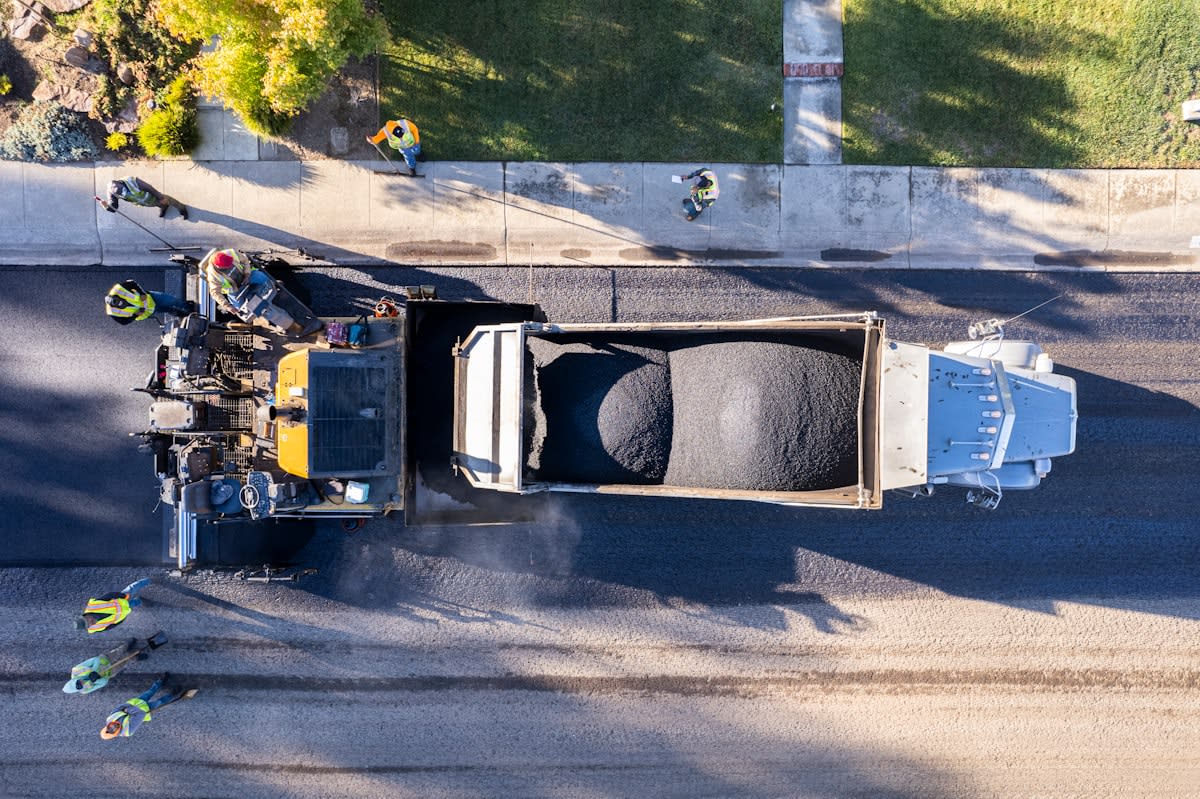
The contrast is stark. In San Francisco and Vienna, the battle is over who controls the 'mind' of the future. In Hawaii, the battle is over how to clean the 'body' of the planet. Both are responses to a world that has realized that globalized, frictionless systems—whether in AI or waste management—are fragile.
The overarching trend of June 2026 is the death of the 'universal' solution. Whether it is the EU seeking its own AI hosting, Anthropic targeting niche diseases, or Hawaii recycling its own nets, the world is moving toward a fragmented, specialized, and stubbornly local form of survival.