
AI Executive Summary
"This article analyzes the convergence of industrial carbon capture and genomic soil science to redefine urban infrastructure. It highlights the strategic necessity of integrating bio-hybrid systems into AI megaprojects to achieve true climate resilience."
The Industrial Lung of Berlin
Berlin just took a massive gamble on the future of the atmosphere. On July 2, 2026, the Ucaneo DAC Campus in Marzahn-Hellersdorf officially opened, marking the inauguration of Germany's largest Direct Air Capture (DAC) facility. This is not just another pilot project or a scientific curiosity. It is a commercial-scale deployment of a proprietary electrochemical platform designed to strip CO2 directly from the air. The facility transforms a waste product—atmospheric carbon—into a resource for fuels and chemicals, filling a critical gap for industries currently facing a shortage of pure CO2.
Why does this specific event signal a trend? Because it represents the shift from innovation to industrialization. For years, carbon capture existed in the realm of academic white papers and small-scale prototypes. Now, with the backing of political leaders and climate-tech investors, the infrastructure is becoming physical and scalable. The goal is clear: transition Europe into a scalable carbon economy where the building itself—or the campus it resides on—functions as a lung for the city.
"The plant is not merely a new facility but the starting point for a scalable carbon economy in Europe."— Carla Glassl and Florian Tiller, Ucaneo Founders
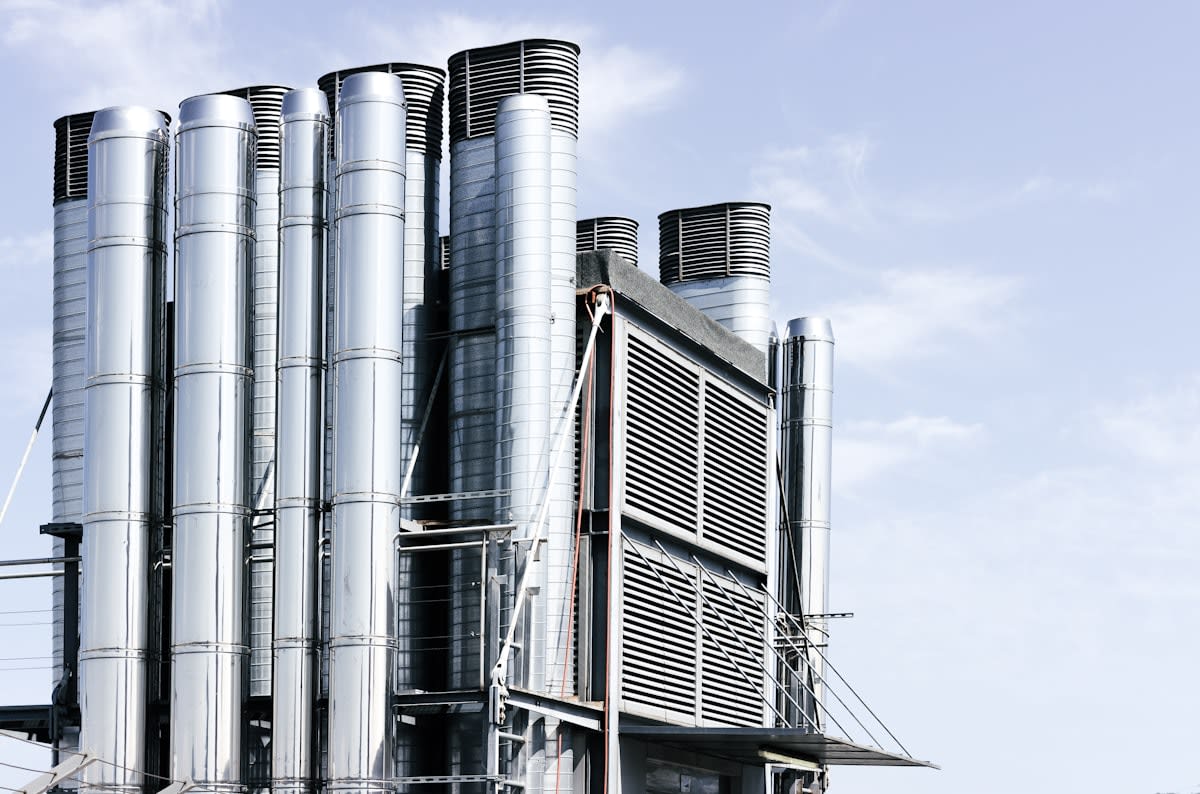
The timeline is aggressive. While the facility is operational, Ucaneo is targeting a full-scale opening in the first quarter of 2028. This window reveals the delta between yesterday's environmentalism and tomorrow's industrialism. Twelve months ago, the conversation focused on whether DAC was viable; today, the conversation is about how quickly we can build the campuses to support it. We are moving from the era of mitigation to the era of active extraction.
But industrial fans and electrochemical cells are only half of the equation. If the city is to become a living organism, it needs a biological foundation. This is where the research shifts from the skyline to the soil.
Decoding the Subterranean Blueprint
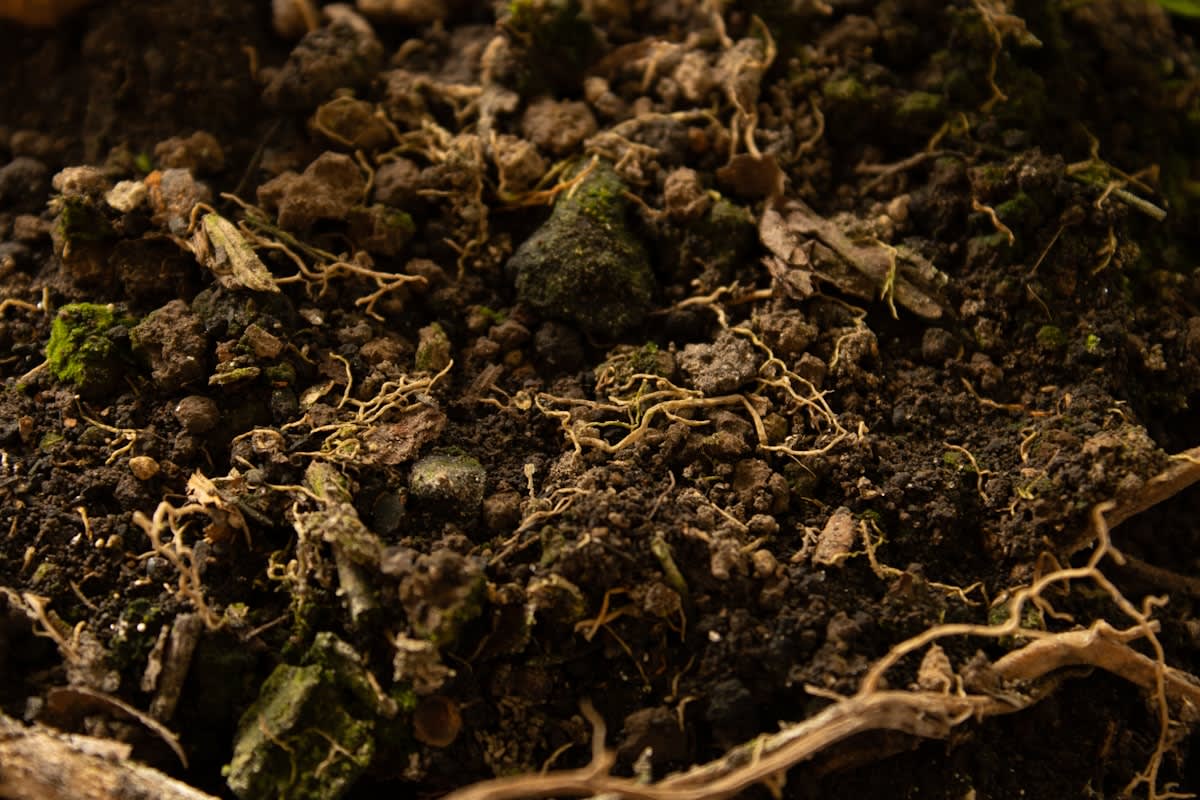
While Berlin builds the lungs, researchers at Aarhus University in Denmark are essentially giving the earth a DNA test. They have developed a new droplet digital PCR (ddPCR) method that quantifies root DNA directly from soil samples. For the first time, scientists can accurately profile root species and quantify biomass without the grueling, inaccurate labor of manual root separation or C13 labeling. This is a breakthrough in precision. It allows us to see exactly how much carbon is being sequestered beneath our feet in real-time.
Why should architects care about root DNA? Because the foundation of a building is no longer just a slab of concrete; it is a carbon-storage interface. Root systems are the primary route for carbon sequestration. By utilizing ddPCR, urban planners can now design 'living foundations'—integrated bio-hybrid zones where plant biomass is optimized for maximum carbon capture. We are seeing the birth of architecture that doesn't just minimize damage but actively repairs the soil it occupies.
| Metric | Traditional Root Profiling | Aarhus ddPCR Method |
|---|---|---|
| Labor Intensity | High (Manual separation) | Low (Automated DNA test) |
| Accuracy | Variable (C13 labeling errors) | High (Precise quantification) |
| Sensitivity | Low (PCR inhibitors) | High (Resistant to inhibitors) |
| Application | Academic/Slow | Scalable/Climate Science |
The precision of the ddPCR method removes the guesswork from biodiversity research and climate science. When we can quantify root biomass with this level of accuracy, we can begin to treat urban greenery not as an aesthetic luxury, but as a measurable piece of carbon-capture infrastructure. The 'living' part of living architecture is finally becoming a data-driven science.
However, this biological optimism is colliding with a massive industrial surge that threatens to outpace our sequestration capabilities.
The Collision: AI Megaprojects vs. Carbon Budgets
As we integrate bio-hybrid materials, we are also seeing an explosion in AI-driven infrastructure. In Newark, California, and other global hubs, data center construction is booming. These are not just buildings; they are megaprojects. While these facilities are often the sole bright spot in economic reports regarding groundbreakings and spending, they bring a heavy carbon footprint and significant public opposition. The tension is palpable: we are building the digital brain of the future while struggling to maintain the biological lungs of the planet.
This is where the debate over carbon sequestration becomes a political battleground. In various local jurisdictions, the arrival of data centers has sparked intense discussions regarding how to offset their energy and carbon demands. Can a data center be a carbon-sink? If we integrate Ucaneo-style DAC facilities and Aarhus-inspired bio-foundations into the design of these AI hubs, the narrative shifts from 'environmental cost' to 'ecological contribution.'
The Integration Gap
The critical friction point today is not the lack of technology, but the integration of it. We have the DAC for the air and the ddPCR for the soil; the challenge is embedding both into the rapid expansion of AI infrastructure.
The delta here is stark. A year ago, data centers were viewed as isolated energy sinks. Now, they are being forced into the conversation about carbon sequestration. The pressure from the public and the necessity of climate resilience are pushing developers to look beyond simple energy efficiency toward active carbon removal. The megaproject is no longer just about the server rack; it is about the ecosystem surrounding it.
The Roadmap to 2028
What does the next 24 months look like? The Ucaneo project provides the blueprint. By targeting a full opening in Q1 2028, they are setting a pace for the industrialization of carbon capture. We should expect to see more 'DAC Campuses' appearing in urban industrial zones, transforming the way we think about city planning. These will not be hidden utilities; they will be the centerpieces of a new industrial economy.
Simultaneously, the application of ddPCR in soil science will move from the lab at Aarhus University to the construction site. Imagine a world where a building permit is contingent on a 'Soil DNA Test,' proving that the project will increase the subterranean carbon biomass rather than deplete it. This turns the act of building into an act of planting.
The ultimate goal is a bio-hybrid synthesis. A building that uses electrochemical DAC to clean the air and a genetically optimized root system to store carbon in the earth. It is a shift from architecture as a static object to architecture as a living, breathing organism. The tools are here. The industrial scale is beginning. The only question is whether the pace of adoption can match the pace of the AI boom.