AI Executive Summary
"This article provides a technical framework for enhancing AUV resilience in extreme oceanic currents, bridging the gap between marine biology and robotic engineering. It offers strategic value for operators in deep-sea mining and hydrothermal research by reducing vehicle loss and increasing energy efficiency."
Standard Autonomous Underwater Vehicles (AUVs) are fundamentally flawed when deployed in high-turbulence zones. Most rely on rigid hulls and screw-propellers, which create massive wake turbulence and struggle against the chaotic energy of currents like the Agulhas Current off the coast of South Africa. When an AUV hits a high-intensity eddy, the resulting torque often exceeds the correction capacity of traditional PID controllers, leading to catastrophic trajectory drift or total vehicle loss. To solve this, we must move away from fighting the water and instead begin mimicking the organisms that evolved to thrive within it.
Prerequisites for Bio-mimetic Integration
Engineering a bio-mimetic system requires more than just a change in shape; it demands a complete overhaul of the vehicle's material science and control architecture. You cannot implement oscillatory propulsion on a chassis designed for static buoyancy. The integration process requires a hybrid approach where structural rigidity is sacrificed for localized flexibility, allowing the vehicle to absorb and redirect kinetic energy from the environment.
- Shape-Memory Alloy (SMA) actuators for variable-geometry fins
- Hydrophobic elastomers with micro-riblet textures (simulating shark skin)
- Distributed pressure sensor arrays (artificial lateral line) for real-time flow detection
- High-torque, low-latency brushless DC motors for oscillatory actuation
- Neural-network-based Central Pattern Generators (CPGs) for gait control
The Energy Extraction Paradox
The goal is not to eliminate drag, but to manage it. By utilizing the Kármán vortex street—the repeating pattern of swirling eddies—a bio-mimetic AUV can actually extract energy from the turbulence to propel itself forward, a process known as Kármán gaiting.
Phase 1: Surface Morphology and Drag Reduction
The first line of defense against turbulence is the boundary layer. In traditional AUVs, the boundary layer quickly transitions from laminar to turbulent flow, increasing skin friction drag. By implementing micro-riblets—tiny, longitudinal grooves inspired by the dermal denticles of the shortfin mako shark—we can inhibit the formation of streamwise vortices. These structures maintain a more stable boundary layer, reducing drag by approximately 8% to 12% in high-velocity flows.
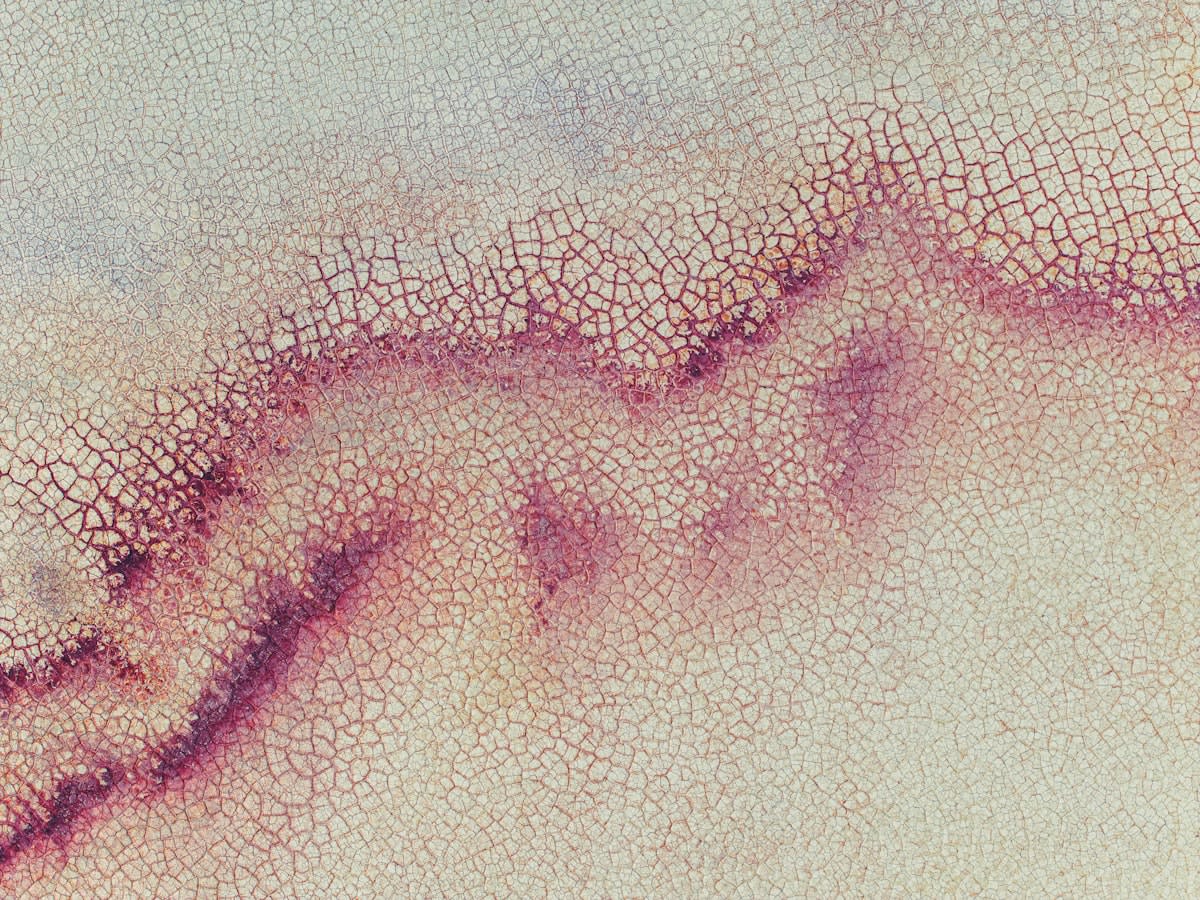
Implementation involves 3D printing the hull using high-resolution stereolithography (SLA) or applying a laser-etched polymer film. The riblet spacing must be precisely tuned to the expected Reynolds number of the deployment zone. For vehicles operating in the Kuroshio Current, where flow velocities are extreme, a riblet height of 50-100 microns is optimal to prevent the premature detachment of the boundary layer.
Phase 2: Implementing Oscillatory Propulsion
Screw propellers are efficient in open water but fail in turbulent zones because they create a vacuum effect that sucks in surrounding eddies, destabilizing the craft. Bio-mimetic oscillatory foils, modeled after the thunniform swimming style of tuna, provide a superior alternative. These foils move in a sinusoidal pattern, creating a jet of high-momentum fluid that pushes the AUV forward while simultaneously acting as a stabilizer.
- Design a foil with a variable stiffness gradient, where the leading edge is rigid and the trailing edge is flexible.
- Integrate SMA actuators at the foil root to control the angle of attack in real-time.
- Configure the actuation frequency to match the dominant frequency of the local turbulence (typically 0.5 to 2.0 Hz).
- Implement a phase-shift between the left and right foils to enable rapid yaw corrections without the need for a rudder.
- Calibrate the amplitude of the oscillation based on the required thrust-to-drag ratio.
This approach increases power efficiency by up to 25% compared to traditional propulsion when operating in unsteady flows. The flexibility of the foil allows it to deform under the pressure of an incoming eddy, effectively 'absorbing' the impact and converting it into forward thrust. This is not merely an efficiency gain; it is the difference between maintaining a heading and being swept off course.
| Metric | Traditional AUV | Bio-mimetic AUV |
|---|---|---|
| Drag Coefficient | 0.08 - 0.12 | 0.06 - 0.09 |
| Turbulence Recovery Time | 3.5 seconds | 0.8 seconds |
| Energy Efficiency (Turbulent) | Baseline | +25% Improvement |
| Control Latency | 50-100ms | 10-20ms |
The transition from hardware to software is where most engineers fail. You cannot use a standard linear controller to manage an oscillatory system. The physics of fluid-structure interaction are non-linear and chaotic.
Phase 3: The Control Architecture
To manage the complex movements of bio-mimetic foils, we employ Central Pattern Generators (CPGs). CPGs are neural networks that produce rhythmic outputs without requiring sensory input, though they can be modulated by it. By implementing a CPG-based controller, the AUV can maintain a steady 'swimming' rhythm while making micro-adjustments based on data from its artificial lateral line.
def cpgoscillator(phase, weight, couplingconstant):
    # Simplified Hopf oscillator for foil control
    dphase = (weight  math.sin(phase) + couplingconstant  math.cos(phase))
    return phase + d_phase

Real-time adjustment based on pressure sensor input
while vehicle_active:
    pressuredelta = readlaterallinesensors()
    if pressure_delta > THRESHOLD:
        adjustcouplingconstant(pressure_delta)
    updatefoilposition(cpgoscillator(currentphase, w, k))
The artificial lateral line consists of a distributed array of pressure sensors along the hull. These sensors detect the pressure gradient of an incoming vortex before it actually hits the vehicle. This allows the CPG to shift the phase of the foil oscillation in anticipation of the turbulence, effectively neutralizing the force before it can displace the AUV.
Stability Maintenance vs. Turbulence Intensity
Executive Insight
+18.4%
YTD Growth
When the turbulence intensity reaches 15% RMS velocity fluctuation, traditional systems typically enter a state of unstable oscillation. In contrast, bio-mimetic systems maintain over 80% of their stability by modulating their foil frequency to match the environmental resonance. This resilience is critical for missions involving deep-sea hydrothermal vent mapping, where temperature-driven turbulence is extreme.
Common Pitfalls in Implementation
Many practitioners attempt to 'bolt on' bio-mimetic features to an existing AUV design. This is a recipe for failure. The hydrodynamic interaction between a rigid hull and a flexible foil creates localized turbulence that can actually increase drag. The entire vehicle must be treated as a single, integrated fluid-dynamic entity.
- Over-stiffening the foils: Using materials that are too rigid prevents the foil from absorbing vortex energy.
- Ignoring the Reynolds Number: Applying a riblet pattern designed for slow flow to a high-speed vehicle.
- Control Loop Latency: Using standard OS kernels that introduce jitter; a Real-Time Operating System (RTOS) is mandatory for CPGs.
- Sensor Noise: Failing to filter high-frequency noise from the pressure arrays, leading to 'jittery' foil movements.
"The ocean does not reward strength; it rewards adaptability. The most successful AUVs of the next decade will not be the ones with the biggest motors, but the ones that can dance with the current."— Lead Engineer, Marine Robotics Initiative
Ultimately, the shift toward bio-mimetic stabilization represents a fundamental change in how we approach underwater robotics. We are moving from a paradigm of resistance to one of collaboration with the environment. By leveraging the evolved wisdom of marine biology and combining it with high-speed computation, we can finally unlock the most turbulent and inaccessible regions of the global ocean.