AI Executive Summary
"This article analyzes the strategic tension between the demand for battery minerals and the irreversible ecological destruction of the deep ocean. It argues that prioritizing short-term resource autonomy over long-term biological stability is a geopolitical and environmental miscalculation."
The deep ocean floor is the largest museum of life on Earth, yet we are treating it like a warehouse for raw materials. In the Clarion-Clipperton Zone (CCZ), a vast stretch of the Pacific between Hawaii and Mexico, potato-sized rocks called polymetallic nodules sit in total darkness. These nodules are not just rocks; they are the anchors for an entire ecosystem of extremophiles and rare sponges. To the mining industry, they are simply high-grade ore containing cobalt, nickel, and manganese. To a biologist, they are the only substrate available for species that have evolved over millions of years in absolute stability.
The logic driving this extraction is a paradox of the green transition. To move away from carbon-burning internal combustion engines, we need massive quantities of minerals for lithium-ion batteries. Land-based mining is fraught with geopolitical instability and human rights abuses, particularly in the Democratic Republic of Congo. The abyss offers a seductive alternative: minerals that are already concentrated on the seafloor, requiring no drilling or blasting of mountains. However, this efficiency comes with a hidden price tag that the market currently fails to quantify.
The Genetic Goldmine
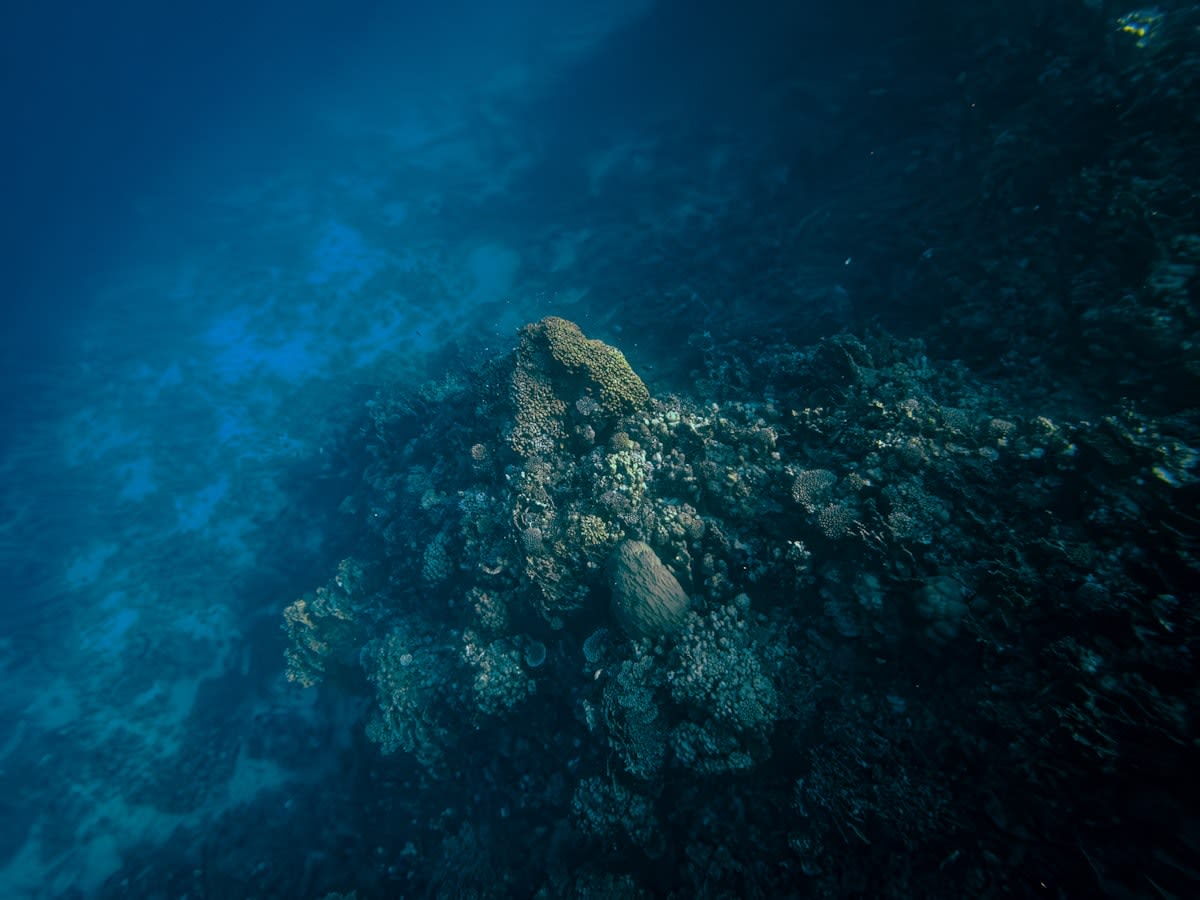
What is actually being traded here? We are swapping biological blueprints for battery metals. The deep sea is home to organisms that survive under crushing pressure and freezing temperatures, utilizing chemical synthesis rather than sunlight. These creatures possess unique enzymes and genetic sequences that could revolutionize medicine, from new antibiotics to cancer-fighting compounds. When a mining crawler vacuums the seafloor, it doesn't just take the nodules; it obliterates the biological architecture of the benthic zone. We are essentially burning a library of genetic information to build a few million more car batteries.
"We are on the verge of destroying an ecosystem before we even have a map of who lives there."— Marine Biologist, Deep-Sea Conservation Coalition
The scale of the unknown is staggering. Recent surveys suggest that up to 90% of the species collected in the CCZ are entirely new to science. These are not just curiosities; they are functional components of the global carbon cycle. The deep ocean acts as the planet's primary carbon sink, and disrupting the microbial mats that process this carbon could trigger feedback loops we are ill-equipped to handle. By focusing solely on the mineral yield, the industry ignores the ecosystem services that keep the atmosphere breathable.
Why is the pressure to mine accelerating now? The trigger was the two-year rule invoked by the Republic of Nauru in 2021, which forced the International Seabed Authority (ISA) in Jamaica to finalize mining regulations. This legal maneuver shifted the conversation from 'if' we should mine to 'how' we should mine. It created a window of opportunity for companies like The Metals Company to push for commercial contracts, betting that the demand for electric vehicles will outweigh the scientific community's warnings.
This race for resources reveals a fundamental flaw in how we value the natural world.
| Asset | Immediate Economic Value | Long-term Biological Value | Risk of Loss |
|---|---|---|---|
| Polymetallic Nodules | High (Cobalt, Nickel) | Low (Physical substrate) | Replaceable via recycling |
| Benthic Megafauna | Negligible | Extremely High (Biodiversity) | Permanent Extinction |
| Microbial Mats | Zero | Critical (Carbon Sequestration) | Irreversible Climate Impact |
| Genetic Sequences | Speculative (Biotech) | Infinite (Medical Breakthroughs) | Complete Erasure |
The Sediment Storm
The destruction isn't limited to the footprint of the crawler. Deep-sea mining creates massive sediment plumes—clouds of silt and crushed rock that drift for kilometers. These plumes can choke filter-feeding organisms and block the bioluminescent signals that deep-sea creatures use to find mates or prey. In an environment where energy is scarce and movements are slow, a sudden blanket of silt is a death sentence. The mid-water column, which is often overlooked, may also be contaminated by the discharge of waste water from the surface ships.
Does the world actually need these metals? The industry claims that terrestrial mines cannot meet the 500% increase in demand for cobalt and nickel projected by 2050. But this projection assumes we will continue using current battery chemistries. We are already seeing a pivot toward Lithium Iron Phosphate (LFP) batteries, which require zero cobalt and zero nickel. The irony is that by the time the ISA finalizes its regulations and the first commercial ships deploy, the very metals they are chasing might be obsolete.
This is a classic case of path dependency. We are building an industrial infrastructure for a 20th-century extraction model to solve a 21st-century energy problem. Instead of investing in the deep sea, the capital could be redirected toward a circular economy. Urban mining—the process of recovering minerals from old electronics—could potentially satisfy a significant portion of the demand if the regulatory frameworks for recycling were as aggressive as those for extraction.
The geopolitical tension surrounding these minerals adds another layer of complexity to the debate.
Geopolitics and the Abyss
China currently dominates the processing of battery metals, controlling roughly 80% of the global cobalt refinery capacity. For Western nations, the deep sea represents a way to break this monopoly. The quest for 'mineral sovereignty' is driving the push for deep-sea mining more than the actual scarcity of the materials. It is a strategic gamble where the stakes are not just economic, but ecological. The abyss becomes a chessboard for superpowers, while the biological inhabitants are merely collateral damage.
The International Seabed Authority is tasked with a contradictory mandate: to organize and control activities in the Area for the 'benefit of mankind' while also protecting the marine environment. This duality is impossible to resolve. You cannot mine a nodule without destroying the life attached to it. Any 'mitigation' strategy is a fantasy in an environment where recovery takes centuries. A footprint in the deep-sea mud can remain visible for decades because there are no currents or animals to erase it.
Projected Demand for Battery Metals vs. Recycling Capacity
Executive Insight
+18.4%
YTD Growth
The gap between projected demand and recycling capacity is where the mining industry finds its justification. But this gap is a choice, not a destiny. By prioritizing extraction over innovation in battery chemistry and recycling, we are choosing the path of least resistance. We are opting for a quick fix that provides mineral security for a few decades at the cost of biological archives that have existed for eons.
Ultimately, the trade-off is an exercise in myopia. We are sacrificing the unknown—the potential for new medicines, the stability of the carbon sink, and the intrinsic value of undiscovered species—for a known, finite commodity. The abyss is not a mine; it is the planet's last great biological frontier. Once the crawlers begin their work, there is no 'restoration' possible. The blueprints will be gone, and we will have traded the infinite potential of evolution for a few thousand tons of cobalt.