AI Executive Summary
"This article provides a strategic critique of the 'personal brand' era, synthesizing insights from AI fashion, corporate R&D, and industrial failures. It argues for a return to organic growth over curated optimization to avoid psychological instability."
Why are we obsessed with the idea of a brand? For the modern adult, the mandate is clear: curate your image, optimize your niche, and present a consistent, marketable version of yourself to the world. We have stopped asking who we are and started asking how we are perceived. This shift is not a harmless byproduct of social media; it is a systemic redesign of the human psyche. We are moving away from the messy, iterative process of becoming and toward the static, polished process of branding.
This transformation mirrors a broader global trend where the boundary between the human and the artificial is blurring. Look at the Polimoda Graduate Show 2026 in Florence. On June 15, designer Emilie Wenckstern presented a collection titled No longer human. The work did not just challenge fashion; it challenged the very nature of existence. Wenckstern asked an AI a chilling question: if you had a body, would it still be human? The answer lies in the construction. In the digital age, identity is no longer an internal discovery but a designed surface.

The Surface Logic: Identity as Architecture
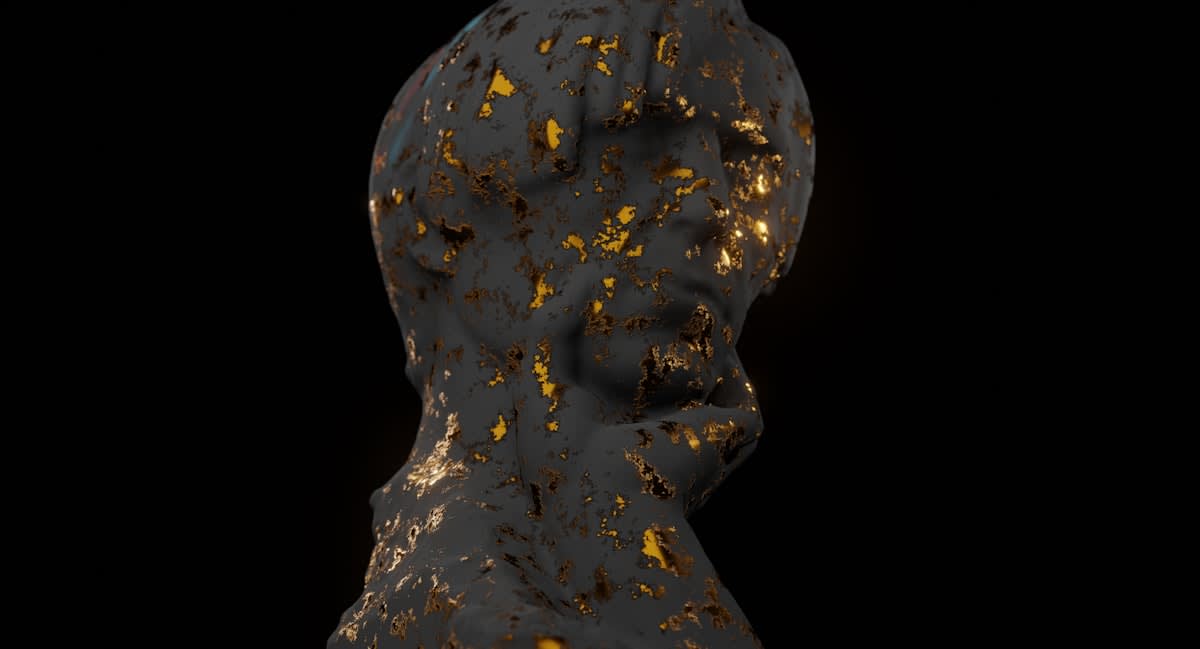
Wenckstern's collection explores the body as a construction, utilizing dolls, mannequins, and digital avatars to show how skin becomes a surface. This is the precise logic of the Personal Brand. When you are told to find your brand, you are being told to treat your personality as a surface. You are encouraged to design your life like a product pipeline. Is it any wonder that adult growth is stunting? Growth requires friction, failure, and the willingness to be inconsistent. Branding, however, demands a seamless image.
"In the digital age, identity is constructed, skin becomes a surface and the body is something that is designed."— Emilie Wenckstern, Polimoda Graduate Show 2026
Consider the capital flowing into this surface-level obsession. Unilever is not merely selling soap; they are investing $270 million in a new Global Innovation Centre to accelerate beauty R&D. By promoting Hanny van Amerongen to Chief R&D Officer for Personal Care, the corporate giant is doubling down on the science of the surface. When the global economy invests hundreds of millions into the modification of the exterior, the internal self becomes a secondary concern. We are living in an era where the packaging is more valuable than the product.
The Curator's Paradox
The 'Identity Trap' occurs when the effort required to maintain the brand exceeds the energy available for actual personal development. We become curators of a museum that no one is actually visiting.
Does this obsession with construction lead to stability? Hardly. We see the same pattern in our physical and economic infrastructure. The Crown Estate and Lendlease recently sealed a £24bn joint venture to oversee a pipeline of 27,500 homes and commercial space across the UK. This is the pinnacle of planned, managed growth. But when we apply this 'pipeline' mentality to human identity, we forget that humans are not real estate. We cannot be developed in phases. We cannot be managed by a development management platform.
| Dimension | Organic Growth | Branded Identity |
|---|---|---|
| Core Driver | Curiosity & Conflict | Marketability & Consistency |
| View of Failure | Essential Learning | Brand Damage |
| Temporal Focus | Iterative Present | Curated Legacy |
| Primary Goal | Self-Actualization | External Validation |
The danger of the brand is that it creates a rigid shell. In the mining sector, rigidity without flexibility leads to catastrophe. On July 1, 2026, Agnico Eagle Mines reported a rock mass movement along the north wall of the Barnat open pit in Quebec. While the company maintains targets of 1 million ounces of gold by the early 2030s, the physical reality of the rock mass movement threatens the entire production outlook. This is a perfect metaphor for the branded adult: a gleaming target of gold on the surface, while the structural walls of the psyche are shifting and collapsing.
When we prioritize the brand over the human, we ignore the rock mass movements in our own lives. We suppress the anxiety, the doubt, and the contradictions because they do not fit the narrative. We build a facade of professional success and personal wellness, ignoring the fact that our internal foundations are defective. What happens when the facade finally cracks?

Beyond the Surface: Reclaiming the Human
To escape the trap, we must stop treating our lives as a series of deliverables. The pressure to be a brand is a pressure to be a product. Products do not grow; they are updated. Humans, however, evolve through the very things that branding seeks to eliminate: inconsistency, vulnerability, and the courage to be unmarketable. If we continue to view our skin as a surface and our identity as a design, we risk becoming the digital avatars that Wenckstern warns us about.
The opportunity here is not to abandon the tools of the modern world, but to use them without becoming them. We can utilize the efficiency of a pipeline—like the £24bn infrastructure projects in the UK—without turning our souls into commercial real estate. We can appreciate the innovation of beauty R&D without believing that our value is tied to the surface of our skin.
The path to adult growth is not found in a brand guide. It is found in the willingness to be a work in progress. It is found in the gaps between the curated posts and the polished resumes. It is found in the parts of ourselves that cannot be generated by an AI or optimized by a corporate strategist. The goal should not be to find your brand, but to lose the need for one.
- Shift focus from consistency to authenticity, allowing for contradictions in personality.
- Prioritize internal structural integrity over external surface perception.
- Reject the 'pipeline' mentality of personal growth in favor of iterative exploration.
- Recognize that marketability is a tool, not an identity.
Ultimately, the tension between the human and the artificial is the defining struggle of the 21st century. Whether it is in a fashion show in Florence or a boardroom at Unilever, the push is toward the designed. But the most resilient structures are those that can bend, shift, and adapt. By abandoning the identity trap, we reclaim the right to be complex, flawed, and profoundly human.