
AI Executive Summary
"This article analyzes the strategic pivot from traditional ore extraction to 'industrial recovery,' where critical minerals are reclaimed from legacy waste. It highlights how chemical and biological innovations are decoupling resource security from geological luck, transforming environmental liabilities into strategic assets."
The End of the Extraction Era
For centuries, the mining industry operated on a simple, brute-force logic: find a concentrated geological deposit, dig a massive hole, and haul the ore to a processing plant. This linear model is hitting a systemic wall. As high-grade deposits vanish and geopolitical tensions tighten the grip on reserves in Chile and the Democratic Republic of Congo, the industry is forced to ask a contrarian question: Why are we searching for new earth when we have already dug up the minerals and simply thrown them away? The most valuable mines of the next decade will not be found in unexplored wilderness, but within the tailings ponds, wastewater streams, and ash heaps of the industrial past.
We are witnessing a fundamental pivot from geology to chemistry. The 'mine' is evolving into a sophisticated processing factory where the feedstock is not raw rock, but industrial waste. This shift represents a move toward a circular mineral economy where the legacy of the 20th century—its coal plants and chemical runoff—becomes the primary resource for the 21st century's energy transition. It is a strategic reimagining of waste as an asset, transforming environmental liabilities into strategic reserves.
Turning Coal Ash into Strategic Assets
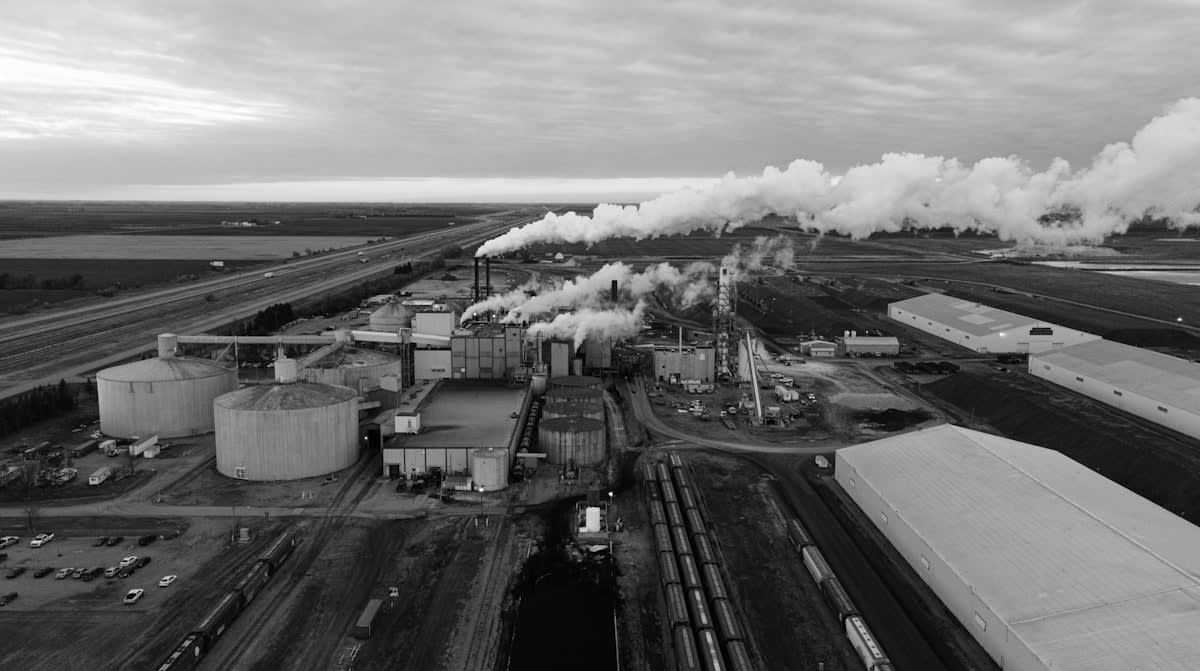
The United States is currently executing a dual-track strategy that treats legacy coal infrastructure as a Trojan horse for critical mineral security. The US Department of Energy’s (DOE) Office of Critical Minerals and Energy Innovation has recently allocated US$75 million in funding across five specific projects. These initiatives are not designed to revitalize coal power, but to use coal and coal feedstocks as a source for rare earth elements (REEs) and other critical minerals. By stripping value from the remnants of the coal industry, the US is effectively mining its own industrial waste to bypass volatile global supply chains.
This is as much a political maneuver as it is a scientific one. The DOE is leveraging these projects to keep coal-dependent communities economically relevant without appearing to abandon the energy transition. When viewed alongside the approximately US$700 million recently invested in domestic coal infrastructure and operations, the pattern becomes clear: the goal is to maintain the physical footprint of the coal industry while completely changing the output. The old coal plant is no longer a power generator; it is a critical mineral refinery.
The Resource Pivot
The strategic pivot is clear: the US is using $75 million in targeted funding to transform the liability of coal waste into the asset of rare earth element sovereignty.
This systemic shift creates a new industrial geography. The value is moving away from the point of extraction and toward the point of recovery. If the minerals are already above ground in the form of waste, the competitive advantage shifts from those who own the land to those who own the intellectual property of the recovery process.
The Bioreactor as the New Mine Shaft
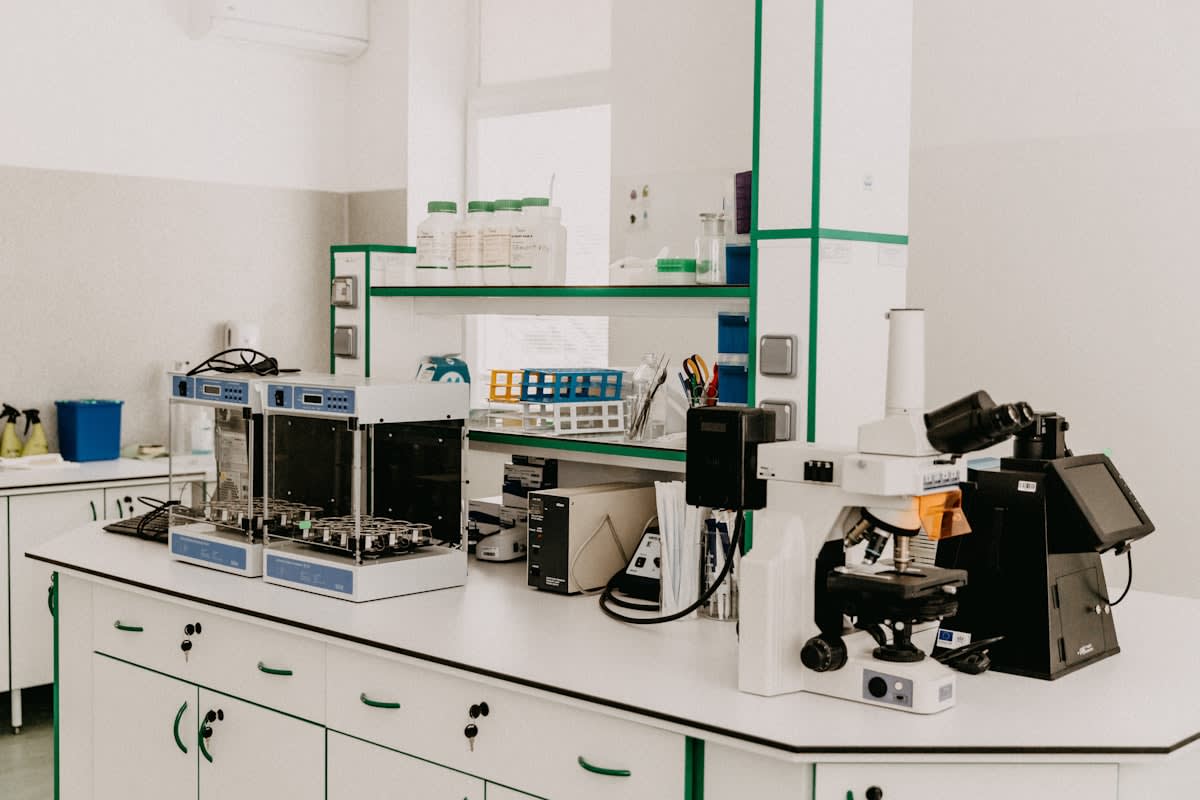
While the US focuses on coal, a biological revolution is turning wastewater plants into high-yield mineral mines. New research into microalgal and cyanobacterial systems is demonstrating that biological mechanisms can be engineered for the selective recovery of lithium, cobalt, and rare earth elements from high-salinity industrial and mining wastewaters. Instead of using energy-intensive chemical leaching, these systems use living organisms to 'capture' minerals from waste streams. This transforms a cost-center—wastewater treatment—into a profit-center.
These microalgal systems operate as biological filters, selectively absorbing critical metals that were previously considered too dilute to recover. The result is a closed-loop system where the environmental cleanup of mine wastewater directly feeds the supply chain for battery technologies and renewable energy deployments. The 'factory' in this scenario is a series of bioreactors, replacing the traditional open-pit mine with a controlled biological environment.
Can we really rely on algae to fuel the electrification of the global economy? The scale is the challenge, but the efficiency is the draw. By targeting high-salinity streams, these biological systems avoid the massive land-use conflicts and habitat destruction associated with traditional lithium brine ponds or cobalt mines.
Geographic Obsolescence and the Rise of Recovery Hubs
The decline of traditional mining is already visible in the Upper Hunter region of Australia. Once a powerhouse of underground coal mining, the district is seeing a wave of closures. The Ashton mine is projected to close by 2028, and Dartbrook underground was recently placed in receivership. As open-cut operations scale up and underground mines shrink, the traditional model of 'digging deeper' is proving economically unsustainable in the face of shifting energy demands.
In contrast, the UK is aggressively pursuing a different path in Cornwall, focusing on critical minerals ambitions that prioritize new extraction technologies over traditional methods. The strategy is to build resource security by targeting the minerals that were previously ignored or left behind. This mirrors the approach taken by companies like Dundee Sustainable Technologies in Quebec, which is focusing on the 'chemical cleanup' of mining. By developing cyanide-free gold recovery and permanent arsenic stabilization, they are treating the processing phase as the primary site of value creation.
| Feature | Traditional Extraction Mine | Industrial Recovery 'Factory' |
|---|---|---|
| Primary Feedstock | Virgin Ore/Rock | Coal Ash/Wastewater/Tailings |
| Core Technology | Mechanical Excavation | Bioreactors/Chemical Stabilization |
| Environmental Impact | High Habitat Destruction | Net Positive (Waste Remediation) |
| Key Drivers | Geological Luck | Intellectual Property/Chemistry |
| Example Region | Upper Hunter, Australia | Cornwall, UK / Quebec, Canada |
The logistical infrastructure is also changing. In Australia, the Dowdens Group is pivoting toward global technology partnerships to solve water and waste challenges. Their focus isn't on how to dig more, but on how to manage water, waste, and dewatering more intelligently. This indicates that the 'mining' industry is actually becoming a 'water and waste management' industry.
Why does this shift matter for the global audience? Because it decouples mineral wealth from geological luck. For too long, national security has been tied to who happened to have lithium or cobalt in their soil. If the world can successfully transition to 'factory mining'—reclaiming minerals from the vast amounts of industrial waste already distributed globally—the geopolitical leverage of a few resource-rich nations diminishes.
The systemic shift is inevitable. As the cost of traditional mining rises due to declining ore grades and increasing environmental regulation, the cost of recovery from waste becomes relatively cheaper. We are moving toward a world where the most profitable 'mines' are the ones that clean up the mess of the previous century. The old factory is not a relic; it is the ore body of the future.