AI Executive Summary
"This article analyzes the strategic shift from conversational AI to autonomous agentic workloads, highlighting the move from human-centric dashboards to systemic orchestration. It critically examines the associated energy costs and the widening gap between AI deployment and workforce readiness."
For a decade, the SaaS dashboard has been the altar of corporate efficiency. We spent billions of dollars building sophisticated interfaces that aggregated data into colorful charts, trusting that if a human could only see the right metric at the right time, they could make the right decision. This paradigm assumed that the primary bottleneck in business was information asymmetry. However, a quiet transition is underway. The industry is moving away from interfaces designed for human observation toward systems designed for autonomous execution. We are witnessing the death of the dashboard and the birth of the agentic swarm.
This shift is best understood through the lens of what Tirias Research identifies as the transition from Wave 1 to Wave 2 AI. Wave 1 was defined by the conversational assistant—a tool that responded to individual prompts and required a human to drive every step of the process. Wave 2 represents a fundamental leap: autonomous agents that reason, invoke tools, maintain context, and execute multi-step tasks with minimal human intervention. In this new era, the value is no longer in the ability to chat with data, but in the ability to deploy a system that can act upon it without being told how to do so at every turn.
The Systems Problem vs. The Compute Problem
The prevailing narrative in AI has been an obsession with compute—the race for more H100s and larger clusters. But as workloads evolve from simple chat to agentic execution, the bottleneck is shifting. Running a model is largely a compute problem, but running an agent is a systems problem. The challenge now lies in orchestration: combining compute, models, data, tools, and operational services into a cohesive environment. When an agent must plan a sequence of actions, call an external API, reflect on the result, and then pivot its strategy, the limiting factor is not the raw FLOPs of the GPU, but the robustness of the system architecture surrounding the model.
This architectural shift is already manifesting in global professional services. Deloitte has integrated a unified agentic intelligence network within its Omnia platform, creating a framework where AI agents work together to coordinate and execute workflows across more than 140 countries. This is not a collection of isolated bots; it is a unified network where professionals, data, and methodology are synthesized. By moving the intelligence layer into the workflow itself, the need for a human to monitor a dashboard to trigger the next step of an audit or assurance process evaporates. The swarm handles the coordination; the human handles the governance.
"Omnia has evolved into a unified agentic platform where Deloitte’s professionals, data, methodology and AI work together."— Will Bible, Global Digital Products leader for the Audit & Assurance division
The transition from dashboards to swarms changes the very nature of corporate software. If the software can reason and execute, the user interface becomes a secondary concern. We are moving toward a 'headless' enterprise where the primary interaction is not a user clicking a button on a screen, but a governance layer setting a goal and an agentic network determining the most efficient path to achieve it. This renders the traditional SaaS dashboard—a tool for human interpretation—largely redundant.
However, this leap in autonomy comes with a staggering physical cost that the industry has largely ignored until now.
The Energy Tax on Dynamic Reasoning
The intellectual leap from single-turn inference to agentic reasoning is not free. Research from KAIST-affiliated scientists reveals a brutal reality regarding energy consumption: agentic test-time scaling can consume between 62.1x and 136.5x more GPU energy per query than a standard single-turn LLM inference. This happens because agents do not simply answer; they plan, call tools, reflect on their errors, and search for better alternatives. This iterative loop, while increasing accuracy, multiplies the number of inference requests before a final answer is delivered to the user.
| Inference Type | Model Setup | Energy Consumption (Wh) | Multiplier vs. Baseline |
|---|---|---|---|
| Single-Turn Baseline | ShareGPT | Approx. 2.5 | 1x |
| LATS Agentic | Llama-3.1-Instruct 70B | 158.48 | 62.1x |
| Reflexion Agentic | Llama-3.1-Instruct 70B | 348.41 | 136.5x |
The case of Reflexion on Llama-3.1-Instruct 70B is particularly telling, consuming 348.41 Wh per query. This represents a fundamental trade-off: the industry is trading latency and electricity for accuracy. In a dashboard-centric world, the cost was the human's time spent analyzing the data. In an agentic world, the cost is shifted to the power grid. This energy tax suggests that agentic swarms will not be deployed indiscriminately, but will be reserved for high-value, complex reasoning tasks where the cost of a human error outweighs the cost of a massive GPU energy spike.
As these systems scale, the operational challenge shifts from managing software licenses to managing energy budgets and thermal loads. The 'systems problem' mentioned earlier now includes the physical infrastructure required to support test-time scaling. Companies that successfully transition to agentic swarms will be those that can optimize this energy-to-accuracy ratio, ensuring that the swarm is not just autonomous, but computationally sustainable.
This tension between power and precision is playing out in real-time across specialized industrial sectors.
Execution in the Trenches: Underwriting and Risk
The insurance industry provides a visceral example of the dashboard's obsolescence. Traditionally, underwriting required a professional to toggle between geospatial data, property reports, and regulatory filings—a classic dashboard workflow. Now, vendors like ABBYY, Cogitate, and ZestyAI are introducing agentic orchestration. Instead of a human reviewing a submission triage dashboard, agents now handle document AI and geospatial risk data, scoring property-level risks for wildfire or storm peril autonomously.
By employing agentic automation, these systems can move from submission triage to pricing guidance without a human needing to manually bridge the data gap. The agentic swarm doesn't just show the underwriter that a building is in a flood zone; it invokes the necessary tool to check the current regulatory filing, reflects on the risk appetite of the carrier, and proposes a price. The interface is no longer a place to view data, but a place to approve a completed action.
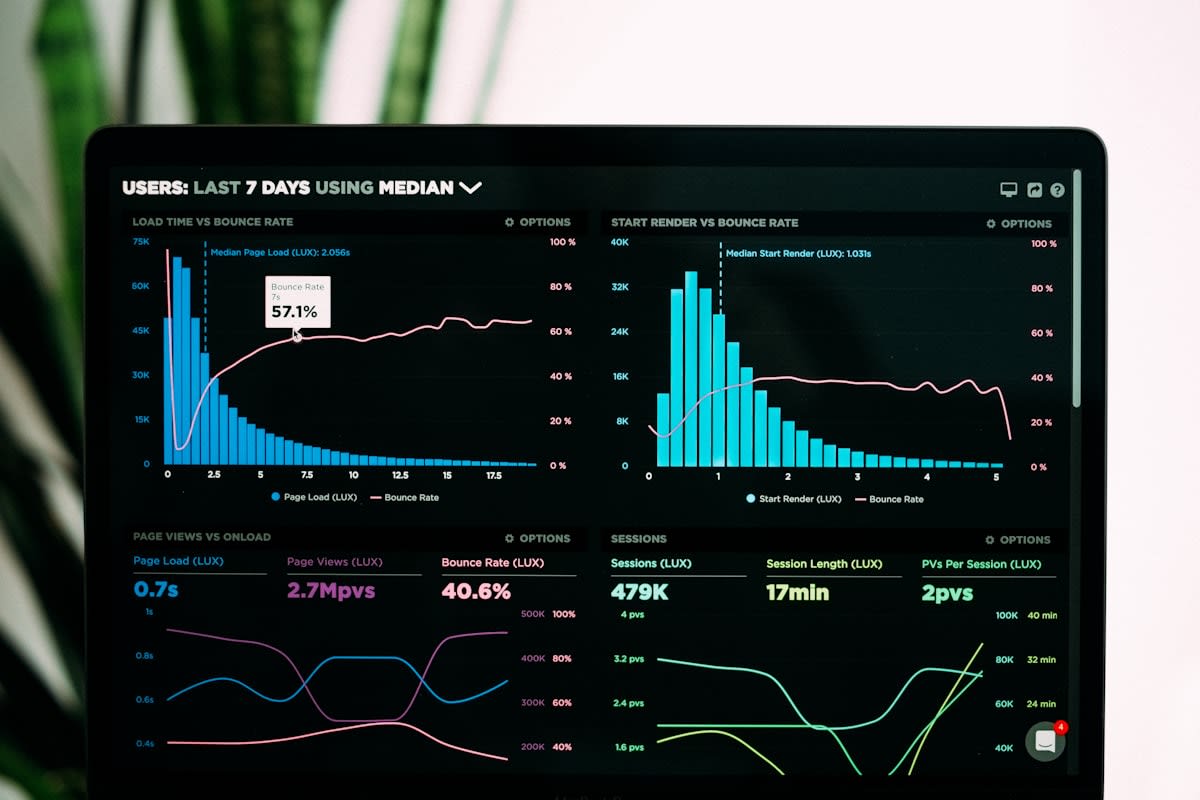
This transition highlights the systemic shift: we are moving from software that helps humans do work to software that does the work and asks humans for validation. The 'SaaS' model, which traditionally charged for seats (users accessing a dashboard), is fundamentally threatened by this shift. If a swarm of agents does the work of ten analysts, the value is no longer in the seat, but in the outcome.
Yet, the technical capability to deploy these swarms is outstripping the human capacity to manage them.
The Readiness Gap and the Trust Deficit
The deployment of agentic systems is creating a widening chasm between corporate ambition and workforce readiness. In India, the data is stark: while 56 per cent of organizations have deployed AI broadly or embedded it in core business processes, only 25 per cent of firms feel their workforce is adequately prepared to leverage it. This is a 12-point decline from 2025, suggesting that as AI becomes more agentic and complex, the human ability to keep pace is actually diminishing.
The paradox is that while 84 per cent of Indian organizations expect autonomous AI agents to make material decisions within the next 12 months, only 28 per cent fully trust these systems to operate without human oversight. This trust deficit is the final bastion of the dashboard. We cling to the interface because it provides a sense of control, a way to 'see' what the AI is doing. However, as swarms become more interconnected and execute tasks in milliseconds, the dashboard becomes an illusion of control rather than a tool for it.
The Readiness Paradox
The gap between AI deployment (56%) and workforce readiness (25%) indicates that the bottleneck has shifted from technology availability to cognitive integration. We are building engines that our operators do not know how to steer.
To bridge this gap, 69 per cent of surveyed Indian organizations have begun redesigning roles across functions. This is a recognition that the role of the knowledge worker is changing from a 'doer' who uses a tool to a 'governor' who manages a swarm. The new required skill set is not proficiency in a specific software interface, but the ability to define constraints, audit autonomous reasoning, and manage the systemic risks associated with agentic decision-making.
Ultimately, the replacement of the SaaS dashboard by agentic swarms is not a change in UI, but a change in the philosophy of work. We are moving from a world of human-operated tools to a world of human-governed systems. The companies that survive this transition will be those that stop trying to build better dashboards and start building better orchestration frameworks, accepting that the most efficient interface is the one that disappears entirely.