
AI Executive Summary
"This article provides a technical blueprint for deploying autonomous multi-agent LLM swarms within physically isolated environments. It highlights the strategic shift from monolithic models to specialized agent swarms to enhance security, reduce hallucinations, and ensure data sovereignty."
Intelligence synthesis in high-security environments faces a fundamental paradox: the most powerful Large Language Models (LLMs) are designed for cloud-native elasticity, yet the most sensitive data requires absolute physical isolation. Air-gapped systems, traditionally static repositories of classified information, are now evolving into active reasoning engines. By implementing multi-agent orchestration locally, organizations can move beyond simple retrieval-augmented generation (RAG) toward a system where specialized autonomous agents critique, synthesize, and validate intelligence without a single packet leaving the facility. This shift transforms the air-gap from a limitation into a security feature.
The objective is to replace a single, monolithic model with a swarm of specialized agents. One agent acts as the Librarian, indexing local vector databases; another as the Analyst, synthesizing patterns; a third as the Red Teamer, challenging assumptions. This modularity reduces the cognitive load on any single model, mitigating the hallucination rates that plague general-purpose LLMs. When these agents operate in a zero-trust environment, the orchestration layer must manage state and hand-offs with clinical precision, ensuring that the logic flow is deterministic and auditable.
Technical Prerequisites
Hardware Baseline
Local multi-agent systems demand significant VRAM overhead. To run a coordinated swarm of 70B parameter models, expect a minimum requirement of 320GB of H100 VRAM to maintain acceptable tokens-per-second throughput.
- Compute: NVIDIA H100 or A100 clusters with NVLink for low-latency inter-GPU communication.
- Storage: High-speed NVMe arrays to handle the rapid loading of model weights and vector indices.
- Models: Quantized weights (GGUF or EXL2) of Llama 3, Mistral, or Mixtral, pre-vetted for security compliance.
- Orchestration Framework: A local implementation of AutoGen or CrewAI, stripped of all telemetry and external API calls.
- Vector Database: A self-hosted instance of Milvus or Qdrant deployed via Kubernetes on-premise.
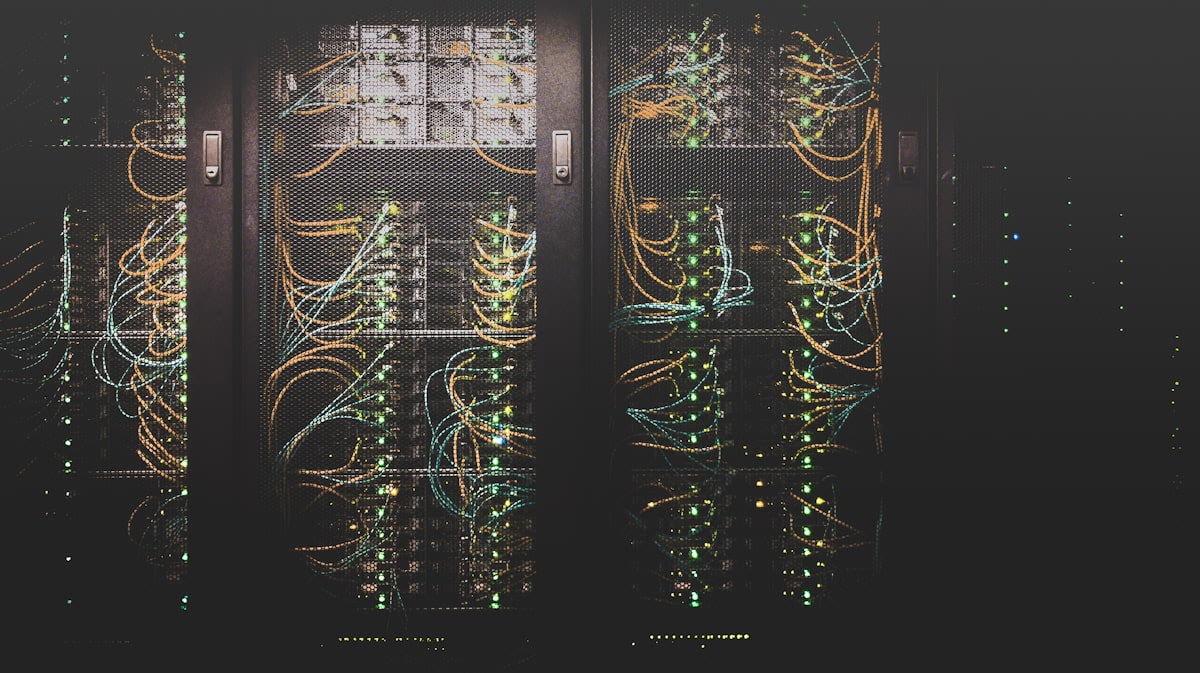
Establishing the hardware foundation is only the first step. The real challenge lies in the weights. In regions like Singapore or the Swiss Alps, where data sovereignty is paramount, the process of moving weights into a secure enclave involves a rigorous 'clean room' protocol. This includes scanning weight files for steganographic triggers and ensuring that the quantization process does not introduce vulnerabilities. Using 4-bit quantization (NF4) typically reduces VRAM requirements by nearly 50% while retaining approximately 95-98% of the model's reasoning capability, making it the standard for air-gapped deployments.
The Implementation Protocol
- Deploy the Model Gateway: Set up a local inference server (e.g., vLLM or Text-Generation-WebUI) that exposes an OpenAI-compatible API. This allows the orchestration layer to swap models without rewriting the integration code.
- Configure the Vector Fabric: Ingest classified documents into the local vector database. Use a local embedding model (like BGE-M3) to ensure the embedding process itself is air-gapped.
- Define Agent Personas: Create strict system prompts for each agent. The Librarian must only retrieve; the Analyst must only synthesize; the Reviewer must only critique. Overlapping roles lead to logic loops.
- Build the Orchestration Logic: Implement a supervisor agent that manages the 'turn-taking' logic. This agent determines which specialized agent should speak next based on the current state of the synthesis.
- Establish the Human-in-the-Loop (HITL) Gate: Insert a mandatory manual approval step between the Analyst's output and the final report generation to prevent autonomous hallucination propagation.
The orchestration layer functions as the nervous system of the operation. Unlike cloud-based agents that rely on high-latency API calls, local agents can leverage shared memory spaces to pass context. This reduces the need to re-send massive prompt histories, which otherwise consumes precious VRAM and increases latency. By using a state-machine approach, the system can track exactly which agent processed which piece of intelligence, creating a transparent audit trail essential for intelligence work.
class AirGappedOrchestrator:
    def init(self, agents):
        self.agents = agents
        self.state = {}

    def routetask(self, taskinput):
        # Supervisor logic to assign task
        nextagent = self.agents['supervisor'].determinenext(task_input)
        response = self.agents[nextagent].process(taskinput)
        self.state[next_agent] = response
        return response

Local instance implementation
swarm = AirGappedOrchestrator({
    'librarian': LocalAgent(model='llama3-8b-quant'),
    'analyst': LocalAgent(model='llama3-70b-quant'),
    'supervisor': LocalAgent(model='mixtral-8x7b-quant')
})
Latency in these systems is measured not just in tokens per second, but in 'reasoning cycles'. A typical synthesis task might require four iterations: retrieval, drafting, critiquing, and refining. On an H100 cluster, these cycles should occur with sub-100ms hand-off latency. If the orchestration layer introduces significant overhead, the advantage of local compute is lost. Optimizing the KV cache management across different agent models is the primary lever for increasing system throughput.
| Metric | Cloud-Based Agents | Air-Gapped Local Swarm |
|---|---|---|
| Data Leakage Risk | Moderate to High | Near Zero |
| Inference Latency | Network Dependent | Hardware Bound (<20ms) |
| VRAM Cost | OpEx (Pay-per-token) | CapEx (High Upfront) |
| Model Flexibility | Limited to Provider | Full Weight Control |
The synthesis phase is where the multi-agent approach proves its worth. A single model often suffers from 'confirmation bias', echoing the user's prompts. In a multi-agent setup, the Red Teamer agent is explicitly programmed to find flaws in the Analyst's logic. This adversarial relationship forces the system to refine its output through iterative contradiction. The result is a synthesis report that has been internally stress-tested before it ever reaches a human reader.
Scaling this architecture requires a transition from a single-server setup to a distributed local cluster. Using technologies like Kubernetes for orchestration allows for the dynamic allocation of GPUs to different agents based on the complexity of the task. For instance, a simple retrieval task can be handled by a 8B parameter model on a single A100, while the final synthesis is routed to a 70B model spanning multiple GPUs via NVLink. This tiered approach optimizes resource utilization and prevents system bottlenecks.
Common Pitfalls and Mitigations
One of the most frequent failures in local orchestration is 'prompt drift', where agents lose the original objective over multiple hand-offs. This occurs when the supervisor agent fails to pass the core constraints of the original query to subsequent agents. To mitigate this, implement a 'Global Context Buffer' that is appended to every agent's prompt, ensuring the primary objective remains immutable regardless of the conversation depth.
Another critical risk is the 'hallucination loop', where two agents validate each other's incorrect assertions. This is particularly dangerous in air-gapped environments where there is no external search engine to provide a ground-truth check. The solution is to implement 'Source-Grounded Verification', requiring the Analyst agent to provide direct citations from the local vector database for every claim. If the Librarian cannot find a matching chunk of text, the claim is flagged as speculative.
"The goal is not to build a machine that gives the right answer, but to build a system that knows how to prove it is wrong."— Chief Systems Architect, Secure Intelligence Initiative
Finally, memory leakage within the orchestration framework can bring an entire cluster to a halt. Local LLM frameworks often struggle with VRAM fragmentation when switching between models of different sizes. Implementing a strict 'Model Warm-up' and 'Clear Cache' routine between agent transitions is essential. Organizations that ignore this often find their systems crashing during high-intensity synthesis tasks, leading to unacceptable downtime in critical intelligence windows.