
AI Executive Summary
"This article analyzes the strategic pivot of the gene-editing industry from niche orphan diseases to high-volume chronic conditions. It highlights the technical shift to in vivo base editing and the economic transition toward industrial-scale genomic medicine."
The approval of Casgevy for sickle cell disease was a watershed moment, but it was also a signal that the low-hanging fruit of rare disease treatment is being harvested. For years, the CRISPR narrative centered on orphan diseases—conditions affecting a tiny fraction of the population where the genetic cause is a single, clear-cut error. These cases provided the perfect proof-of-concept: a high-need patient population and a clear target. However, the financial and clinical ceiling for rare diseases is narrow. The industry is now aggressively pivoting toward common ailments that affect millions, transforming gene editing from a boutique rescue operation into a mass-market healthcare tool.
Why the sudden urgency? The economics of rare disease therapies are unsustainable. When a single treatment costs upwards of 2 million dollars per patient, the market remains a niche of high-cost, low-volume interventions. To achieve true scale, the biotechnology sector must address the chronic conditions that drain global healthcare budgets. We are seeing a migration toward targets like hypercholesterolemia and hypertension. This isn't just a change in target; it's a change in philosophy. Instead of fixing a broken gene in a few thousand people, the goal is now to optimize a healthy gene in millions.
The Delta: Twelve Months of Radical Transition
If you look at the clinical pipeline from twelve months ago, the dominance of ex vivo treatments was absolute. Patients had their cells removed, edited in a lab, and re-infused—a grueling and expensive process. Today, the momentum has shifted toward in vivo editing, where the CRISPR machinery is delivered directly into the patient's body. This shift removes the need for bone marrow transplants and hospital-grade cell processing. The ability to inject a therapy and have it find its way to the liver or the heart is the catalyst that makes treating common diseases viable. We have moved from a surgical mindset to a pharmacological one.
| Metric | CRISPR 2023 (Rare Focus) | CRISPR 2024 (Common Focus) |
|---|---|---|
| Primary Delivery | Ex Vivo (Cell extraction) | In Vivo (Direct injection) |
| Target Population | Orphan/Rare (Thousands) | Chronic/Mass (Millions) |
| Editing Method | Double-Strand Breaks (Cas9) | Base/Prime Editing (Precision) |
| Patient Experience | Hospital-intensive | Outpatient/Clinic-based |
The technical pivot is equally stark. The original CRISPR-Cas9 tool functioned like molecular scissors, cutting through both strands of DNA. While effective for knocking out a gene, this approach is too blunt for common diseases where precision is paramount. Enter base editing and prime editing. These newer iterations act more like a pencil and eraser, changing a single chemical letter without breaking the DNA backbone. This reduces the risk of chromosomal rearrangements and off-target mutations, making the safety profile acceptable for patients who aren't facing a terminal diagnosis but simply want to lower their cholesterol.

Take the case of Verve Therapeutics and the targeting of the PCSK9 gene. For decades, the medical community has used statins to manage LDL cholesterol, requiring daily adherence for a lifetime. The new approach uses base editing to permanently silence the PCSK9 gene in the liver. One injection could potentially replace a lifetime of pills. This is the 'so what' of the current trend: we are moving from managing symptoms to editing the underlying biological predisposition. When you can reduce LDL cholesterol by 50% or more with a single dose, the entire model of chronic care collapses.
"The goal is no longer just to save the few from rare tragedies, but to shield the many from predictable chronic failures."— Industry Analyst, Genomic Frontiers
But the science is only half the battle; the delivery mechanism is where the real war is being fought. Lipid Nanoparticles (LNPs) have emerged as the gold standard for transporting CRISPR components to the liver. This is why the first wave of common-disease treatments is liver-centric. The liver acts as a natural filter, soaking up these nanoparticles. The current challenge is expanding this delivery to other organs. If researchers can crack the code for targeting the lungs or the brain with the same efficiency as the liver, the scope of treatable common diseases will explode overnight.
The Logistics of Mass-Market Genomics
Scaling from 100 patients to 100 million requires a complete overhaul of the supply chain. Rare disease treatments are artisanal; they are crafted for individuals. Mass-market gene editing must be industrial. This means standardized dosing, off-the-shelf delivery vehicles, and a regulatory framework that can handle the sheer volume of treated individuals. The FDA and EMA are now grappling with how to assess long-term safety for 'preventative' editing. Is it ethical to edit the genome of a healthy 40-year-old to prevent a heart attack at 60? The risk-benefit ratio shifts dramatically when the patient isn't already sick.
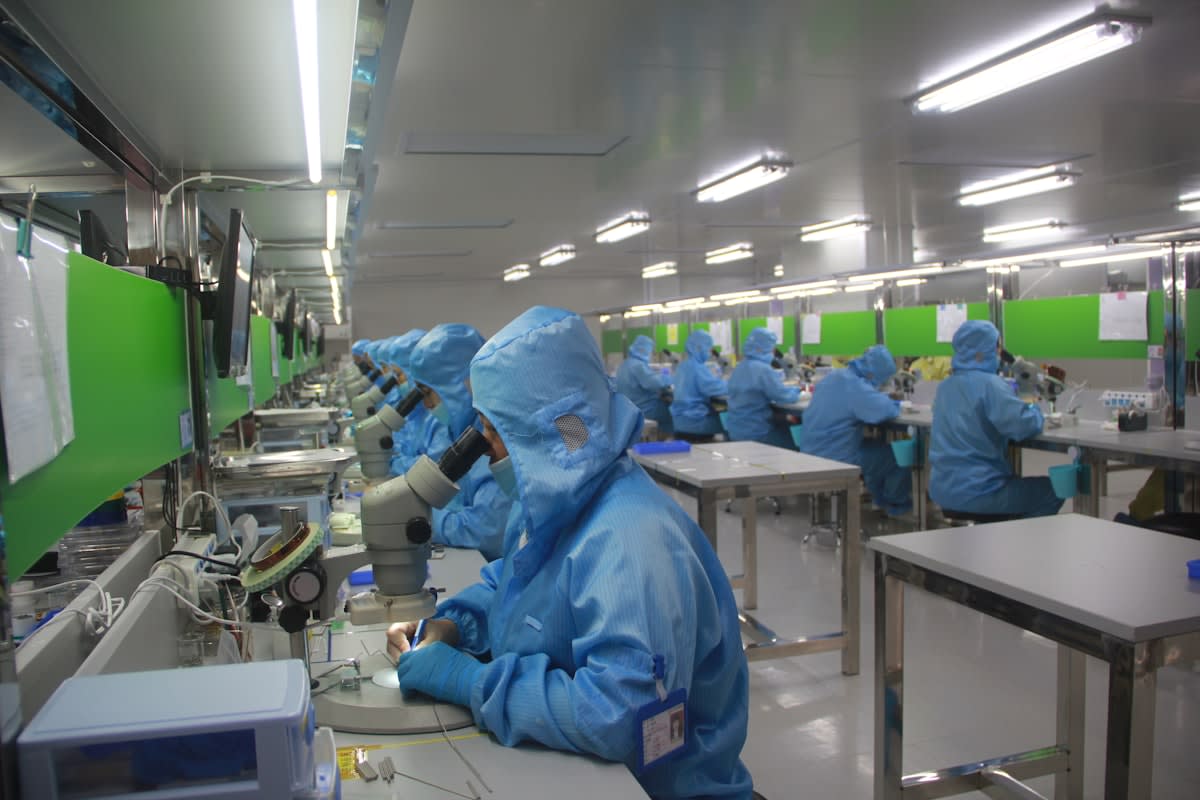
The geography of this revolution is also shifting. While the US leads in venture capital, China's NMPA is overseeing a massive surge in CRISPR clinical trials. Chinese researchers are moving aggressively into common conditions, often with faster trial recruitment cycles. In hubs like Shanghai and Beijing, the focus is already shifting toward metabolic syndromes and chronic viral infections. This global race is accelerating the timeline, forcing Western companies to move faster or risk losing the intellectual property dominance of the next decade.
Consider the economic imperative. Cardiovascular disease affects roughly 300 million people globally. Even if a gene-editing cure captured only 1% of that market at a price point of 50,000 dollars—far lower than rare disease prices—the revenue would dwarf anything seen in the orphan drug space. Investors are no longer asking if the technology works; they are asking how quickly it can be deployed to the masses. The focus has moved from the lab bench to the balance sheet.
Projected Patient Reach: Rare vs Common Targets
Executive Insight
+18.4%
YTD Growth
Despite the optimism, the risk of off-target effects remains a haunting possibility. In a patient with a fatal rare disease, a small percentage of unintended edits is an acceptable trade-off. In a patient seeking a preventative treatment for high cholesterol, that same risk is unacceptable. This is why the industry is obsessing over high-fidelity enzymes and AI-driven guide RNA design. We are seeing a move toward 'transient' expression, where the CRISPR machinery disappears from the cell shortly after the edit is made, leaving no permanent footprint for errors to accumulate.
The democratization of health is the ultimate end-game here. If these therapies can be delivered via a simple clinic visit, the divide between those who can afford bespoke medicine and those who cannot may narrow—or it may widen into a genetic caste system. The real test will be whether these breakthroughs reach the populations in the Global South who suffer most from chronic metabolic diseases but lack the infrastructure for advanced genomics. The technology is ready; the delivery and pricing models are not.
We are witnessing the death of the 'orphan drug' era as the primary driver of genomic innovation. The next five years will be defined by the struggle to move from the liver to the heart, the lungs, and the brain. The goal is a world where a single injection at age 30 eliminates the risk of a stroke at 60. The transition is underway, and the scale of the impact will be measured not in thousands of lives saved, but in millions of lives optimized.