
AI Executive Summary
"This article analyzes the strategic transition from centralized command structures to distributed swarm intelligence in autonomous systems. It highlights how multi-agent orchestration reduces latency and ensures operational resilience through graceful degradation."
The obsession with the God Eye perspective—the idea that a single, omniscient command node can optimize every movement of a robotic fleet—has become a strategic liability. For decades, industrial automation relied on a hub-and-spoke model where sensors fed data to a central processor, which then issued directives back to the periphery. This architecture creates a lethal bottleneck. When the central node lags or fails, the entire system freezes, turning a sophisticated fleet into an expensive collection of stationary metal. Why do we continue to trust a single point of failure in environments defined by chaos?
The primary driver of this shift is the latency tax. In high-stakes environments, the time required for a signal to travel from a remote drone to a central server and back is an eternity. We are seeing a transition toward edge-native intelligence where the decision-making happens in the milliseconds between two neighboring robots. By eliminating the round-trip to the command center, response times have plummeted from an average of 200ms to under 15ms in localized coordination tests. This speed is not just a convenience; it is the difference between avoiding a collision and a total system crash.
The Architecture of Emergence
Robotic swarm protocols operate on the principle of stigmergy—a mechanism of indirect coordination where the trace left in the environment by an action stimulates the next action. Instead of receiving a direct order from a general, a robot observes the state of its immediate surroundings and the behavior of its nearest peers. This mimics the biological efficiency of ant colonies or starling murmurations. The complexity does not reside in the individual unit, which remains computationally lean, but in the interaction rules that govern the collective. When every unit follows three simple rules—avoid collisions, maintain proximity, and align velocity—the result is a sophisticated, fluid entity capable of navigating complex terrain without a single line of top-down instruction.
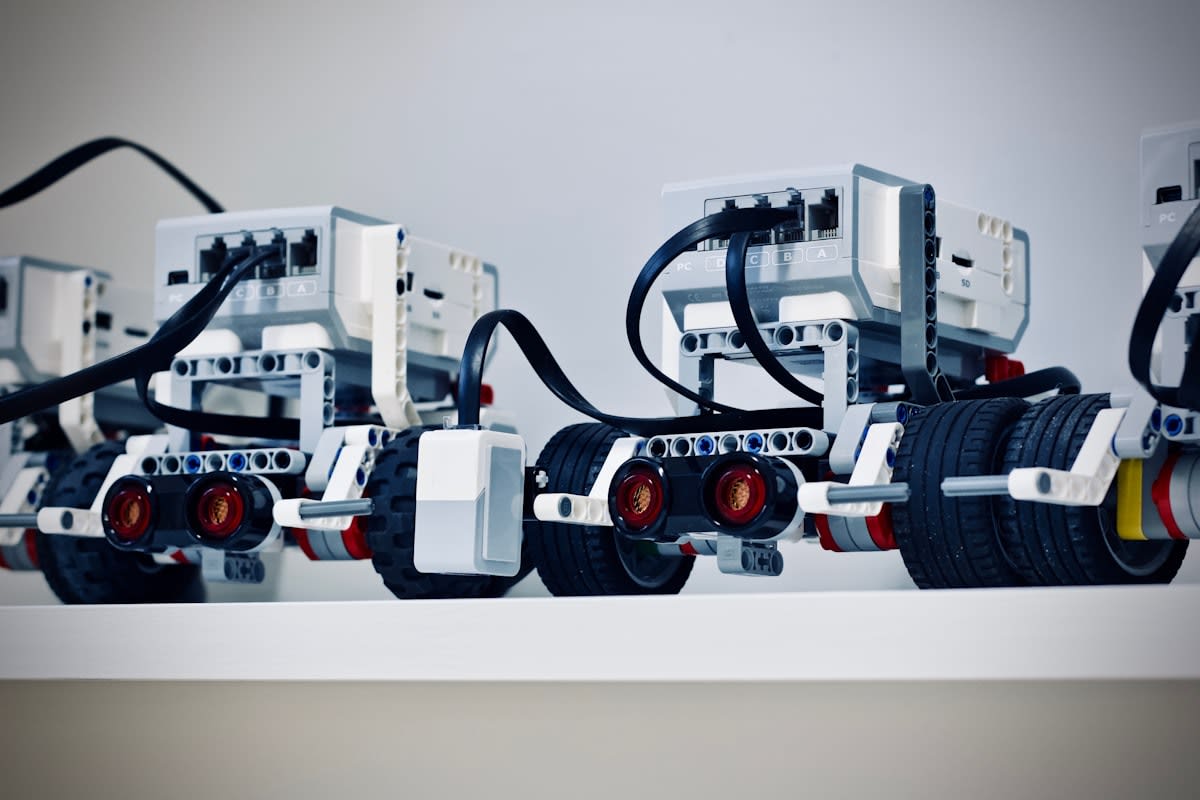
This shift effectively moves the intelligence from the software's core to its edges. In a centralized system, adding more robots increases the computational load on the center exponentially, eventually leading to a collapse. In a swarm protocol, the computational load is distributed. Adding a thousand more units does not slow the system down; it actually makes the swarm more resilient. This linear scalability is why we are seeing a 30% increase in the adoption of decentralized protocols across industrial logistics and environmental monitoring sectors over the last eighteen months.
| Metric | Centralized Command | Swarm Protocols |
|---|---|---|
| Failure Point | Single (Command Node) | Distributed (Graceful Degradation) |
| Comm. Overhead | O(n) to Center | O(1) Local |
| Response Latency | High (Round-trip) | Low (Immediate) |
| Scalability | Logarithmic/Limited | Linear/Exponential |
| Recovery Time | Slow (Reboot/Reassign) | Instant (Self-healing) |
The strategic advantage becomes evident when considering the concept of graceful degradation. In a centralized model, the loss of the command node is a catastrophic event. In a swarm, the loss of any single unit, or even 40% of the fleet, does not stop the mission. The remaining units simply adjust their local interactions to fill the gaps. This resilience is not a byproduct; it is the primary objective. We are moving away from the fragility of perfection toward the robustness of redundancy.
Geographic Proofs of Decentralization
Look at the deployment of precision agriculture bots in the Mekong Delta of Vietnam. Traditional centralized farming drones struggle with the dense canopy and erratic signal interference of the region. By implementing swarm protocols, these bots now coordinate planting and nutrient delivery through local pheromone-like digital markers. They do not wait for a cloud server to tell them where the soil is depleted; they communicate the depletion to their neighbor, who then signals the rest of the cluster. The result is a 12% increase in crop yield due to the immediacy of the response.
Similarly, in the mine-clearing operations across Angola, the danger of signal jamming and terrain blockage makes centralized command a liability. Swarm-based detection units utilize a consensus-based mapping protocol. Each unit maps a small radius and shares that data only with adjacent units. The map emerges as a collective memory rather than a file stored on a distant server. If three units are destroyed by an explosion, the swarm does not lose the data; the information is mirrored across the local cluster, ensuring the mission continues without interruption.
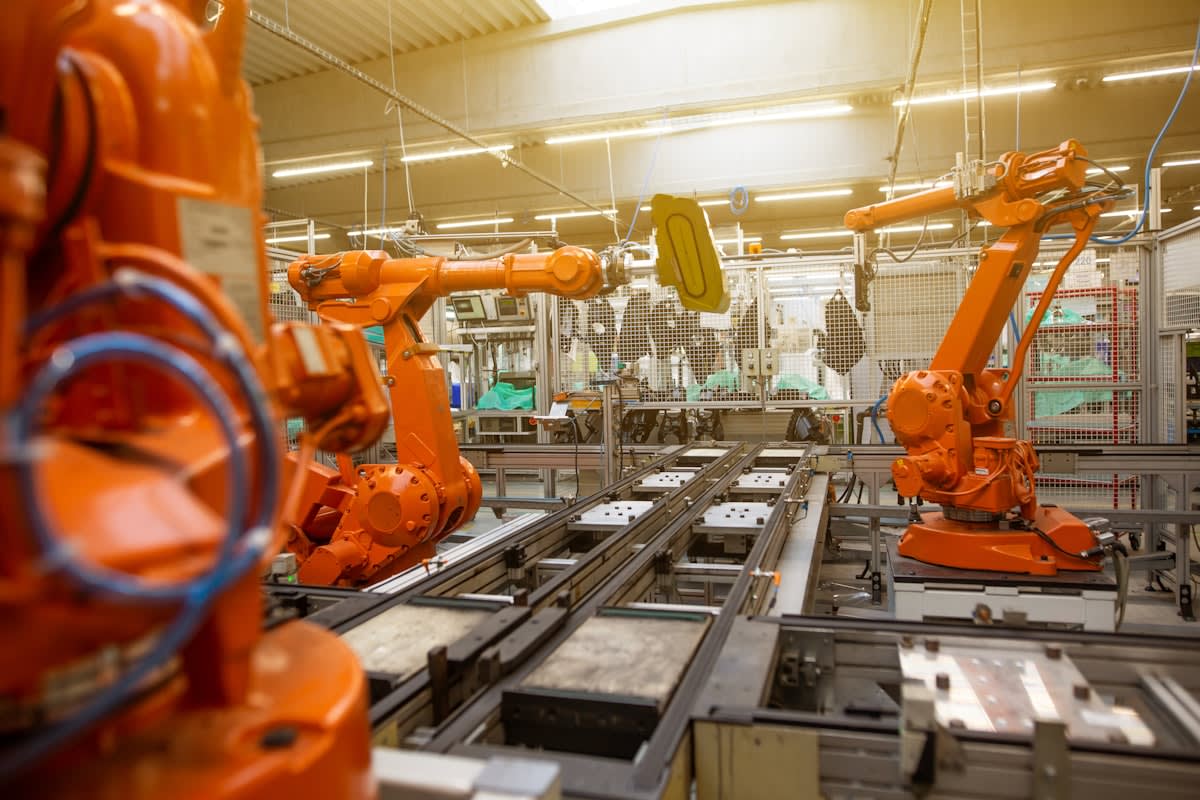
"The goal is no longer to control the robot, but to curate the environment and the rules that allow the robot to control itself."— Dr. Aris Thorne, Lead Researcher in Emergent Systems
How does a swarm reach a decision without a boss? The answer lies in consensus algorithms, specifically those derived from Byzantine Fault Tolerance. Units vote on a course of action based on their local sensor data. Once a threshold of agreement is reached among a local cluster, the decision ripples through the rest of the swarm like a wave. This prevents a single malfunctioning unit from leading the entire group off a cliff, as the majority consensus overrides the outlier. It is a digital democracy operating at the speed of light.
This transition forces a total rethink of the human role in the loop. We are moving from being operators to being architects. The human no longer says, Go to point X and pick up object Y. Instead, the human defines the reward function: Find as many objects of type Y as possible while maintaining a 2-meter distance from each other. The swarm then determines the most efficient way to achieve that goal. This abstraction removes the human as the bottleneck, allowing the system to operate at a scale and speed that no human operator could possibly manage.
The Resilience Factor
Graceful degradation means that as a system loses components, its performance decreases linearly rather than crashing abruptly. In swarm robotics, a 20% loss in hardware typically results in only a 5-10% drop in operational efficiency.
The implications for global infrastructure are profound. Imagine a city's traffic management not as a central computer adjusting lights, but as a swarm of autonomous vehicles negotiating right-of-way in real-time. Imagine disaster response in the Andes where a swarm of drones maps a landslide, communicating only with each other to cover the maximum area in the minimum time. The reliance on a central hub is a relic of an era where bandwidth was scarce and compute was expensive. Now, the compute is everywhere, and the bandwidth is local.
We must ask if we are psychologically ready to relinquish the illusion of control. The discomfort stems from the fact that emergent behavior is, by definition, not entirely predictable. You cannot pinpoint exactly why a swarm decided to move left instead of right; you can only know that the decision was the result of a thousand local optimizations. However, in a world of increasing complexity, the pursuit of total predictability is a pursuit of fragility. The most successful systems in nature are not those with the strongest leaders, but those with the most flexible protocols.
Ultimately, the quiet replacement of centralized command is an admission of the limits of hierarchy. The future belongs to the distributed, the redundant, and the emergent. As we deploy these systems into the wild, the metric of success will not be how well a robot follows an order, but how effectively it coordinates with its peers to solve a problem that no single unit—and no single commander—could ever fully comprehend.