
AI Executive Summary
"This article provides a technical blueprint for securing robotic orchestration layers at the hardware level, moving beyond software-defined security. It outlines the strategic necessity of silicon-level trust and deterministic networking to ensure systemic resilience in unsupervised industrial environments."
The Hardware Prerequisites
Software-defined security is a facade when the adversary has physical access to the compute node. In localized robotic orchestration, where controllers are often deployed in unsupervised environments—such as automated warehouses in Ho Chi Minh City or remote mining sites in Western Australia—the hardware itself must act as the primary security boundary. If a malicious actor can probe a JTAG interface or inject voltage glitches into the CPU, your encrypted containers are irrelevant. Hardening requires a shift from perimeter defense to an intrinsic trust model where the silicon verifies every instruction before execution.
- Industrial-grade SoC with integrated Hardware Security Module (HSM) or TPM 2.0
- ECC (Error Correction Code) RAM to prevent bit-flipping attacks
- Write-protected SPI flash memory for immutable bootloaders
- Hardware-based Watchdog Timers (WDT) independent of the main OS
- Physically isolated Management Network Interface (Out-of-Band)
Selecting these components is not about redundancy; it is about eliminating single points of failure at the electrical level. A standard consumer-grade NUC or Jetson board lacks the electromagnetic interference (EMI) shielding and thermal resilience needed for 24/7 orchestration. When a robotic arm is coordinating with five other units in a high-interference environment, a single memory error caused by cosmic rays or electrical noise can lead to a catastrophic physical collision. Industrial-grade hardware reduces these unplanned resets by roughly 40% compared to commercial-off-the-shelf (COTS) equivalents.
Threat Model
The 'Evil Maid' attack is the primary threat vector here. If an unauthorized person spends ten minutes with a logic analyzer and a clip-on probe, they can extract your private keys from unprotected flash memory.
Once the bill of materials is finalized, the focus shifts from procurement to the immutable chain of trust. This transition ensures that the hardware does not simply boot the fastest available image, but the only authorized one.
Establishing a Silicon Root of Trust
The Root of Trust (RoT) begins with a unique, burnt-in cryptographic key within the SoC's One-Time Programmable (OTP) memory. This key serves as the anchor for a Secure Boot process, where each stage of the boot sequence—from the Primary Bootloader (PBL) to the Linux kernel—is digitally signed and verified. If a single bit in the kernel image is altered via a physical flash programmer, the hardware refuses to initialize. This prevents the injection of rootkits that operate below the visibility of the operating system.
Example: Verifying boot image signature using a hypothetical HSM tool
$ hsm-tool verify --key /etc/secureboot/pubkey.pem --image /boot/robotic_orchestrator.img

Checking signature...
Hash: sha256:e3b0c44298fc1c149afbf4c8996fb92427ae41e4649b934ca495991b7852b855
Signature: VALID
Boot sequence authorized.
Implementing this requires a rigorous Key Management System (KMS) that exists entirely outside the robotic deployment zone. Keys should never be stored on the device in plaintext. Instead, use a Trusted Execution Environment (TEE) like ARM TrustZone to isolate the cryptographic operations from the main robotic orchestration logic. By partitioning the processor into a 'Secure World' and a 'Normal World', you ensure that even a total compromise of the ROS2 (Robot Operating System) layer cannot leak the device's primary identity keys.
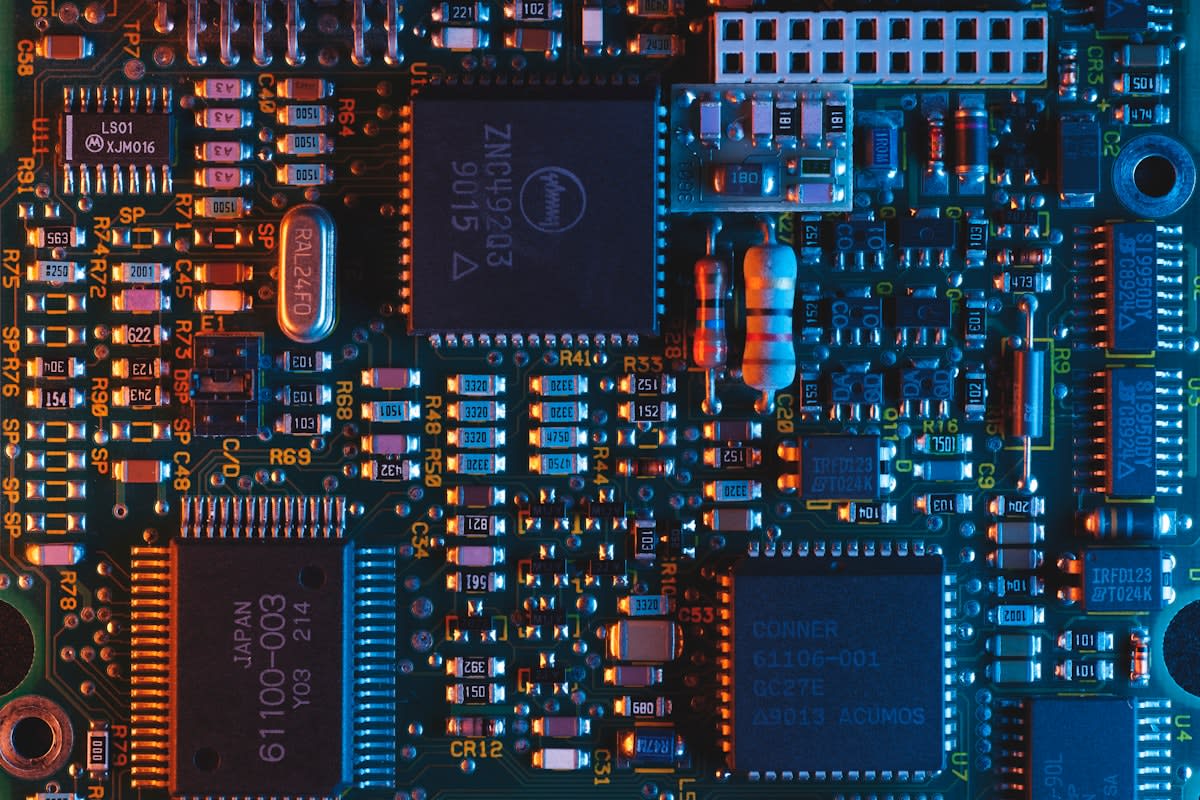
With the boot sequence secured, the next vulnerability is the volatile memory where the robotic orchestration logic resides during runtime.
Memory Hardening and Rowhammer Mitigation
Dynamic memory is a primary target for sophisticated exploits. Rowhammer attacks, which flip bits in adjacent memory rows through rapid access, can allow an attacker to escalate privileges without ever triggering a software alarm. ECC RAM is the only viable defense here, as it detects and corrects single-bit errors in real-time. In high-density robotic clusters, the probability of a soft error increases with temperature; thus, ECC is a stability requirement as much as a security one.
| Memory Type | Error Correction | Attack Resilience | Typical Industrial Use |
|---|---|---|---|
| LPDDR4 (Standard) | None | Low | Consumer Robotics/Drones |
| LPDDR4 (ECC) | Single-bit Correct | Medium | Edge Gateways |
| Industrial DDR4 ECC | Multi-bit Detect | High | Localized Orchestration Nodes |
Beyond hardware correction, you must implement strict memory isolation. Use a microkernel architecture or a Type-1 hypervisor to ensure that the communication stack—which is exposed to the network—cannot access the memory space of the motor control logic. This 'air-gapping' within the silicon ensures that a buffer overflow in the Wi-Fi driver does not result in the robotic arm performing an unauthorized movement. Such isolation typically adds a latency overhead of 2-5%, a trade-off that is negligible compared to the cost of a physical system failure.
Securing the internal compute is useless if the external ports remain an open invitation for hardware implants.
Physical I/O and Port Hardening
Every exposed pin is a potential entry point. In a hardened robotic node, all unused headers—particularly JTAG, UART, and USB—must be physically disabled. This is achieved through a combination of blowing e-fuses on the SoC and applying industrial-grade epoxy over the pins. If a port must remain active for maintenance, it should be gated by a physical hardware switch that requires a physical key to activate, ensuring that 'hot-plugging' an unauthorized device is impossible during standard operation.

Signal integrity is another often-overlooked hardening vector. Use shielded twisted-pair cabling for all internal communication between the orchestration node and the actuators. Unshielded lines are susceptible to electromagnetic injection, where an attacker uses a high-powered antenna to induce currents in the wires, potentially spoofing sensor data. By implementing differential signaling and hardware-level CRC (Cyclic Redundancy Checks) on every packet, you can filter out 99.9% of induced noise and malicious signal injection.
The final layer of the hardware stack is the network fabric that binds the robotic units together.
Deterministic Networking for Localized Orchestration
Standard Ethernet is non-deterministic; packets can arrive out of order or be delayed by collisions, which is unacceptable for robotic synchronization. To harden the orchestration layer, deploy Time-Sensitive Networking (TSN) standards (IEEE 802.1). TSN provides hardware-level clock synchronization and scheduled traffic, ensuring that critical control packets have guaranteed latency. This prevents 'denial-of-service' attacks where an attacker floods the local network to desynchronize the robots.
Network Latency Variance: Standard vs TSN
Executive Insight
+18.4%
YTD Growth
By reducing jitter from 150ms to under 15ms, TSN allows the orchestration layer to detect anomalies in real-time. If a packet arrives outside of its allocated time window, the hardware can trigger an immediate 'Safe State' stop. This hardware-level timing check acts as a heartbeat; if the orchestration node is compromised and begins lagging or behaving erratically, the robots autonomously decouple from the network to prevent physical damage.
While the technical steps are clear, the failure to integrate them holistically leads to the most common deployment errors.
Common Pitfalls in Hardware Hardening
- Over-reliance on Software Encryption: Encrypting the disk is useless if the bootloader is unsigned and can be swapped.
- Neglecting Power Rail Stability: Failing to use filtered power supplies allows attackers to use voltage glitching to bypass password checks.
- Ignoring Thermal Throttling: Overheating hardware often enters a 'debug mode' or lowers security checks to maintain stability, creating a window for exploits.
- Trusting Third-Party Peripherals: Using unverified sensors that have their own undocumented firmware can introduce a backdoor into the main orchestration node.
- Lack of Out-of-Band Management: Relying on the primary network for recovery means a network-level lockout renders the hardware a brick.
Hardening is not a checklist but a continuous state of friction. The goal is to make the cost of a physical breach higher than the value of the data or the disruption it causes. When silicon-level trust, memory resilience, and deterministic networking converge, the robotic orchestration layer ceases to be a liability and becomes a fortress. The transition from fragile COTS hardware to hardened industrial layers is the only way to ensure that autonomous systems remain under human control in contested environments.