
AI Executive Summary
"This article analyzes the strategic shift from deterministic to probabilistic robotics in global logistics, highlighting the economic viability of humanoid forms in existing 'Brownfield' infrastructure. It specifically examines the use of Robotics-as-a-Service (RaaS) to solve labor elasticity and attrition challenges in emerging markets like India."
The End of the Demo Phase
Twelve months ago, the conversation around humanoid robots in logistics was dominated by carefully curated videos of robots walking in straight lines or picking up a single box in a sterile lab. These were vanity projects designed for venture capital pitches rather than operational blueprints. Today, that narrative has evaporated. We are seeing the first actual deployments where robots like Figure 01 and Agility Robotics' Digit are performing 'move-to-bin' tasks in real-world environments, dealing with the chaotic variables of a working warehouse. The shift is no longer about whether the hardware can stand; it is about whether the software can reason.
What changed in the last six to twelve months? The integration of End-to-End (E2E) neural networks has replaced the rigid, scripted movements of the past. Instead of a programmer defining every joint angle to move a package, robots are now learning via imitation and reinforcement learning. This allows a humanoid to encounter a misplaced pallet or a leaking container and adjust its grip in real-time without a system crash. The delta is clear: we have moved from deterministic robotics to probabilistic robotics, allowing machines to handle the inherent messiness of global supply chains.
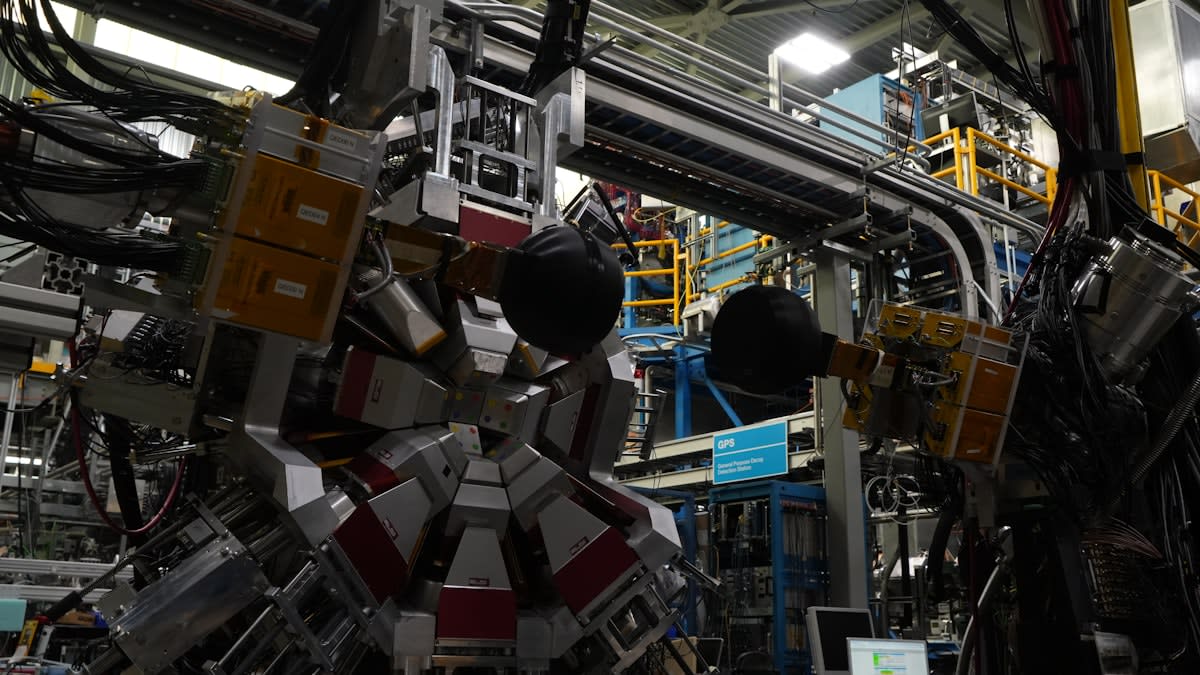
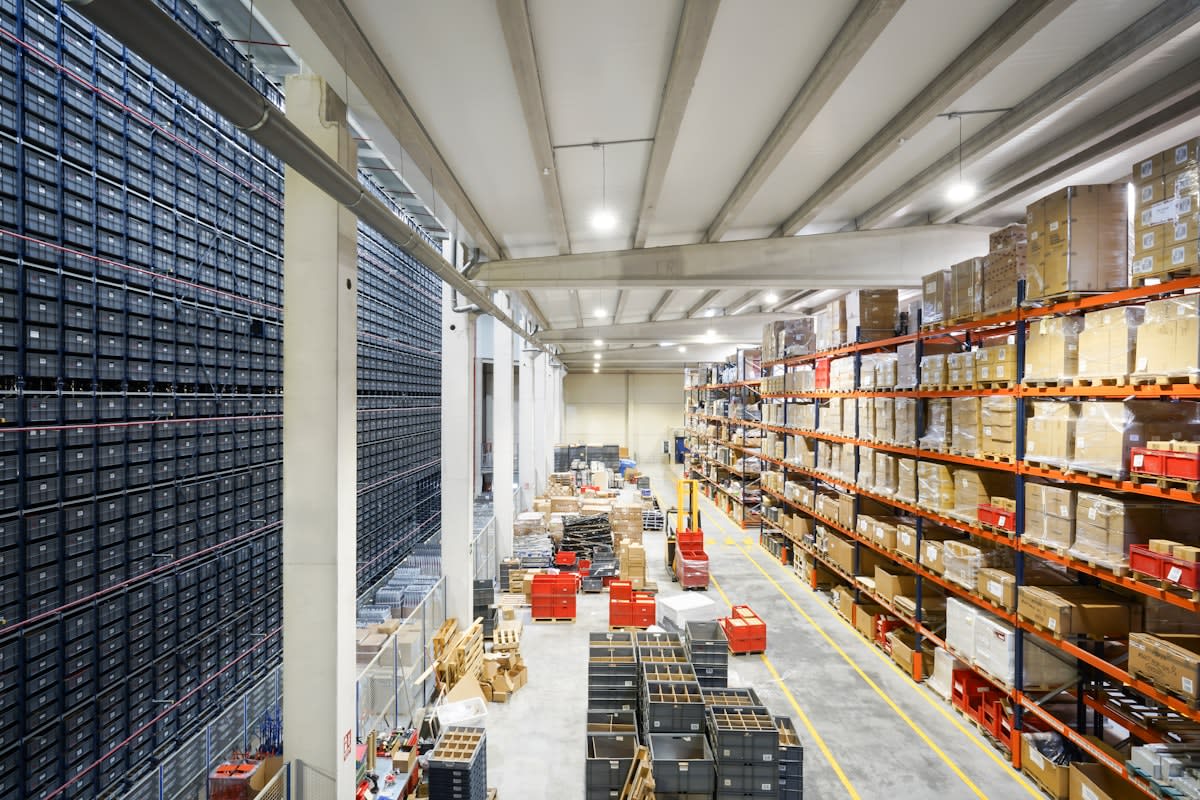
Why does the humanoid form factor matter when a wheeled robot is more stable? The answer lies in the 'Brownfield' problem. Most of the world's warehouses were built for humans. They have stairs, narrow aisles, and shelving heights optimized for a five-to-six-foot biped. Redesigning a million-square-foot facility to accommodate specialized automation costs billions. A humanoid robot, however, simply steps into the existing infrastructure. It uses the same doors, the same elevators, and the same workstations as a human employee, eliminating the need for massive capital expenditure on facility retrofitting.
"The goal is no longer to build a robot that looks like a person, but to build a tool that fits the world we already built for people."— Chief Robotics Engineer, Logistics AI Global
This transition is creating a sudden pressure point for logistics operators who banked on the slow rollout of automation. The speed of software iteration in the LLM space has bled into the physical world, meaning a robot's capability can now increase overnight via a cloud update. A fleet of humanoids in a distribution center can 'learn' a new packing technique in one facility and deploy that knowledge across ten thousand units globally in seconds. This creates a compounding efficiency gain that traditional automation simply cannot match.
The Indian Logistics Paradox
For years, the consensus was that humanoid robotics would skip the Indian Subcontinent due to the abundance of low-cost manual labor. This logic was flawed. In the massive e-commerce hubs sprawling across Maharashtra and Haryana, the issue isn't the cost of a single worker, but the cost of attrition and inconsistency. Warehouse turnover in high-growth Indian corridors often exceeds 30% annually. When a facility scales from 500 to 5,000 workers during a festival sale peak, the training lag creates a massive productivity dip.
Humanoids offer a solution to this elasticity problem. A robotic fleet doesn't require a three-week onboarding process or housing subsidies for migrant labor. In the NCR (National Capital Region) logistics clusters, we are seeing a growing interest in 'Robotics-as-a-Service' (RaaS) models. This allows operators to lease humanoid capacity during peak demand cycles without the risk of owning depreciating hardware. The economic calculation has shifted from 'Can I afford a robot over a human?' to 'Can I afford the instability of a human-only workforce?'
| Metric | Traditional AGVs | Humanoid Robotics |
|---|---|---|
| Infrastructure Need | Magnetic strips/Markers | Existing Human Layout |
| Task Versatility | Single-purpose (Transport) | Multi-purpose (Pick/Pack/Move) |
| Deployment Speed | Months (Facility Mod) | Days (Plug-and-Play) |
| Scaling Logic | Linear | Exponential (via Cloud Learning) |
Does this mean the end of manual labor in the Global South? Not immediately, but it changes the nature of the job. We are seeing the emergence of the 'Robot Shepherd' role—human workers who manage a fleet of five to ten humanoids, intervening only when the machine hits a confidence threshold it cannot resolve. This shifts the labor requirement from raw physical stamina to basic technical oversight. The risk is no longer the robot taking the job, but the worker who cannot manage a robot being replaced by one who can.
The technical bottleneck is now shifting toward power density. To be truly viable, a humanoid cannot spend four hours charging for every two hours of work. Recent breakthroughs in solid-state battery research and more efficient harmonic drives are extending operational windows. When a robot can maintain a 12-hour shift with a single rapid-charge cycle, the operational cost per unit drops below the threshold of a full-time human salary in almost every developed market, and begins to challenge the cost-benefit analysis in emerging markets.
The Intelligence Moat
The real winner isn't the company that builds the best robot, but the company that builds the best data pipeline to train them. Hardware is becoming a commodity; the 'General Purpose' intelligence is the actual moat.
We must also address the resilience factor. Global supply chains are increasingly volatile, plagued by climate events and geopolitical friction. A humanoid workforce provides a level of operational resilience that is impossible with humans. They don't succumb to heat exhaustion in non-climate-controlled warehouses during a heatwave in Rajasthan, nor do they face the logistical hurdles of pandemic-related lockdowns. This 'reliability premium' is why the largest logistics firms are accelerating their humanoid roadmaps.
The Deployment Horizon
Looking at the next 24 months, we expect a surge in 'hybrid cells.' These are specific zones within a warehouse where humans and humanoids work side-by-side on a shared conveyor. This allows companies to test the safety and efficiency of bipedal robots without risking a total system failure. The data gathered from these hybrid cells will feed back into the Large Behavior Models, creating a fly-wheel effect where the robots get smarter with every single box they move.
The ultimate goal is the autonomous dark warehouse—a facility where lights are off because no human eyes are needed. However, the path to that goal is not a straight line. It is a series of incremental wins: first, the robot moves the bin; then, it sorts the item; finally, it manages the inventory. Each step removes a layer of human friction and adds a layer of predictable, scalable output.
Is the industry ready for the social fallout? Probably not. But the economic momentum is now too strong to ignore. When the cost of a humanoid drops to the projected $20,000 to $30,000 range, the decision to automate will no longer be a strategic choice—it will be a survival requirement. Those who wait for the 'perfect' moment to automate will find themselves competing against firms that have already optimized their entire physical layer.