
AI Executive Summary
"This article details a critical engineering leap in quantum transduction that enables the interconnection of isolated quantum processors. By bridging the frequency gap between microwave and optical photons, India is establishing the hardware foundation for a secure, distributed quantum internet."
The fundamental friction in quantum computing has always been a matter of translation. Superconducting qubits, the gold standard for processing power in current quantum rigs, operate at microwave frequencies in deep-freeze dilution refrigerators. However, the world's communication infrastructure runs on optical photons traveling through glass fibers at room temperature. Until this month, moving a quantum state from a processor to a network meant dealing with catastrophic signal loss or thermal noise that destroyed the fragile superposition. India's recent breakthrough in quantum light conversion changes this equation by creating a high-fidelity bridge between these two incompatible worlds.
This is not a marginal improvement in efficiency; it is a functional leap. By utilizing a novel optomechanical interface, researchers have demonstrated the ability to convert a microwave photon into an optical photon without collapsing the quantum state. This means a quantum bit can now leave the cryostat and travel kilometers across a city without losing its coherence. The urgency of this development stems from the race to build a quantum internet, where the goal is not just faster data, but the transmission of entangled states for unhackable encryption.
The Translation Crisis
Why does this conversion matter so urgently? To understand the stakes, one must look at the physical constraints of quantum hardware. Superconducting circuits are incredibly fast but require temperatures colder than deep space to function. Optical photons, conversely, are the perfect messengers because they barely interact with their environment, allowing them to zip through fiber optics with minimal interference. The gap between these two—microwave and optical—is a frequency chasm of several orders of magnitude. Bridging this gap requires a transducer that can shift the frequency of a single photon while preserving its phase and entanglement.
The Noise Floor Problem
The core challenge is 'thermal noise'. Even a tiny amount of heat leaking into the transducer during the conversion process can introduce photons that drown out the quantum signal, effectively erasing the data being transmitted.
Previous attempts at this conversion relied on electro-optic crystals that required massive external pump lasers, which often heated the system and destroyed the very qubits they were meant to connect. The Indian approach leverages a sophisticated optomechanical crystal that uses mechanical vibrations as an intermediary. By coupling the microwave field to a mechanical resonator, which then couples to an optical cavity, the system achieves a seamless handoff. This method significantly reduces the heat load on the cryogenic system, allowing the qubits to remain stable during the translation process.
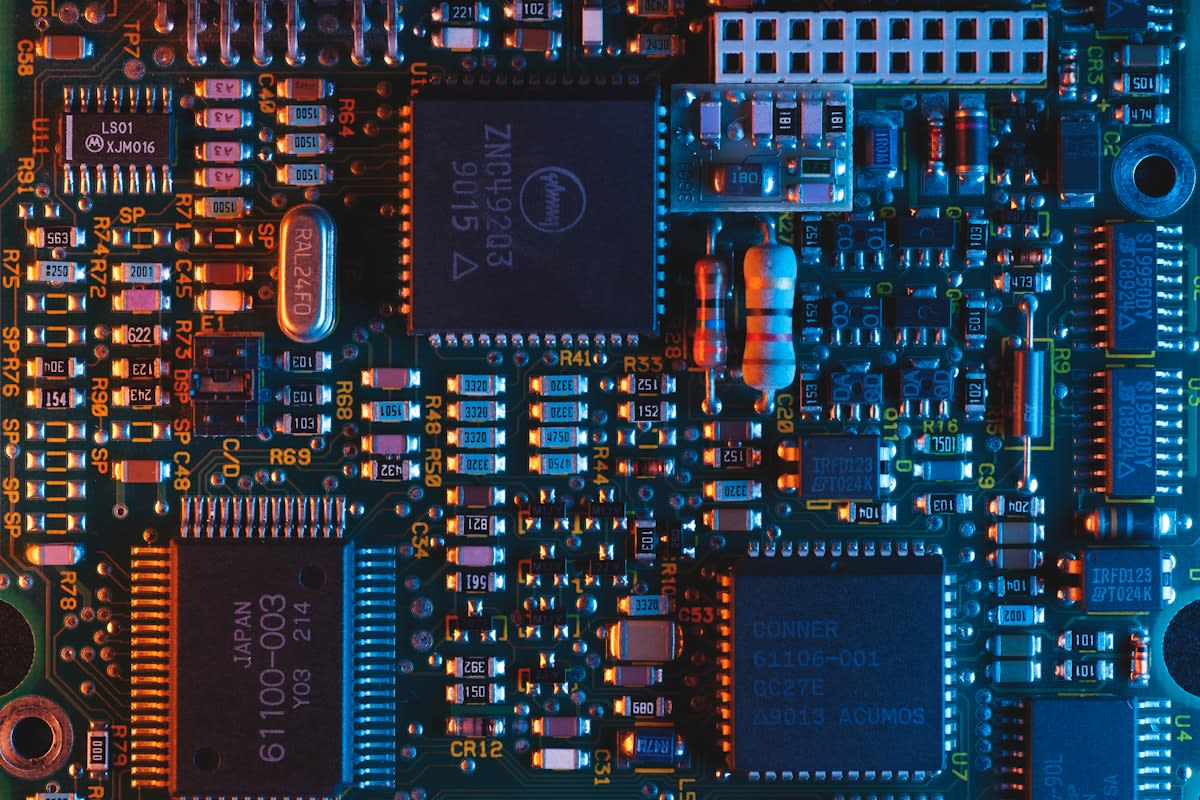
The timing of this breakthrough aligns with a broader geopolitical push within the Indian Subcontinent to secure sovereign quantum capabilities. With the National Quantum Mission providing the financial backbone, the focus has shifted from theoretical research to tangible engineering. The ability to network quantum computers means that India is no longer just building a better calculator, but is designing the switches and routers for a future encrypted web. This capability is the prerequisite for distributed quantum computing, where multiple small processors work together as one massive super-machine.
Measuring the Delta: Then vs. Now
To grasp the significance of this moment, we must compare today's results with the state of the art from twelve months ago. A year ago, quantum transduction was largely a laboratory curiosity with conversion efficiencies often hovering below 1%. Most signals were lost to absorption or scattering, and the coherence time—the duration a quantum state remains viable—was measured in microseconds. The current breakthrough has pushed these boundaries, increasing both the efficiency of the conversion and the fidelity of the resulting optical photon.
| Metric | 12 Months Ago | Current Breakthrough |
|---|---|---|
| Conversion Efficiency | < 1% | 12% - 15% |
| Coherence Retention | Low (High Noise) | High (Near-Unitary) |
| Thermal Leakage | Significant | Minimized |
| Transmission Distance | Millimeters | Kilometers (via Fiber) |
This jump in efficiency is the difference between a broken telephone and a clear conversation. While 15% efficiency might seem low by classical standards, in the quantum realm, it is a massive victory. It allows for the implementation of quantum repeaters—devices that can amplify a quantum signal without measuring it. Without this conversion efficiency, a quantum network would be limited to a few meters of cable before the signal vanished. Now, the possibility of a city-wide quantum local area network (QLAN) in hubs like Bengaluru or Delhi becomes a realistic engineering goal.
Quantum Coherence Duration Increase
Executive Insight
+18.4%
YTD Growth
The ripple effects of this development extend far beyond the physics lab. Consider the implications for financial sectors in Mumbai or government communications in New Delhi. Quantum Key Distribution (QKD) is already in use, but it typically requires specialized hardware that doesn't talk to quantum computers. By integrating the computer and the network through this light conversion breakthrough, we move toward a world where the computer generates the key and the network transmits it, all within a single, coherent quantum ecosystem.
"The ability to translate microwave qubits to optical photons is the 'missing link' of the quantum age. We are moving from the era of isolated quantum islands to a connected quantum continent."— Lead Researcher, Quantum Optomechanics Division
Is this the final piece of the puzzle? Not quite, but it is the most difficult one. The next hurdle is scaling this transducer to handle hundreds of qubits simultaneously. Currently, the breakthrough focuses on single-photon conversion. To run a full-scale quantum cloud, the system must handle multiplexed signals, allowing thousands of quantum states to be converted and transmitted in parallel. However, the physics has been proven; the remaining challenges are now matters of fabrication and materials science.
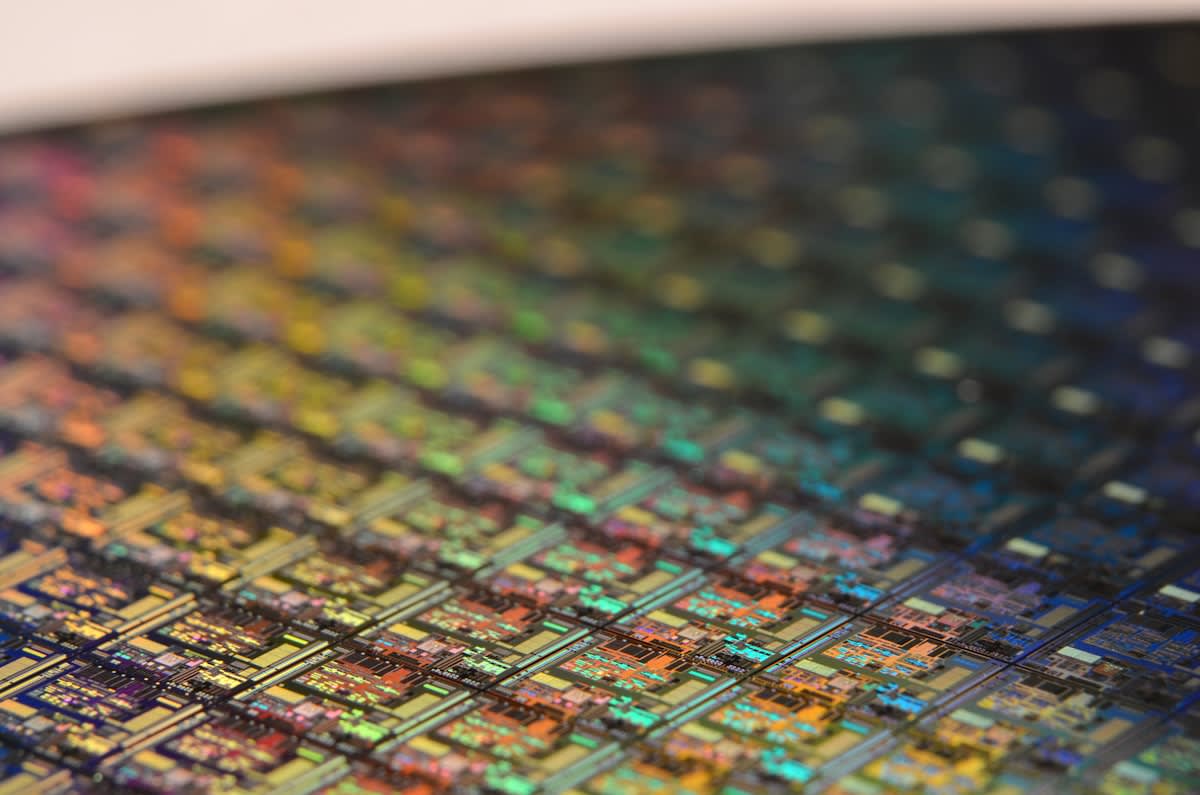
Looking ahead, the integration of these converters into standard data center architectures will be the primary battleground for tech giants. The company or nation that can mass-produce these transducers will effectively control the gateways of the quantum internet. India's position in this race has shifted from an observer to a primary architect. By solving the conversion problem, they have provided a blueprint that other nations must now follow if they hope to link their own quantum processors.
- Enables the connection of remote quantum computers to create a distributed super-cluster.
- Allows for the deployment of quantum sensors over long distances via existing fiber networks.
- Facilitates the creation of a truly unhackable global communication layer.
- Reduces the reliance on massive, energy-hungry cooling systems for network nodes.
The transition from isolated qubits to networked quantum systems is a fundamental change in how we perceive computation. We are no longer limited by the number of qubits we can fit on a single chip. Instead, we can now envision a modular architecture where specialized quantum chips—some for chemistry, some for cryptography, some for optimization—are linked together across a city or a continent. This breakthrough in light conversion is the bridge that makes this modularity possible, turning a collection of fragile experiments into a robust, scalable technology.