
AI Executive Summary
"This article analyzes the strategic pivot from refining to direct mining and electrochemical extraction to secure critical mineral supplies. It highlights the emergence of application-specific battery chemistries, such as Li-Air for aviation and Faraday batteries for AI data centers, to ensure long-term energy sovereignty."
Mining Is The New Bottleneck
Mineral scarcity is a physical wall. CATL’s recent move into direct mining signals the end of the refining-first era. While Ford Motor Co. previously flagged processing as the primary industry constraint, the world's largest battery manufacturer now identifies raw extraction as the actual hurdle.
"Processing is not the bottleneck, but mining is."— Jiang Li, Vice President of CATL
Direct investment in mining units is the only hedge against price volatility. Sodium-ion batteries remain the contingency plan if lithium costs spike beyond sustainable thresholds. This operational logic replaces the previous focus on refining efficiency.
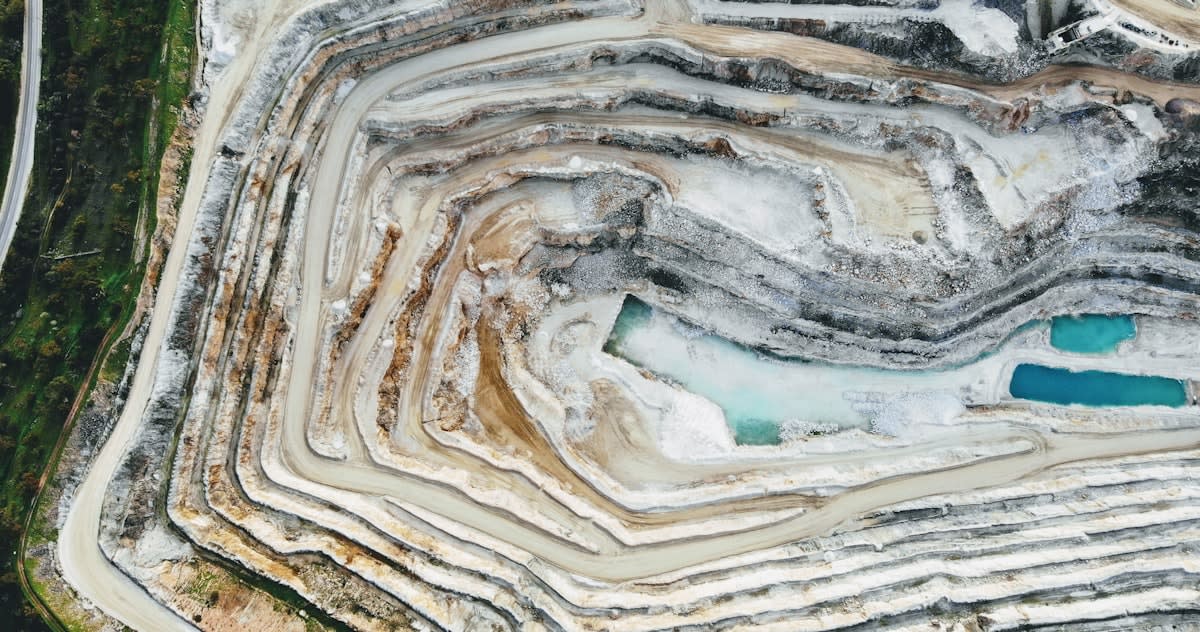
Industry intelligence shows a stark delta between 2025 and July 2026. Last year, the focus remained on refining capacity in China. Today, the race has moved upstream to the dirt itself.
Electrochemical Extraction From Saline
Saline water offers a strategic alternative to traditional ore. University of Chicago researchers at the Pritzker School of Molecular Engineering have developed a process using electric currents to force lithium ions into a host material. This method filters lithium with high precision from saline sources.
Technical Mechanism
The process utilizes lithium cobalt oxide as a layered material, creating interstitial spaces that act as conduits for lithium ion transport based on two-phase equilibrium.
Chemical mimicry between lithium and sodium ions creates significant operational friction. Precise filtering is required to ensure purity. Success in the lab in Chicago must now face the scale of industrial saline ponds.
| Technology | Primary Driver | Critical Constraint |
|---|---|---|
| Direct Mining | Supply Security | Geopolitical Access |
| Saline Electrochemistry | Resource Diversification | Sodium Mimicry |
| Lithium-Air | Energy Density | Atmospheric Integration |
| Faraday Battery | Power Stability | Niche Use Cases |
Hardware diversification is no longer optional. Specific use cases are now dictating the chemistry rather than a one-size-fits-all approach.
High-Density and High-Power Specialization
Aviation requires extreme energy density. Air Energy is utilizing oxygen as a key ingredient in lithium-air batteries to shed weight. This approach targets long-haul trucks and passenger aircraft where lithium-ion falls short.
Comparative Battery Application Priority
Executive Insight
+18.4%
YTD Growth
AI data centers present a different problem. SuperDielectrics has produced a Faraday battery that outperforms lithium-ion in high-power and sub-zero temperatures. These cells handle the spiky loads inherent in AI training and wind/solar power stabilization.
Testing by UK defense company QinetiQ confirms these results at the pouch cell level. Stability in fluctuating power environments is the primary win here. Lithium-ion's failure in extreme cold and high-spike scenarios is being solved by specialized hardware.