AI Executive Summary
"This article analyzes the strategic shift from traditional Von Neumann architecture to event-driven neuromorphic silicon. It highlights how colocating memory and processing is essential for overcoming the 'energy wall' in edge AI and autonomous robotics."
The modern computer is a machine of constant, wasteful motion. Every single operation, from a simple addition to a complex LLM inference, requires data to travel from the memory (RAM) across a narrow bus to the processor (CPU/GPU) and back again. This physical distance creates a latency tax and an energy drain known as the Von Neumann bottleneck. We have spent decades trying to hide this inefficiency with larger caches and faster clock speeds, but we have hit a wall where the energy cost of moving data exceeds the energy cost of computing it.
Why do we tolerate this inefficiency? Because the Von Neumann architecture is deterministic and predictable. It allows for the precise, step-by-step execution of instructions that built the digital age. However, as we pivot toward artificial intelligence and real-time sensory processing, the requirement for absolute determinism is being superseded by the need for extreme energy efficiency and parallel adaptability. The human brain operates on roughly 20 watts of power—less than a dim lightbulb—while performing tasks that would require a megawatts-scale data center to simulate. The gap is not just a matter of scale; it is a matter of fundamental design.
The Architecture of Biological Efficiency
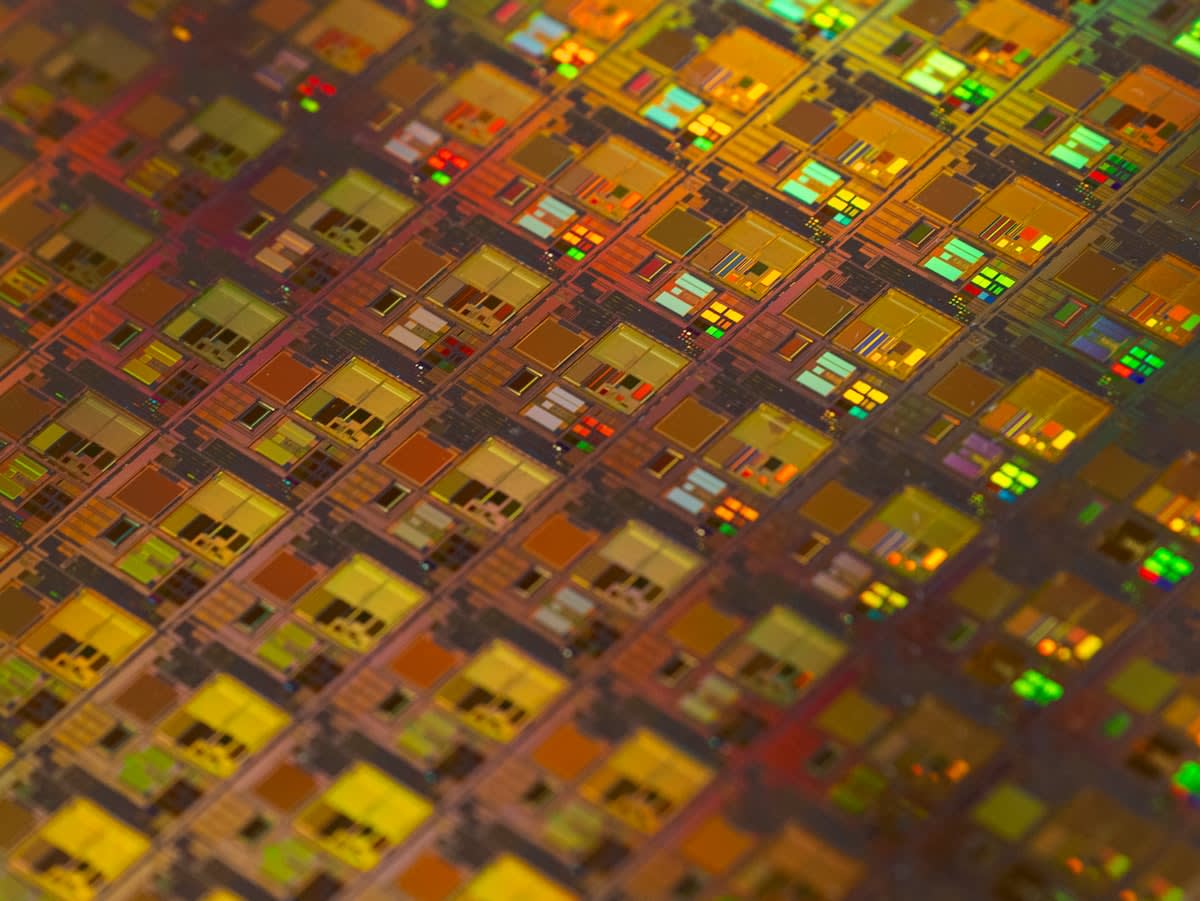
Neuromorphic chips reject the separation of memory and logic. Instead, they utilize a collocated structure where processing happens within the memory elements themselves, mirroring the synapses and neurons of a biological brain. In this paradigm, there is no 'bus' to clog. Information is processed locally and distributed globally. This shift eliminates the energy-intensive shuffle of data, allowing the chip to operate with a fraction of the power required by traditional GPUs.
Central to this shift is the concept of Spiking Neural Networks (SNNs). Unlike traditional artificial neural networks that pass continuous values (floating-point numbers) through layers, SNNs communicate via discrete 'spikes' of electricity. A neuron only fires when its internal threshold is reached, meaning the chip remains largely silent until a specific event triggers a response. This event-driven nature is the secret to its efficiency. If there is no change in the input data, there is zero switching activity and, consequently, near-zero power consumption.
The Event-Driven Advantage
In a traditional GPU, every transistor is potentially active during a clock cycle. In a neuromorphic chip, only the neurons receiving a spike are active. This is the difference between keeping every light in a skyscraper on at all times versus only lighting the room you are currently standing in.
This isn't theoretical. Intel's Loihi 2 and IBM's TrueNorth have demonstrated that for specific tasks—such as gesture recognition or olfactory sensing—neuromorphic hardware can be up to 1,000 times more energy-efficient than conventional processors. By removing the global clock and allowing neurons to operate asynchronously, these chips can process complex temporal patterns in real-time without the latency overhead of batch processing.
| Metric | Von Neumann (CPU/GPU) | Neuromorphic (SNN) |
|---|---|---|
| Memory/Logic Relationship | Physically Separated | Colocated (Synaptic) |
| Timing Mechanism | Synchronous (Global Clock) | Asynchronous (Event-Driven) |
| Energy Consumption | High (Constant Leakage) | Ultra-Low (Spike-Based) |
| Data Movement | High (Bus-Heavy) | Minimal (Local) |
| Primary Strength | Precision & Determinism | Pattern Recognition & Adaptation |
The transition, however, is not a simple hardware swap. The most significant barrier is the software stack. Our entire history of programming—from Fortran to Python—is built on the assumption of sequential execution and shared memory. To truly leverage neuromorphic silicon, we must rewrite the rules of computation. We are moving from 'algorithmic' programming to 'structural' programming, where the goal is to define the topology of the network rather than a sequence of instructions.
Can we expect a total replacement of the CPU? Unlikely. The Von Neumann architecture will remain the gold standard for spreadsheets, database management, and high-precision accounting. But for the 'edge'—the billions of sensors, drones, and prosthetic limbs that must think and react in real-time without a tether to a power grid—the current model is unsustainable. The future is a hybrid regime where a traditional processor handles the logic and a neuromorphic co-processor handles the perception.
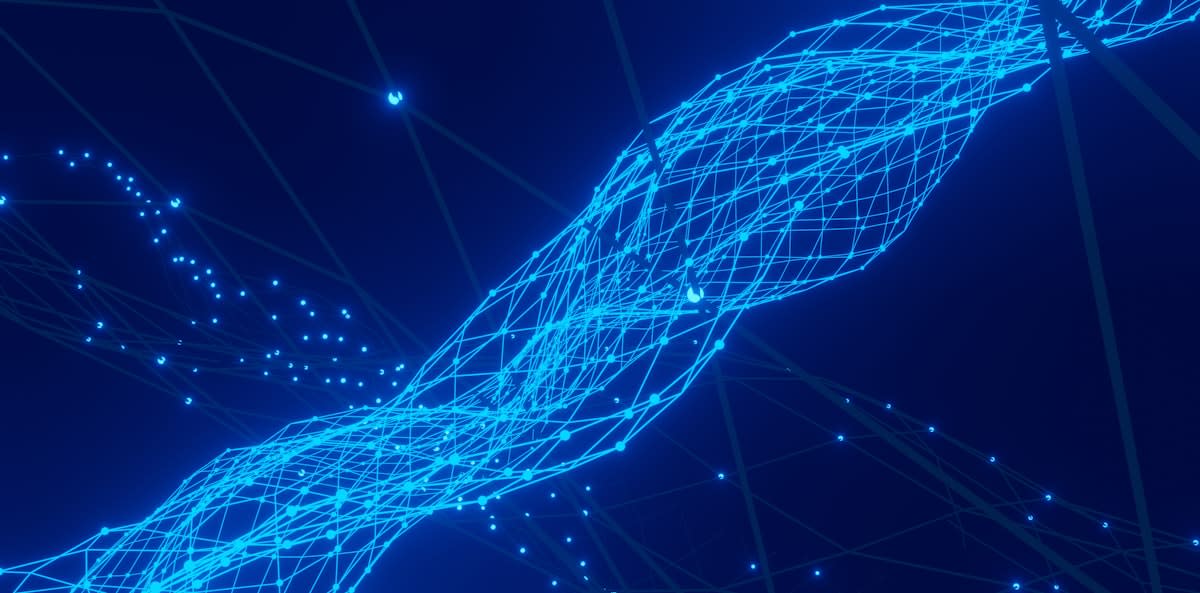
Looking at global initiatives, the European Union's Human Brain Project and the University of Manchester's SpiNNaker project illustrate a concerted effort to map biological intelligence onto silicon. SpiNNaker, specifically, uses a massive array of ARM processors to simulate millions of neurons, proving that the scalability of these networks is possible. When these simulations move from general-purpose ARM chips to dedicated neuromorphic ASICs, the power envelope drops from kilowatts to milliwatts.
"The goal is not to build a computer that simulates a brain, but to build a computer that functions like a brain. The difference is the shift from calculating a result to evolving a response."— Industry Lead, Neuromorphic Research Group
As we integrate AI deeper into the physical world, the 'energy wall' becomes the primary constraint on innovation. A drone that can navigate a forest using a neuromorphic chip consumes a fraction of the battery life of one relying on a GPU-based vision system. This efficiency enables a new class of autonomous devices that can learn and adapt in the field without needing to send data back to a cloud server for processing. The 'quiet' nature of this revolution is simply because it is happening at the circuit level, far beneath the surface of the user interface.
Ultimately, the era of Von Neumann is not ending because it failed, but because it has reached its physical limit. We have squeezed every possible bit of performance out of the separated memory model. The path forward requires a courageous abandonment of the clock cycle in favor of the spike. By embracing the chaos and efficiency of biological systems, we are finally moving toward a computing paradigm that can scale with the complexity of the real world.