
AI Executive Summary
"This article analyzes the critical shift from electronic to photonic computing to overcome the thermal limits of silicon. It highlights the strategic transition to optical neural networks as the only viable path for scaling trillion-parameter AI models sustainably."
The Thermal Ceiling of Silicon
Modern artificial intelligence is currently a hostage to the physics of copper. Every time a GPU performs a matrix multiplication, electrons collide with the atomic lattice of the silicon, generating heat that must be aggressively stripped away to prevent the chip from melting. This thermal bottleneck is not a design flaw but a fundamental limit of electronic conduction. We have reached a point where the energy spent moving data from memory to the processor exceeds the energy spent on the actual computation. Can we continue to build larger models when the electricity required to power a single cluster rivals the output of a small city?
The current trajectory of Large Language Models (LLMs) demands a scale of compute that exceeds the capacity of existing power grids. As we push toward trillion-parameter models, the latency introduced by electronic interconnects becomes a primary inhibitor of performance. Electrons are slow and heavy compared to the requirements of real-time global inference. The industry is currently attempting to solve this with liquid cooling and massive power substations, but these are palliative measures. They treat the symptom of heat rather than the cause of electronic resistance.
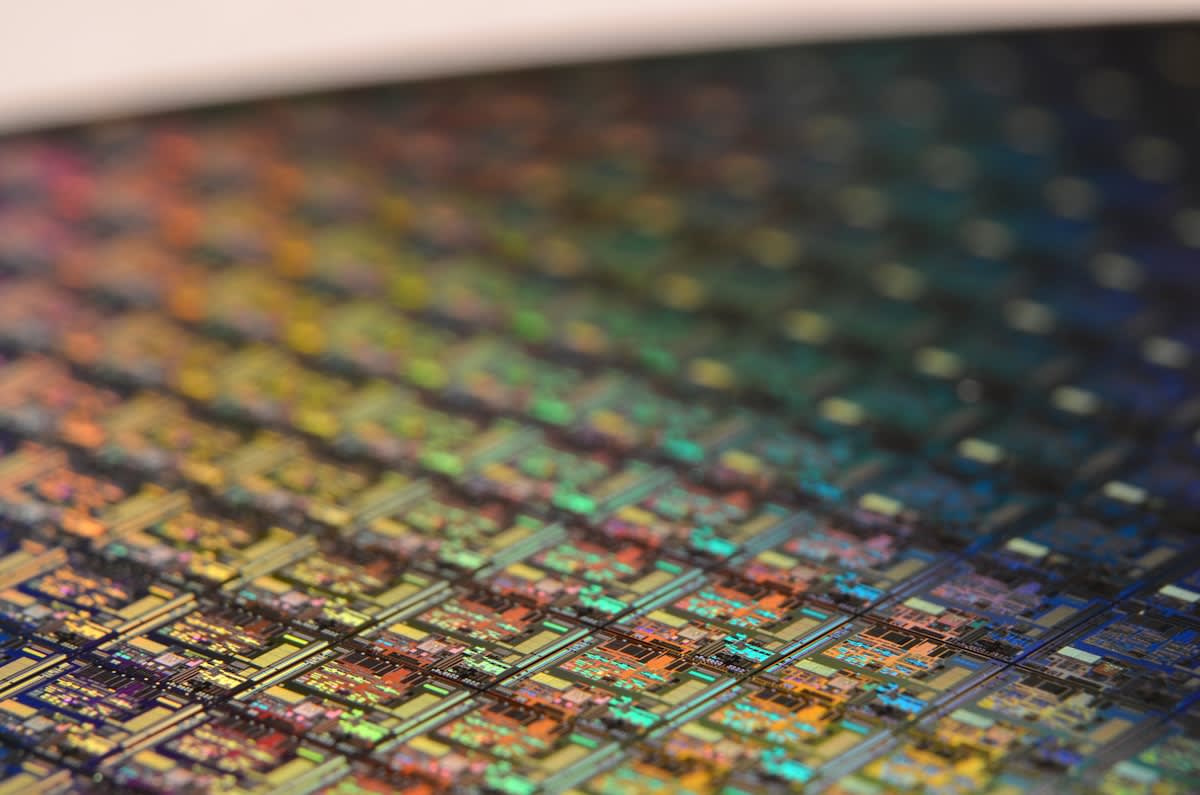
This is where the strategic pivot to photonic computing becomes inevitable. By using photons instead of electrons to carry and process information, we eliminate the resistive heating that plagues CMOS architecture. Light does not possess mass or charge, meaning photons can pass through one another without interacting or generating heat. This allows for the creation of optical neural networks that perform calculations at the speed of light. The shift is not merely an incremental upgrade; it is a fundamental change in how we conceptualize the act of computing.
Matrix Multiplication at the Speed of Light
At the heart of every AI model is the matrix-vector multiplication (MVM). In electronic chips, this requires millions of transistors switching on and off, consuming power at every step. Photonic chips approach this differently by using Mach-Zehnder Interferometers (MZIs) to modulate light. By splitting a beam of light and shifting its phase, the chip can perform additions and multiplications through interference patterns. The computation happens as the light passes through the circuit, meaning the energy cost is almost entirely shifted to the light source and the detectors.
"The transition to optical compute is the equivalent of moving from a horse-drawn carriage to a jet engine. We are no longer fighting the friction of the medium; we are leveraging the fundamental constants of the universe."— Lead Architect, Optical Neural Systems
This architecture allows for massive parallelism that electrons cannot replicate. A single optical waveguide can carry multiple streams of data simultaneously using different wavelengths of light, a technique known as wavelength-division multiplexing. While a GPU must cycle through instructions in a sequence, a photonic processor can process an entire tensor in a single pass. This reduces latency from microseconds to nanoseconds, effectively breaking the deadlock between model size and response time. Why settle for sequential processing when the physics of light allows for instantaneous results?
| Metric | Electronic (GPU/TPU) | Photonic (PIC) | Improvement Factor |
|---|---|---|---|
| Energy per Operation | ~10-100 pJ | ~1-10 fJ | 1,000x - 10,000x |
| Compute Latency | Microseconds | Nanoseconds | 100x - 1,000x |
| Heat Generation | High (Joule Heating) | Negligible | Near Total Elimination |
| Data Bandwidth | Limited by Copper | Terabits/sec per Waveguide | 10x - 100x |
The implementation of these systems is already surfacing in global research hubs. In Tokyo, researchers are integrating silicon photonics with traditional CMOS to create hybrid chips that handle memory electronically but compute optically. Meanwhile, in Leuven, Belgium, the IMEC center is refining the precision of optical modulators to ensure that signal loss does not negate the energy gains. These regions are racing to define the standard for the post-GPU era, knowing that the first to stabilize photonic integration will control the AI infrastructure for the next three decades.
Despite the promise, the path to total photonic dominance is not without friction. The primary challenge lies in the conversion process. Converting an electronic signal to an optical one and back again consumes energy and introduces latency. For photonic computing to truly break the power deadlock, the entire data pipeline—from memory to processing to networking—must be optical. We cannot simply plug a photonic core into a legacy motherboard and expect a revolution. The entire system architecture must be reimagined from the ground up.
The Strategic Advantage
The Energy Gap: While a top-tier GPU cluster may require 20-50 megawatts to train a frontier model, a fully photonic equivalent could theoretically operate on a fraction of that power, shifting the bottleneck from electricity availability to raw material sourcing for specialized glass and polymers.
The economic implications of this shift are staggering. Currently, the CapEx for AI is dominated by the purchase of H100s and the OpEx by the electricity bills of hyperscale data centers. Photonic computing flips this script. While the initial investment in new fabrication plants for PICs will be high, the operational costs will plummet. This democratizes high-scale AI, allowing smaller nations and enterprises to run frontier models without needing a dedicated nuclear power plant. The geopolitical leverage currently held by those who control the power-hungry chips will shift toward those who control the optical patents.
We are witnessing the end of the brute-force era of AI. For the last decade, we scaled intelligence by simply adding more GPUs and more power. That strategy has hit a wall of diminishing returns. The next leap in intelligence will not come from larger datasets or more electricity, but from a more elegant medium of computation. By moving the math into the realm of light, we unlock a level of efficiency that makes current hardware look like an abacus. The power deadlock is not a permanent state, but a signal that we have outgrown silicon.
Ultimately, the transition to photonics represents a return to first principles. We are stopping the fight against the physical limitations of electrons and instead embracing the inherent properties of electromagnetism. As the industry moves toward integrated optical neural networks, the definition of a data center will change from a heat-generating warehouse to a silent, cool facility of light. The question is no longer whether photonic computing will happen, but which architecture will survive the transition.