AI Executive Summary
"This technical guide provides a strategic framework for mitigating environmental risks to high-performance Edge AI hardware in high-humidity industrial zones. It emphasizes the critical role of vacuum sealing and material science in maintaining operational uptime and preventing costly hardware failures."
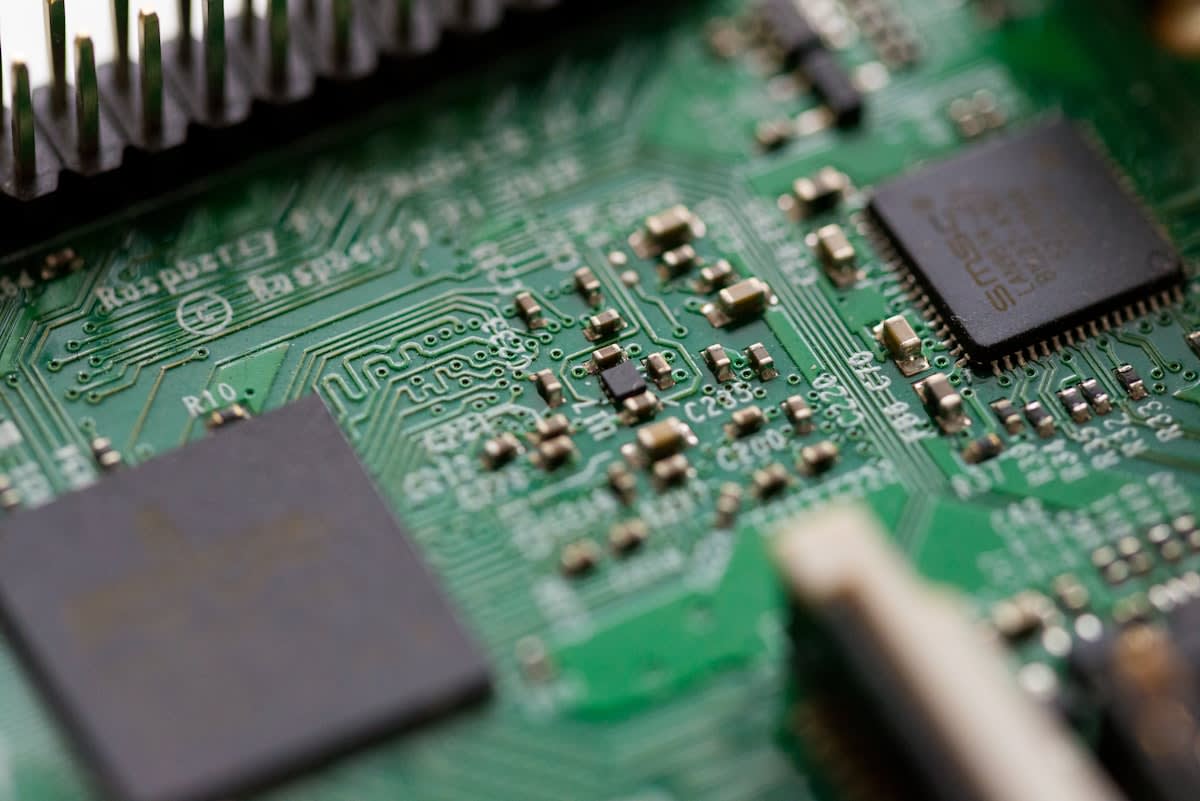
Water kills boards. Moisture infiltrates the smallest gaps in a printed circuit board, creating conductive bridges where none should exist. This is the inevitable end for any hardware deployed in Pune without a moisture barrier. You see it in the green crust of corrosion on solder joints. It happens fast when the dew point hits a critical threshold.
Humidity is a slow poison. In Pune, the air stays saturated, turning the internal chassis of an industrial PC into a condensation chamber. Such conditions accelerate electrochemical migration, where metal ions migrate between conductors to form dendritic whiskers. These whiskers eventually bridge the gap between traces, triggering a hard short. Compare this to a dry brownout in Kinshasa where the failure is electrical; here, the failure is chemical.
Hardware Prerequisites
Preparation defines the outcome. You cannot simply throw a board in a bag and hope for the best. The hardware must be completely desiccated before the seal is applied. Any trapped moisture becomes a localized pocket of humidity that will condense directly onto the silicon during thermal cycles.
- Industrial PCs with high-density processors (e.g., Intel Core Ultra or Panther Lake platforms)
- MIL-PRF-131K compliant vacuum-sealable moisture barrier bags
- Industrial-grade vacuum chamber with a precision pressure gauge
- Cobalt-free silica gel desiccant packets (minimum 5g per 100 cubic inches)
- Humidity indicator cards (HIC) calibrated for 10% to 60% RH
- Heat-sealing bar with adjustable temperature control
Thermal Gradient Warning
High-performance Edge AI platforms, such as those from Avalue, utilize Intel Panther Lake processors that generate intense localized heat. This thermal gradient makes the hardware even more susceptible to condensation if the external environment is saturated.
The Vacuum Sealing Sequence
Precision is the only metric that matters. A single pinhole in the seal renders the entire process useless. The goal is to eliminate the oxygen and water vapor that fuel oxidation. Follow these steps exactly or expect a dead board within six months.
- Place the industrial PC in a climate-controlled pre-drying oven at 40C for 12 hours to remove surface moisture.
- Slide the hardware into the moisture barrier bag, ensuring the HIC is visible through the clear plastic.
- Insert the desiccant packet at the lowest point of the bag to capture any settling moisture.
- Position the bag opening across the vacuum chamber seal, ensuring no folds or creases exist in the plastic.
- Extract air until the internal pressure reaches a minimum of 29 inches of Hg.
- Apply the heat seal while the vacuum is maintained to prevent air re-entry during the closing process.
- Inspect the seal for micro-bubbles or gaps using a high-intensity light source.
Pressure differentials are violent. If the seal is not uniform, the atmospheric pressure in Pune will force moisture through the gap. This creates a capillary effect, pulling humid air directly onto the motherboard. Once the moisture is inside, the desiccant is the only thing preventing immediate failure.
Environmental Stress Benchmarks
Global humidity patterns are shifting. Recent data from July 2026 shows extreme heat and humidity in the US East Coast, with heat indices hitting 115F in cities like Washington DC and New York. These are not isolated events; they are indicators of a broader atmospheric trend. In Pune, the saturation is more constant, creating a permanent state of stress for unsealed hardware.
Thermal triggers dictate failure. For example, the New York Racing Association utilizes a 105 heat index as a critical trigger for safety discussions. Industrial hardware has similar, though invisible, triggers. When the ambient temperature hits 38C (100F) and humidity exceeds 80%, the rate of corrosion on unsealed copper traces increases exponentially.
| Environmental Metric | Standard Zone | Pune High-Humidity Zone | Critical Failure Threshold |
|---|---|---|---|
| Ambient Temp | 22C | 32C - 38C | > 45C |
| Relative Humidity | 45% | 85% - 95% | > 98% |
| Heat Index | Low | 110F - 120F | > 125F |
| Oxidation Rate | Baseline | 4x Baseline | 10x Baseline |
Hardware resilience is a myth. Even energy-efficient platforms like those from Avalue, designed for sustainability and long-term reliability, cannot ignore the laws of physics. A low-power motherboard still uses conductive metals. Those metals will react with water vapor regardless of the processor's efficiency.
Common Pitfalls
Condensation is the primary enemy upon deployment. Opening a vacuum-sealed bag in a humid environment causes an immediate drop in temperature on the board surface. This creates a flash-condensation event. You are effectively bathing your hardware in a fine mist of water the moment the seal is broken.
Plastic fatigue is another failure point. Low-grade bags develop micro-fractures over time due to temperature swings. These fractures are invisible to the naked eye but act as highways for moisture. Only MIL-spec barriers provide the necessary molecular density to stop vapor diffusion over a multi-year deployment.
Desiccant saturation is often ignored. A silica packet has a finite capacity for water absorption. Once it reaches its saturation point, it becomes a useless piece of grit in the bag. If the HIC indicates a shift toward 60% RH, the hardware must be re-dried and re-sealed immediately.
"The climate the country has today is fundamentally different to the one it had when the founding fathers signed the Declaration of Independence."— Theodore Keeping, Imperial College London
Atmospheric shifts are permanent. We are no longer designing for stable environments. Whether it is a heatwave in Philadelphia or the monsoon season in Maharashtra, the physical constraints are the same. Hardware fails when the environment wins.