
AI Executive Summary
"This article provides a technical blueprint for transitioning from cloud-dependent AI to localized, on-premise infrastructure in industrial hubs like Pune. It highlights the critical intersection of power stability, thermal management, and industrial-grade hardware to achieve sub-millisecond latency for precision manufacturing."
Cloud latency kills precision. Data packets traveling to a remote server and back create a lag that ruins real-time quality control. Pune's industrial zones need hardware on the floor, not in a distant warehouse. This means buying heavy iron and managing heat. Real-time AI requires a physical presence where the machines actually breathe.
Physical Prerequisites
Power is the first failure point. Standard industrial grids in Maharashtra cannot handle the spike of high-density AI clusters without stabilization. You need dedicated power skids to prevent voltage drops from frying your boards. Vertiv is currently scaling production in Johor, Malaysia, specifically to address this demand across Asia. Their Power Modules and Power Skids are the only way to ensure your nodes don't starve for current.
Heat is the second enemy. AI chips generate concentrated thermal loads that melt standard air-cooling setups. Liquid cooling is no longer optional for high-density builds. Vertiv's CoolChip CDUs provide the necessary heat exchange to keep processors from throttling. Without these, your expensive silicon becomes a very expensive space heater.
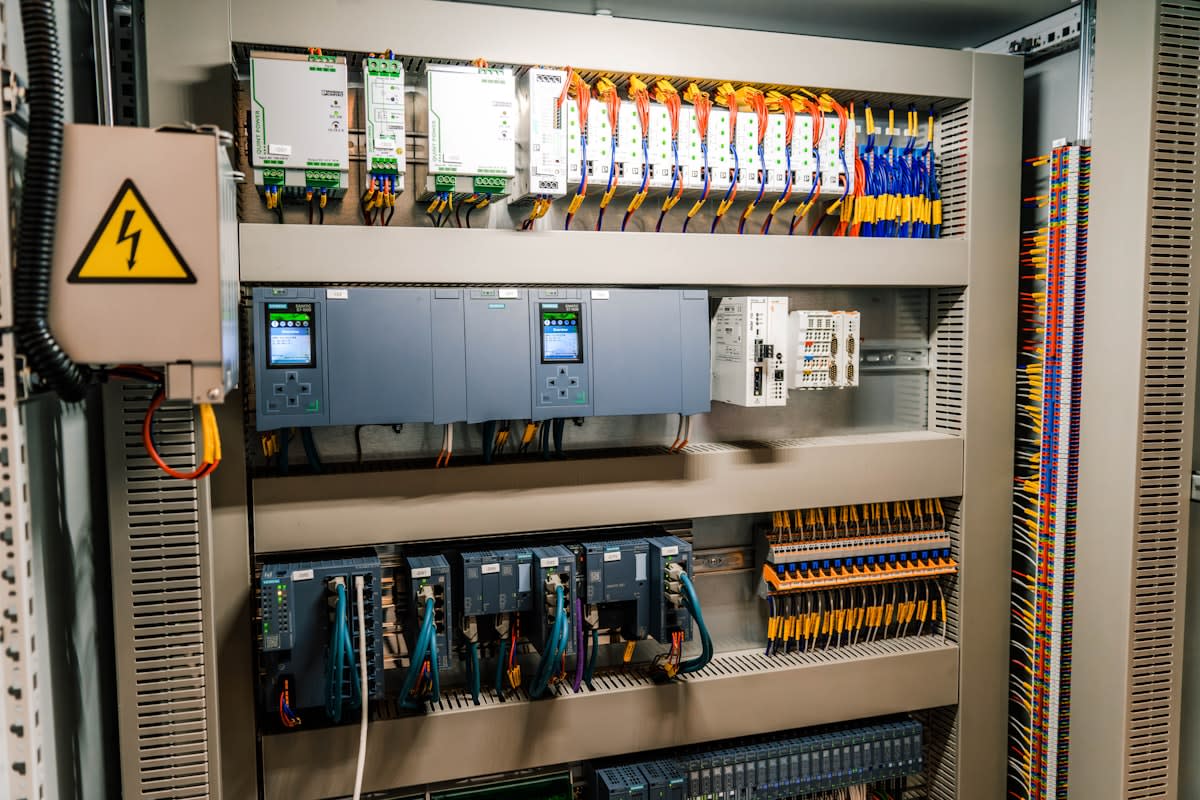
- Vertiv Power Modules for voltage stability
- CoolChip CDUs for liquid-to-liquid heat exchange
- Avalue Industrial PCs with Intel Panther Lake processors
- Lightstorm backhaul connectivity for regional synchronization
- MakinaRocks AI OS Runway for manufacturing orchestration
Hardware selection determines your ceiling. Consumer-grade GPUs will fail in a Pune factory environment due to dust and vibration. Avalue provides industrial PCs powered by Intel Core Ultra and Panther Lake processors designed for these conditions. These platforms balance energy efficiency with the raw throughput needed for Edge AI. Reliability in a dusty warehouse is worth more than a theoretical TFLOP count.
The Cloud Trap
Meta is currently building a cloud business to sell its excess AI capacity. While this increases available compute, it does nothing for the speed of light. Local nodes are the only answer for sub-millisecond response times.
Deployment Sequence
Installation starts with the foundation. Heavy power skids must be leveled and grounded before a single server rack arrives. Electricity must be clean, or you will spend your first month replacing blown capacitors. Once the power is stable, the cooling loop is closed. Any leak in a CDU system will turn your server room into a swamp.
- Install Vertiv Power Skids to stabilize the local grid and provide redundant power feeds.
- Deploy CoolChip CDUs and plumb the liquid cooling lines directly to the AI compute racks.
- Mount Avalue Industrial PCs running Intel Panther Lake processors for localized inference.
- Install the MakinaRocks AI OS Runway to manage the interaction between ML models and factory hardware.
- Configure the data pipeline to eliminate data drift using a modern PLM approach as suggested by IndustryWeek.
- Connect the local node to the Lightstorm backhaul network for synchronization with regional hubs.
Software orchestration is where most projects die. MakinaRocks utilizes an AI OS called Runway to bridge the gap between ML capabilities and manufacturing end-users. This layer allows specialized solutions to be deployed without rewriting the entire stack. Dagem's domain expertise is already being integrated here to accelerate ultra-precision quality control. You cannot just throw a model at a machine and expect it to work.
Data integrity is the final hurdle. Engineers waste up to 27% of their time searching for information according to IndustryWeek. This inefficiency is caused by data drift where the design doesn't match the operation. A unified Digital Thread must be established. This ensures the AI node is making decisions based on current physics, not outdated blueprints.
Connectivity is a long-term game. Lightstorm is leading a consortium to build the I-2SEA subsea cable. This 3,600km system will link Singapore and Malaysia to Hyderabad and Chennai. Service is expected by the fourth quarter of 2029. While this boosts capacity, it is a backhaul solution. Your Pune nodes must operate independently of this cable to maintain zero-latency control.
The Ugly Reality of Failure
Cooling fails first. High-density AI racks turn into space heaters within minutes if the CDU chokes. You will see hardware throttle until the system crawls. This isn't a software bug. It is physics. When the fans scream and the temperature spikes, your AI becomes a paperweight.
Dust destroys everything. Pune's industrial air is thick with particulates that act like sandpaper on motherboard components. Avalue's industrial PCs mitigate this, but neglected filters lead to overheating. Static discharge from poor grounding will pop a chip in a millisecond. One spark can wipe out a month of training data.
Data drift is a silent killer. Your model might work in the lab but fail on the floor because the physical machine has worn down. This disconnect leads to costly errors. Relying on a cloud-based update cycle means your local node is fighting a ghost. Real-time alignment through a PLM approach is the only cure.
| Component | Failure Mode | Physical Consequence |
|---|---|---|
| Vertiv Power Skid | Voltage Spike | Blown Capacitors/Board Death |
| CoolChip CDU | Pump Failure | Thermal Throttling/Meltdown |
| Avalue Edge PC | Particulate Ingress | Short Circuits/Fan Seizure |
| MakinaRocks OS | Data Drift | Incorrect Quality Control Decisions |
Logistics are a nightmare. Shipping heavy power skids from Malaysia to Pune involves customs delays and rough handling. Vertiv's Johor facility speeds up deployment by 50% to 85% compared to traditional builds. Even so, the last mile of delivery in India is where the most damage happens. Inspect every rack for frame warping upon arrival.