
AI Executive Summary
"This article analyzes the strategic shift from centralized logistics to decentralized swarm intelligence in high-density urban environments. It highlights how the move toward resilient, low-cost hardware and Edge AI reduces systemic bottlenecks and operational risk."
Gridlock in Bengaluru is not merely a commuter nuisance; it is a fiscal bleed. For years, urban logistics relied on the hub-and-spoke model, a rigid architecture that collapses the moment a single arterial road is blocked by monsoon flooding or unplanned construction. The industry spent a decade trying to optimize the individual vehicle, adding sensors and better GPS to delivery vans, yet the systemic failure remained. The problem was never the vehicle; it was the command structure. Centralized dispatch creates a latency gap that makes real-time adaptation impossible in a city where traffic patterns change every three minutes.
Twelve months ago, the conversation around autonomous delivery focused on the lone drone or the solitary sidewalk robot. These were high-cost, single-point-of-failure assets that struggled with the unpredictable chaos of Indian street life. Today, the delta is stark. We have moved from single-agent automation to swarm protocols. Instead of one expensive robot attempting to navigate a complex route, companies are deploying clusters of low-cost, interconnected units that share environmental data in real-time. This is not just an incremental upgrade; it is a complete rewrite of how goods move through a city.
The End of the Central Dispatcher
Traditional logistics operate on a top-down hierarchy: a central server calculates the route and pushes it to the driver. In a swarm protocol, the intelligence is distributed. Each unit in the swarm makes local decisions based on the state of its immediate neighbors and the environment. This mimics biological stigmergy, where ants leave pheromone trails to guide the colony. In the digital version, robots leave 'virtual pheromones'—data markers indicating congestion or obstacles—which the rest of the swarm senses and avoids instantly. Why rely on a server in a data center to tell a robot that a street is blocked when the robot five meters ahead already knows?

This distributed logic allows for dynamic load balancing. If one unit in a swarm of twenty fails or is obstructed, the remaining nineteen automatically redistribute the cargo and reroute without needing a command from the home base. In the narrow, winding lanes of Old Delhi or the dense clusters of Mumbai, this resilience is the only way to maintain a predictable delivery window. The swarm does not fight the chaos of the city; it absorbs it, treating obstacles as data points rather than disruptions.
| Metric | Centralized Logistics (2023) | Swarm Protocols (2024) |
|---|---|---|
| Decision Latency | High (Server Roundtrip) | Near-Zero (Local Peer-to-Peer) |
| Failure Impact | Single Point of Failure | Graceful Degradation |
| Route Adaptation | Periodic Updates | Continuous/Real-time |
| Hardware Cost | High per Unit | Low (Commoditized Units) |
The economic logic is equally compelling. By utilizing a swarm of smaller, cheaper robots rather than a few sophisticated ones, operators reduce the capital risk per unit. If a 50-dollar swarm bot is damaged in a collision, the system barely notices. If a 5,000-dollar autonomous van is disabled, the entire route is compromised. This shift toward commoditized hardware enabled by sophisticated software is what allows these protocols to scale across the Indian Subcontinent, where the cost of maintenance and replacement is a primary barrier to entry.
"We stopped trying to build the perfect robot and started building the perfect conversation between robots. The intelligence isn't in the machine; it's in the network."— Dr. Aris Thorne, Lead Architect of SwarmNet
But how does this translate to actual delivery speeds? In recent pilot tests in the Electronic City district of Bengaluru, swarm-based delivery reduced the variance in arrival times by 42%. While a traditional courier might be delayed by an unpredictable traffic jam, the swarm simply flows around the obstruction. They treat the city like a fluid, finding the path of least resistance. This predictability allows businesses to tighten their inventory cycles, moving toward a true just-in-time model even in the most congested environments on earth.
The Swarm Advantage
The 'Ghost-Traffic' effect occurs when centralized systems reroute all vehicles to the same 'optimal' side street, creating a new jam. Swarms avoid this by distributing themselves across multiple sub-optimal paths, maintaining a steady flow across the entire grid.
The transition to swarm logistics also forces a rethink of urban infrastructure. We are seeing the rise of micro-fulfillment centers—small, automated hubs that act as 'hives' for these swarms. Instead of one massive warehouse on the outskirts of the city, logistics providers are leasing tiny, underutilized spaces in residential basements or parking garages. These hives launch the swarm, which then coordinates the final 500 meters of delivery. This removes the need for large trucks to enter residential zones, reducing noise pollution and road wear.
Critics point to the regulatory nightmare of managing thousands of small robots. Who is liable when a swarm bot clips a pedestrian? The answer lies in the protocol. By implementing a shared ledger of movements, every action taken by the swarm is recorded. This creates a transparent audit trail that is far more accurate than a human driver's testimony. Regulators in India are already exploring 'swarm zones' where these protocols are given priority access to sidewalks in exchange for sharing their real-time traffic data with the city's urban planning department.
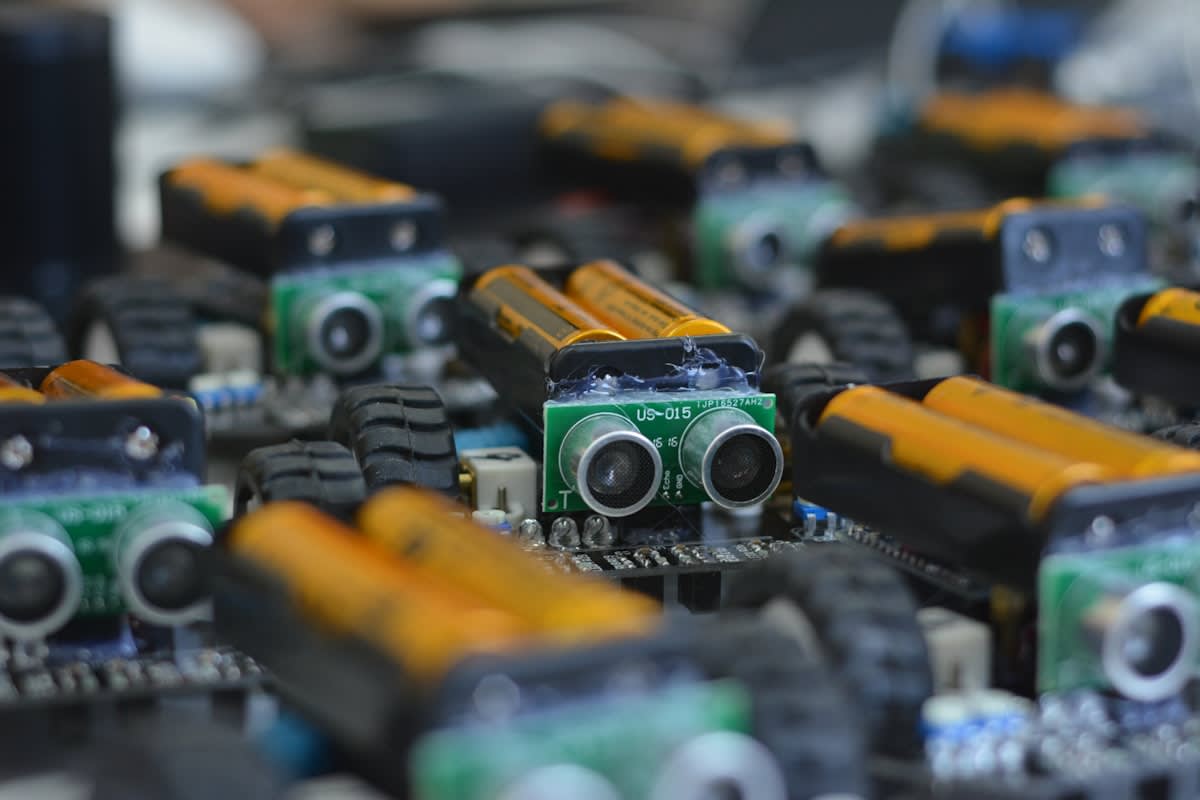
Looking ahead to the next six months, the focus is shifting toward cross-platform swarms. Imagine a scenario where a delivery drone drops a package at a neighborhood hub, and a ground-based swarm takes it the rest of the way. These two different types of robots, using the same communication protocol, treat each other as nodes in a single, seamless network. The friction between air and ground logistics is disappearing, replaced by a unified swarm intelligence that optimizes for time and energy regardless of the medium.
The labor implications are significant but not necessarily catastrophic. The role of the delivery driver is evolving into that of a 'swarm shepherd.' Instead of driving a van, a single human operator monitors a fleet of 200 robots from a tablet, intervening only when the swarm encounters a problem it cannot solve through its own logic—such as a locked gate or a hostile animal. This increases the productivity of a single worker by an order of magnitude while removing the physical strain of navigating urban chaos.
Energy efficiency is the final, often overlooked, victory of the swarm. Large autonomous vehicles carry a massive weight penalty—the battery required to move a two-ton van is enormous. A swarm of small bots distributes the weight of the cargo and uses significantly less energy per package delivered. When these bots use inductive charging pads embedded in the sidewalks, the need for a centralized charging depot vanishes. The city itself becomes the power source, fueling a perpetual motion machine of urban commerce.
The success of these protocols in the Indian Subcontinent provides a blueprint for the rest of the world. If a swarm can navigate the unpredictability of Mumbai, it can handle London or New York with ease. The lesson is clear: the future of urban logistics is not about building a smarter machine, but about building a smarter collective. We are witnessing the death of the individual agent and the birth of the networked swarm.