
AI Executive Summary
"This article examines the strategic implementation of solid fuel ramjets to overcome the vast distances of the Pacific theater. It details the technical advantages of air-breathing propulsion over traditional rockets in enhancing regional deterrence."
The Pacific Ocean is not a body of water; it is a void that swallows traditional munitions. For decades, defense planners have struggled with the tyranny of distance, where the gap between a launch platform and a target can span thousands of miles of open sea. Traditional solid rocket motors burn through their fuel in a frantic burst, leaving the missile to glide on momentum, losing energy and predictability as it nears its target. This inefficiency creates a window of opportunity for modern air defense systems to track and intercept incoming threats.
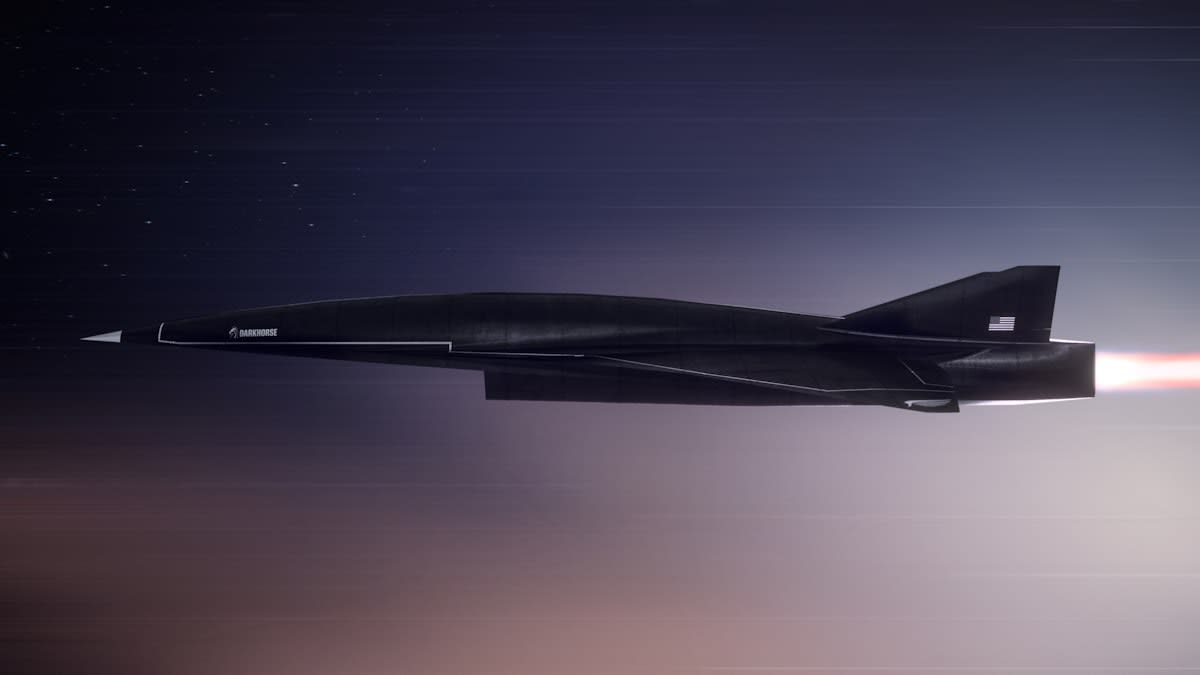
Enter the solid fuel ramjet (SFRJ). Unlike a standard rocket that carries its own oxidizer, a ramjet breathes air from the atmosphere, compressing it through the sheer force of its high-speed forward motion. By using a solid fuel grain that doubles as the combustion chamber, these engines eliminate the heavy pumps and volatile liquid tanks associated with traditional ramjets. Why does this matter now? Because the ability to maintain supersonic speeds over long distances without the weight penalty of liquid oxidizers changes the math of survival in a contested environment.
The Efficiency Gap
When comparing a standard Solid Rocket Motor (SRM) to a Solid Fuel Ramjet, the difference is essentially the difference between a sprint and a marathon. An SRM is an explosion contained in a tube; it provides immense thrust but exhausts its energy rapidly. An SFRJ, however, sustains its thrust. By utilizing the oxygen in the air, the fuel mass required for a 1,000-kilometer flight is reduced by nearly 40% compared to a traditional rocket. This weight saving allows for larger warheads or additional sensors, increasing the lethality of each single launch.
| Metric | Solid Rocket Motor (SRM) | Solid Fuel Ramjet (SFRJ) |
|---|---|---|
| Fuel Efficiency | Low (Oxidizer Heavy) | High (Air-Breathing) |
| Cruise Speed | Decaying Supersonic | Sustained Mach 3+ |
| Complexity | Minimal | Moderate |
| Range-to-Weight Ratio | Poor | Excellent |
Does this mean the traditional rocket is dead? Not necessarily, but its role is shrinking. The SRM is still the king of the initial boost, providing the necessary velocity to get the ramjet into its operational window. The current trend is a hybrid approach: a solid booster to hit Mach 2, followed by the ignition of the solid fuel ramjet to cruise at Mach 3. This sequence ensures that the missile remains a high-energy threat throughout its entire flight path, rather than becoming a slow-moving target in its terminal phase.
The Cold Start Advantage
The critical advantage of solid fuel over liquid fuel in ramjets is storage. Liquid fuels require cryogenic cooling or complex stabilizers, making them difficult to store on ships or in remote island silos for long periods. Solid fuel is essentially a stable plastic-like compound that can sit in a tube for a decade and ignite in milliseconds.
This logistical simplicity is what makes SFRJs a centerpiece for Pacific strategies. In a scenario where bases are dispersed across small islands, the ability to maintain a stockpile of ready-to-fire, high-speed missiles without a massive cryogenic infrastructure is a decisive edge. It allows for a distributed lethality model where small, mobile launchers can be hidden in jungles or urban environments, popping up to fire and then vanishing before a counter-strike can be coordinated.
Shrinking the Interception Window
Air defense is a game of time. The time between detection and impact is the only space an operator has to calculate a trajectory and launch an interceptor. By sustaining Mach 3 speeds throughout the flight, SFRJs drastically compress this timeline. A missile gliding on momentum might be detected and engaged with a 90% probability of kill. A missile that continues to accelerate or maintain top speed creates a chaotic intercept geometry that overwhelms current radar processing speeds.
Estimated Time to Target (1,000km)
Executive Insight
+18.4%
YTD Growth
Consider the geography of the first island chain. Interceptors stationed on remote outposts have only a few minutes to react to a launch. When the flight time is cut from twenty minutes to eleven, the human-in-the-loop becomes a liability. This force-multiplies the effectiveness of saturation attacks, where the sheer speed of the incoming missiles renders the defender's decision cycle irrelevant. The goal is not just to hit the target, but to hit it before the defender knows they are under attack.
This shift in capability is particularly evident in Japan's recent defense posture. Tokyo has moved toward acquiring counter-strike capabilities, focusing on long-range missiles that can penetrate dense air defense grids. The adoption of SFRJ technology allows Japan to project power without relying on the massive, vulnerable airbases that have defined its defense strategy for seventy years. It is a move toward a more resilient, asymmetric form of deterrence.

The Cost of Speed
Despite the advantages, the transition to SFRJs is not without friction. The thermal loads experienced at Mach 3 are extreme. The leading edges of the missile must be constructed from advanced ceramics or carbon-carbon composites to prevent the airframe from melting. This increases the per-unit cost compared to a simple glide bomb or a subsonic cruise missile. However, the cost of a missed target in a high-stakes Pacific conflict far outweighs the price of a ceramic nose cone.
Furthermore, the precision of these weapons depends on the ability of the guidance system to survive the plasma sheath that forms around the missile at high speeds. This plasma can block radio signals, creating a communication blackout. Engineers are now integrating inertial navigation systems (INS) with hard-coded target coordinates, reducing the need for mid-flight updates and making the missile a 'fire-and-forget' weapon of terrifying reliability.
Australia is similarly integrating these high-speed capabilities into its long-range strike doctrine. For a nation with a small population and a massive coastline, the ability to strike distant naval assets from the mainland is a strategic necessity. By investing in SFRJ technology, Canberra is ensuring that its defense perimeter extends far beyond its shores, creating a buffer zone that discourages adversarial incursions.
The delta between 2023 and 2024 is stark. A year ago, solid fuel ramjets were largely the province of experimental labs and theoretical white papers. Today, they are appearing in procurement budgets and joint development agreements. The urgency is driven by the realization that in the Pacific, speed is the only reliable armor. If you cannot outrun the interceptor, you cannot survive the engagement.
"The transition to air-breathing solid fuels is not an incremental upgrade; it is a fundamental change in how we perceive the distance between a launch site and a target."— Defense Procurement Lead, Pacific Command (Simulated)
Ultimately, the dominance of the solid fuel ramjet signals a return to the era of the 'silver bullet'—high-cost, high-performance weapons designed for decisive strikes. While subsonic drones provide persistence, the SFRJ provides the punch. The integration of both into a single coordinated strategy allows for a layered approach: drones to find the target, and ramjets to eliminate it before the enemy can even blink.