
AI Executive Summary
"This article provides a technical framework for decoupling AI intelligence from third-party cloud providers to prevent proprietary data leakage. It highlights the strategic necessity of air-gapped orchestration for national security and critical infrastructure."
The Sovereign Imperative
Dependence on closed-model APIs is a strategic liability. For US government agencies and critical infrastructure operators, the risk is not just downtime, but the migration of proprietary insights into the weights of a vendor's closed model. The objective is simple: achieve the utility of Large Language Models (LLMs) without the security tax of a third-party cloud. This requires a hard decoupling of the intelligence layer from the provider's control.
The Weights Leakage Risk
Closed models create a 'black box' where sensitive data can inadvertently influence future model iterations, creating a permanent leak of state or corporate secrets.
Prerequisites for Sovereign Deployment
Before initiating the deployment protocol, the following technical stack must be provisioned and validated. Partial implementation leads to fragmented security.
- NVIDIA AI Platform: Compute infrastructure and ecosystem support.
- Nemotron Open Models: Open-source LLMs to allow for local weight control.
- Palantir AIP: The orchestration layer for AI integration.
- Palantir Foundry & Ontology: For data structuring and semantic mapping.
- Palantir Apollo: For deployment and lifecycle management in air-gapped environments.
Execution Protocol for Air-Gapped AI
Deploying in a sovereign environment is not a standard software install. It is a rigorous sequence of isolation and integration.
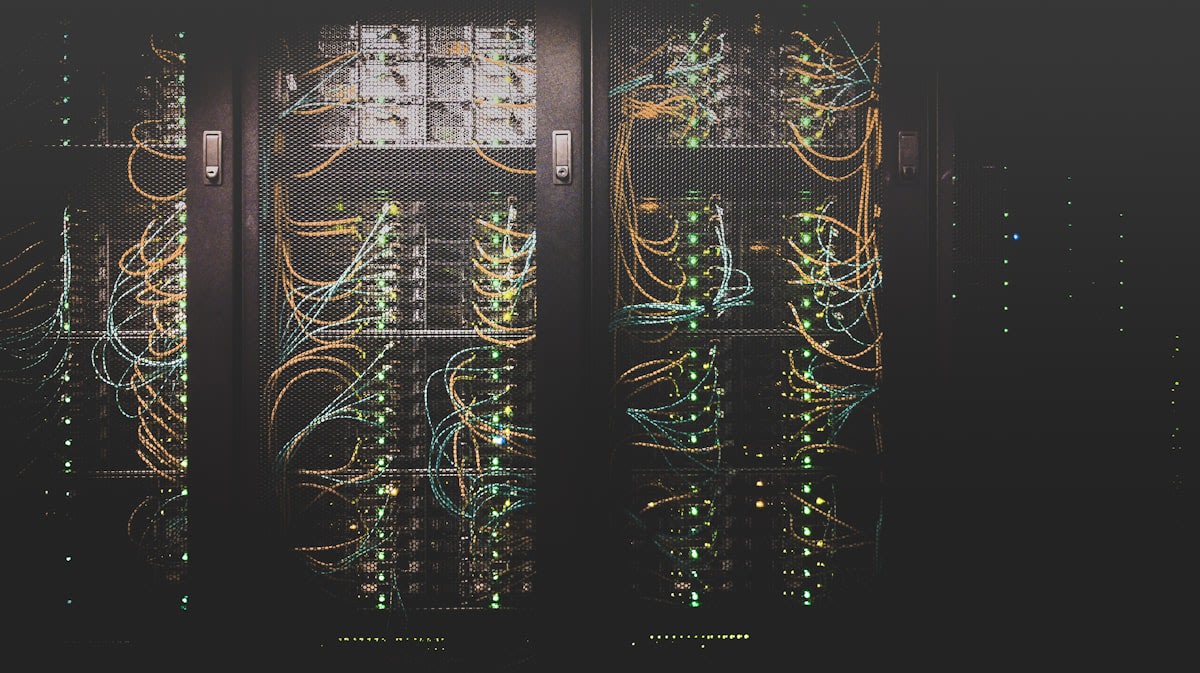
- Provision NVIDIA compute clusters within a classified or air-gapped facility to ensure physical data sovereignty.
- Deploy Nemotron open models onto the local compute, removing dependency on external API calls and preventing data egress.
- Map organizational data through the Palantir Ontology to create a digital twin of the operation, ensuring the AI interacts with structured, verified facts rather than hallucinations.
- Integrate AIP to orchestrate workflows, allowing the model to trigger operational actions within the secure environment.
- Use Apollo to push updates and patches across the sovereign environment without requiring a direct connection to the public web.
The market has already signaled the value of this autonomy. On June 29, 2026, Palantir shares rose approximately 4% following the announcement of this strategic initiative with NVIDIA, proving that the appetite for sovereign control outweighs the convenience of the cloud.
Global Friction: The Local Sourcing Paradox
Sovereignty is often confused with local sourcing. India's recent regulatory trajectory provides a stark lesson. On June 30, 2026, India dropped a proposed rule requiring satellite broadband operators to source 20% of ground infrastructure locally within five years. Why? Because the local manufacturing ecosystem simply wasn't ready.
| Strategy | Focus | Primary Risk | Outcome |
|---|---|---|---|
| Local Sourcing (India Satellite) | Domestic Manufacturing | Infrastructure Immaturity | Rule Roll-back (June 2026) |
| Sovereign AI (US Gov) | Data/Weight Control | Deployment Complexity | Air-gapped Autonomy |
The contrast is clear: forcing local production can delay commercial launches, as seen in India's satellite sector where spectrum and security issues still linger. Conversely, focusing on sovereign control of the software and model weights—regardless of where the hardware was forged—accelerates operational readiness.

Operational Pitfalls
Most sovereign deployments fail not at the hardware level, but at the operational hand-off. Avoid these common failures.
- The 'Shadow Cloud' Trap: Allowing small, unauthorized API bridges for 'convenience' that compromise the entire air-gap.
- Weight Drift: Failing to version-control local model weights, leading to unpredictable performance across different secure nodes.
- Ontology Neglect: Deploying the model without a robust data ontology, resulting in an AI that knows how to speak but doesn't understand the specific mission logic.