
AI Executive Summary
"This article analyzes the geopolitical pivot from software-centric AI to infrastructure-centric 'sovereign compute.' It highlights how national security and financial inclusion are driving a global move away from hyperscaler dependence toward localized silicon and data sovereignty."
The End of the Hyperscaler Monopoly
The map of global AI is being redrawn in real-time. On June 29, 2026, Kyivstar and the Ukrainian Ministry of Economy signed an MoU to build a sovereign AI-ready data center. This isn't just about tech; it is a survival strategy. By keeping critical processing within national borders, Ukraine is slashing latency for robotic systems and industrial facilities while shielding sensitive defense and financial data from foreign cloud jurisdictions.
The Latency Mandate
Sovereignty is no longer a buzzword for policymakers. It is a technical requirement for response-critical AI where every millisecond of latency can be the difference between system failure and operational success.
Europe is following a similar trajectory. While American hyperscalers still dominate the balance sheets, European telcos are aggressively pivoting toward sovereign cloud solutions. They are no longer content being mere pipes for others' data; they want to own the intelligence layer.
"We expect to see a lot more sovereign play from telcos in the next months, quarters, and years, because the world is not coming together."— Marina Koytcheva, Research Director at STL Partners
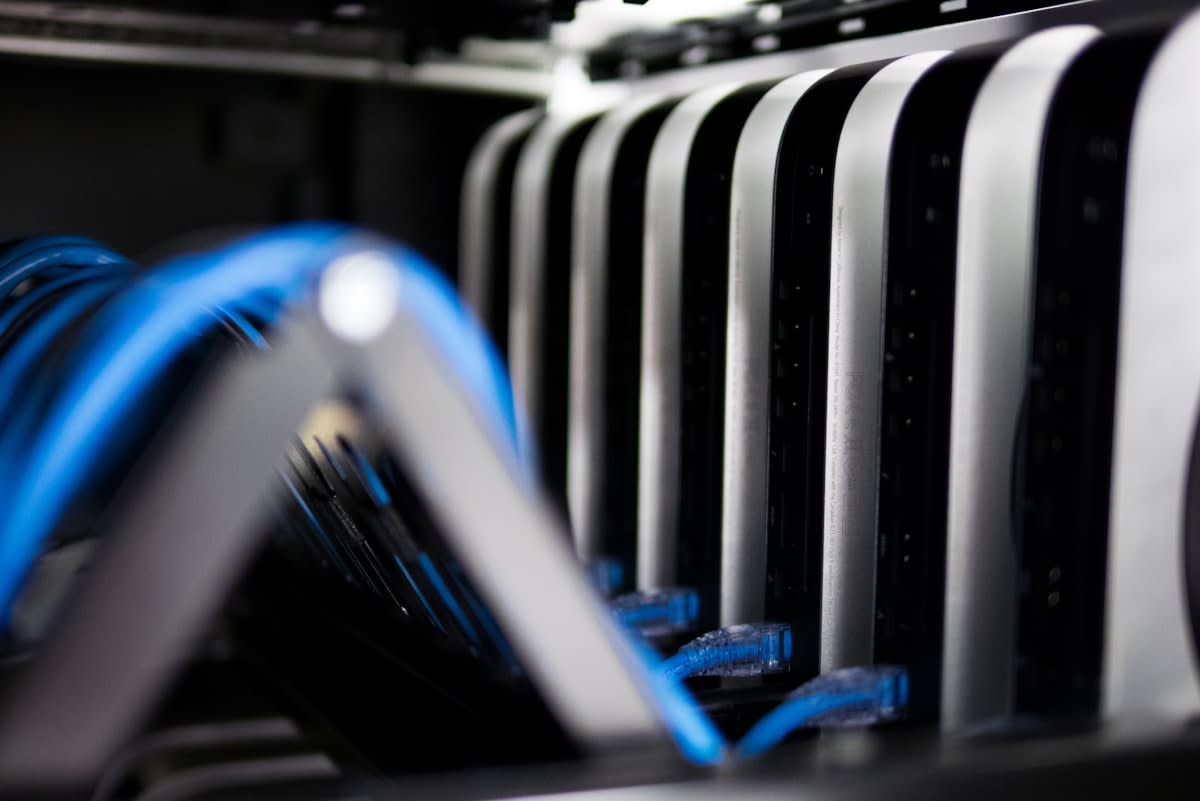
This shift reveals a stark delta from a year ago. In 2025, the conversation focused on which LLM was the smartest. In June 2026, the conversation has shifted to who owns the silicon and where that silicon physically sits.
Silicon Warfare: TPUs vs. GPUs
Alphabet is weaponizing its in-house Tensor Processing Units (TPUs) to break the Nvidia stranglehold. Google Cloud is no longer just a place to rent VMs; it is a TPU powerhouse. Wall Street expects Google Cloud revenue to surge 64% this year to $96 billion, with growth projected to stay above 50% into 2027.
| Metric | Google Cloud (2026 Projection) | 2027 Outlook |
|---|---|---|
| Revenue | $96 Billion | 50%+ Growth |
| Annual Growth Rate | 64% | Sustained Expansion |
But raw speed isn't everything. Cerebras Systems has produced a wafer-scale chip that delivers a staggering 21x speed advantage over Nvidia hardware. They even secured a $20B+ deal with OpenAI. Yet, they are hitting a wall: the CUDA software moat. Because almost every major LLM framework optimizes for Nvidia's CUDA, Cerebras is forced into costly custom engineering to make their speed usable.
While the West fights over chips, the East is scaling AI to the masses at a speed that makes Silicon Valley look tentative.
The Billion-Transaction Milestone
In Mumbai, Dilip Asbe, head of the National Payments Corporation of India (NPCI), is eyeing a massive target: exceeding one billion daily transactions via the Unified Payment Interface (UPI). This isn't just about adding more users; it is about using AI to bring the next half-billion people into the digital economy.
- Multilingual voice assistants to onboard non-English speakers.
- AI-driven fraud prevention to secure a billion-transaction daily volume.
- Simplified credit distribution for entrepreneurs using digital footprints.
India's approach proves that AI's greatest value isn't in generating poems or images, but in removing friction from the basic movement of money. By integrating voice models and multilingual interfaces, NPCI is turning AI into a tool for financial inclusion rather than an elite corporate luxury.