
AI Executive Summary
"This article provides a technical and strategic framework for individuals to reclaim their health data through a 'Sovereign Health Stack.' It demonstrates how synthesizing high-fidelity biometrics with advanced AI reasoning can accelerate diagnosis and optimize preventative care."
For decades, the medical model has been reactive, waiting for a symptom to become a crisis before triggering a diagnostic response. This lag is where chronic illness takes root and rare diseases hide in plain sight. But a shift is occurring. We are seeing the emergence of the Sovereign Health Stack, a personal infrastructure where the individual owns the data acquisition, the synthesis, and the early warning signals. Why wait for a scheduled appointment when your own biometric trends can signal a deviation weeks in advance?
The tools for this transition are already in the wild. From the elite performance vests used by World Cup athletes to the deep-research capabilities of models like OpenAI's o3, the gap between professional sports medicine and consumer health is closing. The goal is no longer just 'wellness' but 'precision orchestration.' By treating your body as a data stream rather than a mystery, you can move from being a passive recipient of care to an active manager of your own biological destiny.
Prerequisites: The Sovereign Toolkit
The Infrastructure Requirement
To build a functional early warning system, you need three distinct layers: a high-fidelity sensor array for continuous data, a structured narrative log for contextual qualitative data, and a reasoning engine (LLM) to synthesize the two.
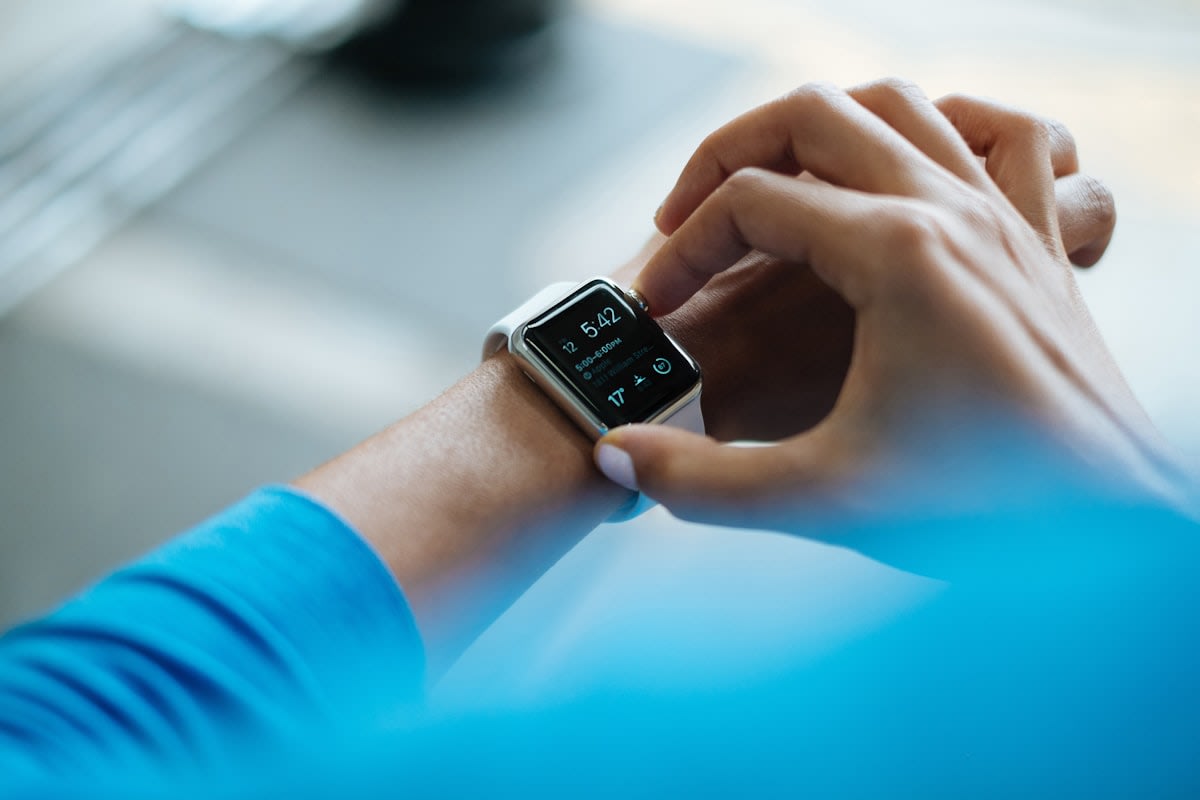
- Biometric Wearables: Devices capable of tracking HRV, sleep stages, and body temperature (e.g., Oura Ring, WHOOP, or Fitbit Air).
- Specialized Sensors: Emerging tech like the hormone-tracking bracelets being developed by startups like Clair Health to monitor endocrine shifts.
- Contextual Logging Software: A digital notebook or dedicated app for symptom tracking and clinician correspondence.
- Reasoning Models: Access to advanced AI tools, specifically those with deep research capabilities like OpenAI's o3, for pattern recognition.
The Implementation Blueprint
- Deploy the Sensor Array: Begin by establishing a biometric baseline. Follow the lead of World Cup athletes who use sweat patches and performance vests to track recovery and sleep trends. Use devices like the Fitbit Air or Whoop to identify your 'normal' heart rate and sleep architecture. When these metrics deviate—such as a spike in resting heart rate or a drop in sleep quality—you have your first early warning signal that the body is under stress before you even feel a symptom.
- Construct the Narrative Log: Quantitative data is useless without qualitative context. Emulate the approach of patient advocates like Kimberley Rivero, who maintains a 50-page symptom log and over 100 pages of AI-assisted correspondence. Document every flare-up, dietary change, and environmental trigger. This log transforms raw data into a story that an AI can actually analyze, providing the necessary 'ground truth' for the reasoning engine.
- Implement the AI Synthesis Layer: Feed your structured logs and biometric trends into a deep-research model. The power of this approach was proven at Boston Children's Hospital, where OpenAI's o3 model analyzed genomes and clinician notes to diagnose 18 children with rare diseases—a 5% success rate among a cohort of 376 previously undiagnosed patients. By inputting your symptom logs and biometric anomalies, you can use AI to generate a list of potential differentials to discuss with your doctor, effectively narrowing the search space for a diagnosis.
- Execute the Cross-Reference Protocol: Never rely on a single AI output. Use multiple chatbots to stress-test medical advice and explore alternative care. Consider the case of a patient in Colorado who used AI to cross-reference Ayurvedic medicine with her clinical history, discovering that a recommended herbal treatment could have reactivated a hepatitis B infection in her liver. This layer of the stack acts as a safety filter, identifying contradictions between different care modalities before they become dangerous.
- Integrate with Clinical Systems: Use your synthesized data to advocate for precise care. As the NHS in England rolls out AI triage tools to direct patients to the most appropriate services by April 2028, the patients who will benefit most are those who arrive with their own data. Instead of describing a vague feeling, present your AI-synthesized trends and symptom logs. This transforms the clinical encounter from a guessing game into a data-validation session.
The transition to a sovereign stack requires a fundamental change in how we view the doctor-patient relationship. It is no longer a hierarchy of knowledge but a partnership of data. When you bring a 50-page symptom log and a biometric trend report to a GP, you are providing the clinician with a high-resolution map of your health. This reduces the diagnostic odyssey that so many patients with rare conditions endure, turning years of uncertainty into weeks of targeted investigation.
Consider the financial and intellectual investment currently flowing into this space. The $11.6 million seed funding for Clair Health's hormone-tracking bracelet signals a market realization: the most valuable health data is the data that is captured continuously, not episodically. By tracking hormones in real-time, users can anticipate mood shifts, metabolic changes, and reproductive health issues with a level of precision previously reserved for clinical trials.
Analyzing the Diagnostic Delta
| Component | Traditional Approach | Sovereign Stack Approach | Expected Outcome |
|---|---|---|---|
| Data Collection | Episodic (Annual Checkup) | Continuous (Wearables) | Early Detection of Deviations |
| Symptom Tracking | Memory-based Recall | Structured Narrative Logs | High-Fidelity Patient History |
| Diagnosis | Clinician Intuition | AI-Assisted Pattern Recognition | Faster Rare Disease Identification |
| Treatment | Standard Protocol | Cross-Referenced Personalization | Reduced Adverse Interactions |
The efficacy of this system is not theoretical. The 5% diagnosis rate achieved by Boston Children's Hospital using the o3 model demonstrates that AI can spot errors in genomes and patterns in clinician notes that human eyes miss. For the average person, this means the ability to flag 'invisible' symptoms. When your wearable shows a consistent 1-degree rise in body temperature and your log shows increased fatigue, the AI can synthesize these into a signal that warrants a specific blood test, rather than a generic 'you're just stressed' response.

Common Pitfalls and Guardrails
The most dangerous error in building a Sovereign Health Stack is the 'Confirmation Bias Loop.' This occurs when a user prompts an AI to find a specific diagnosis, and the AI, designed to be helpful, hallucinates evidence to support that theory. To avoid this, always use 'adversarial prompting.' Ask the AI to argue against your hypothesis or to provide three alternative explanations for your symptoms. This mimics the clinical process of differential diagnosis and prevents the user from spiraling into health anxiety.
Another risk is the neglect of the clinical baseline. While AI can identify patterns, it cannot perform a physical exam or order a biopsy. The Sovereign Stack is a tool for advocacy and early warning, not a replacement for professional medical judgment. The goal is to arrive at the doctor's office with the right questions, not the 'correct' answer. As the NHS England chief executive Sir Jim Mackey noted regarding their AI triage tool, a health professional must remain the one making decisions at key points in the process.
"The power of AI in health is not in replacing the doctor, but in empowering the patient to provide the doctor with the exact data needed to be successful."— Master Practitioner Perspective
Finally, be wary of data fragmentation. If your sleep data is in one app, your hormone data in another, and your symptom logs in a notebook, the synthesis layer fails. The strength of the stack lies in the integration. Centralize your data in a format that can be easily exported or fed into an LLM. This ensures that when you identify a trend, you are looking at the whole human, not just a disconnected set of metrics.