
AI Executive Summary
"This article analyzes the strategic shift toward sovereign midstream mineral processing in Australia and Canada to reduce geopolitical risk and eliminate offshore dependencies. It further connects these material advancements to the critical power requirements of AI data centers and next-gen semiconductor roadmaps."
Port Kembla's Silicon Surge
Australia just injected 45 million dollars into Sicona Battery Technologies. This funding targets silicon-based anode scale-up in Port Kembla. Federal officials intend to bypass offshore processing entirely.
Sicona Production Capacity Delta
Executive Insight
+18.4%
YTD Growth
Production capacity will jump by 300 times. Such a leap moves the technology from a controlled pilot environment to full commercial volume. The cost of failing this transition is a continued reliance on foreign processing hubs.
Strategic Intent
The Future Made in Australia agenda is no longer about digging holes; it is about the chemistry of the anode.
National security now depends on midstream capabilities. Processing raw minerals locally captures value that previously leaked to offshore refineries.
This industrialization in New South Wales mirrors a similar push in North America.
Canadian Graphite Front
Quebec is hosting a different play. Metals Australia is building a BAM refinery in Baie-Comeau. Their goal is converting flake graphite into coated spherical purified graphite (CSPG).

| Location | Material Focus | Strategic Objective |
|---|---|---|
| Port Kembla, AUS | Silicon Anodes | 300x Scale-up |
| Baie-Comeau, CAN | CSPG Graphite | Integrated Downstream Refinery |
Integration is the key metric here. Combining the Lac Carheil mine with a downstream refinery prevents the shipping of raw concentrates across oceans. Logistics costs drop when the refinery sits next to the pit.
Material science is now colliding with energy infrastructure requirements.
AI Power Demands
Data centers are creating spiky power loads. Superdielectrics is testing Faraday battery cells to handle these fluctuations. QinetiQ results confirm these cells outperform lithium-ion in high-power use cases.
"We now have proven results, that at the pouch cell level there is outperformance of lithium-ion in high power use cases and fluctuating power, and sub zero temperatures."— Jane Hunter, CEO of Superdielectrics
Fire prevention is the primary driver for AI hubs. Faraday technology reduces the risk of battery fires during intense training cycles. Stable power outputs are mandatory for the next generation of compute.
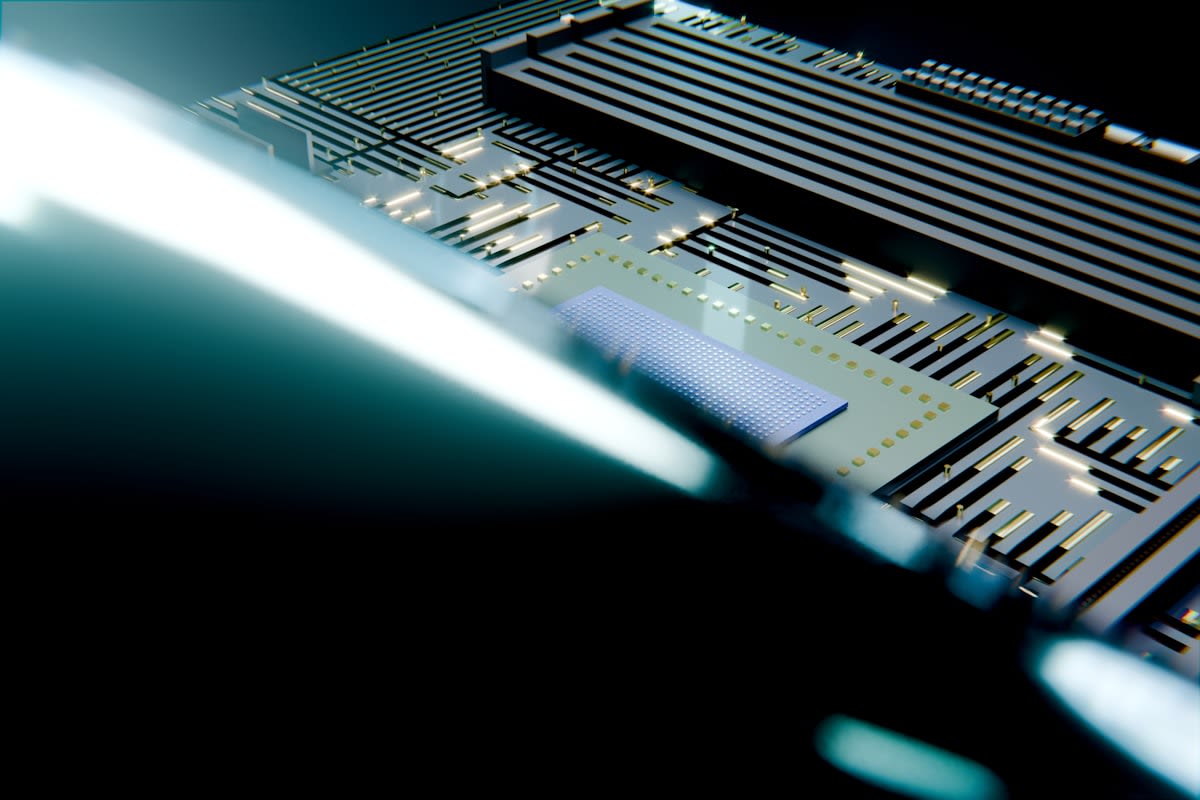
Hardware timelines are stretching. Samsung reaffirmed 1.4nm mass production for 2029. The SF1.4+ process follows in 2030.
Precision is the only remaining lever. These nanometer milestones dictate the efficiency of the very AI clusters that Superdielectrics aims to power.