
AI Executive Summary
"This article analyzes the transition from centralized orchestration to emergent swarm logic in robotics. It highlights the strategic shift toward local interaction protocols to solve scalability bottlenecks in industrial and agricultural Embodied AI."
For a decade, the dream of autonomous coordination relied on a flawed premise: the Master Controller. The industry attempted to scale robotics by building increasingly powerful central servers that could track every coordinate of every unit in a fleet, processing data and beaming back commands in real-time. This architecture created a catastrophic bottleneck. As the number of robots grew, the communication overhead expanded exponentially, leading to latency spikes and systemic collapses. The system was only as strong as its single point of failure.
The shift happening right now is not about faster processors or better 5G connectivity. It is a fundamental pivot toward decentralized swarm protocols. Instead of asking a central brain to tell a robot where to go, engineers are implementing local interaction rules. These protocols allow individual agents to make decisions based solely on the state of their immediate neighbors. When thousands of these simple, local decisions align, a global, intelligent behavior emerges. We are seeing a transition from orchestration to emergence.
The Delta: From Orchestration to Emergence
Comparing the operational landscape of today to just twelve months ago reveals a stark divergence in strategy. A year ago, the industry standard for warehouse automation involved rigid, pre-mapped paths and centralized traffic control. If a single unit stalled, the central server had to recalculate paths for the entire fleet, often causing a ripple effect of delays. Today, the deployment of Laplacian consensus algorithms has shifted the burden of coordination to the edge. Robots now 'negotiate' right-of-way in milliseconds through peer-to-peer handshakes, eliminating the need for a central arbiter.
| Metric | Centralized Orchestration (2023) | Decentralized Swarm (2024) |
|---|---|---|
| Communication Latency | O(n) - Scales with fleet size | O(1) - Constant local overhead |
| Failure Point | Single (Central Server) | Distributed (No single point) |
| Deployment Speed | Slow (Requires full mapping) | Rapid (Plug-and-play emergence) |
| Coordination Limit | Hundreds of units | Thousands of units |
Why does this matter immediately? Because it solves the scalability paradox. In a centralized system, adding the 1,001st robot adds more complexity to the server than the 100th robot did. In a swarm protocol, the 1,001st robot only cares about the five robots nearest to it. The computational cost remains flat regardless of whether the swarm consists of ten units or ten thousand. This is the leap that makes massive-scale autonomy economically viable for the first time.
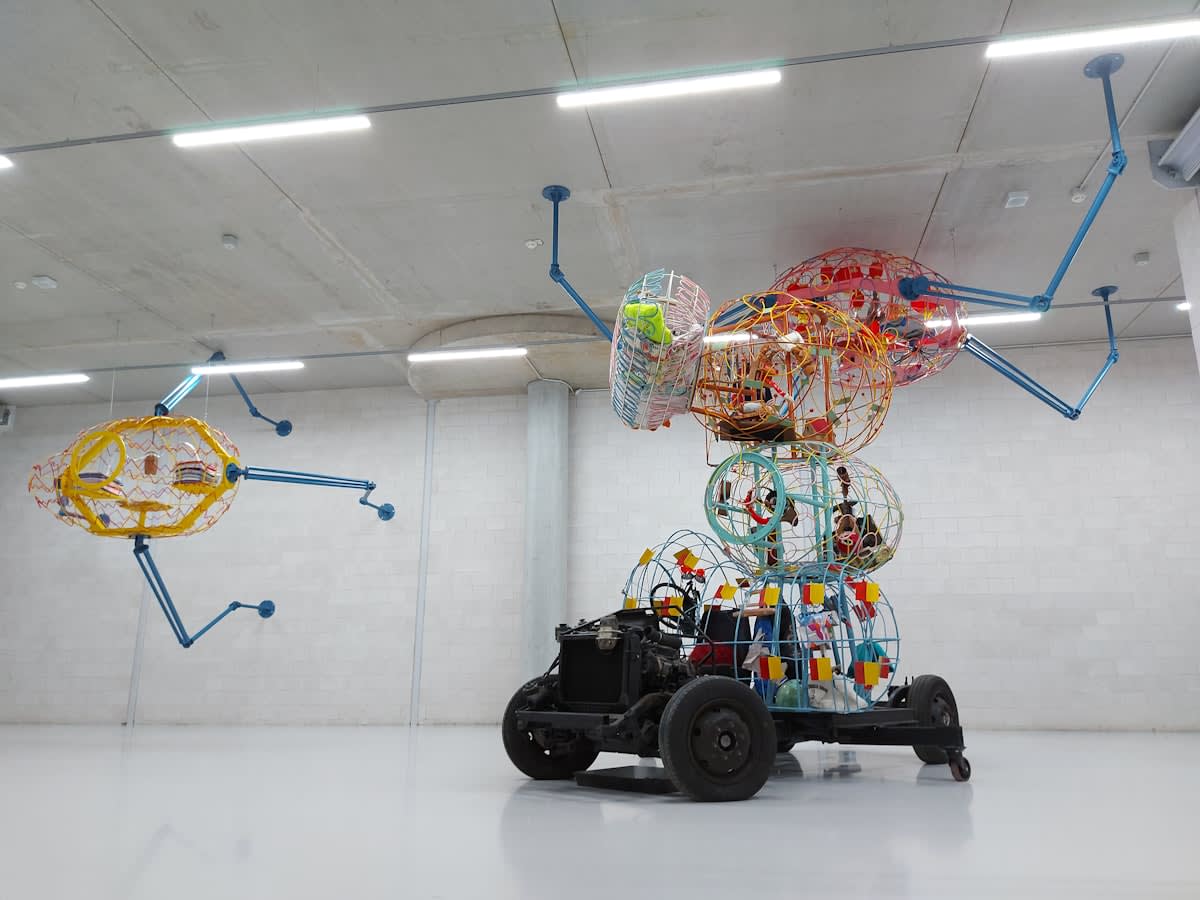
The technical engine driving this shift is bio-inspired stigmergy. Borrowed from ant colony optimization, stigmergy allows robots to leave 'digital pheromones' in a shared environment. Rather than sending a direct message to another robot, a unit modifies the environment—marking a zone as 'explored' or 'obstructed' in a shared spatial database. Other robots sense these markers and adjust their behavior accordingly. This asynchronous communication removes the need for constant, high-bandwidth connectivity, allowing swarms to operate in signal-denied environments.
The Resilience Factor
The Byzantine Generals Problem in robotics is the risk of a 'rogue' or malfunctioning unit sending false data to the swarm. Modern protocols solve this through weighted consensus, where a unit's influence is diminished if its reported state contradicts the majority of its immediate neighbors.
Looking at global implementations, the impact is already visible in Singapore's automated port logistics. By moving away from a central traffic manager and toward swarm-based coordination, throughput has increased by an estimated 30% in specific pilot zones. The robots no longer wait for 'permission' to move; they fluidly flow around obstacles and each other, mimicking the efficiency of a school of fish. The reduction in idle time is a direct result of removing the round-trip latency to a central server.
Similarly, in the agricultural sectors of Brazil, swarm protocols are being deployed for precision crop monitoring. Instead of one large, expensive drone covering a massive area—which is prone to total mission failure if the aircraft crashes—operators are deploying swarms of twenty smaller, cheaper units. These units use flocking algorithms to maintain an optimal sensor grid. If three drones fail, the remaining seventeen automatically redistribute themselves to fill the gap, ensuring 100% coverage without human intervention.
System Efficiency vs. Fleet Size
Executive Insight
+18.4%
YTD Growth
The transition to swarm logic forces a complete rethink of hardware. We are moving away from 'heavy' robots with onboard supercomputers toward 'light' robots with specialized, low-power ASICs designed specifically for local communication and rapid consensus. This reduction in onboard compute lowers the cost per unit, allowing companies to deploy quantities of hardware that were previously cost-prohibitive. The intelligence is no longer in the machine; it is in the protocol.
But this shift introduces a new, unsettling challenge: predictability. In a centralized system, you can audit the server logs to see exactly why a robot made a specific move. In a swarm, the behavior is emergent. The 'decision' to move left or right is the result of a thousand tiny interactions. This makes traditional debugging nearly impossible. Engineers are now forced to move from deterministic programming to probabilistic validation, treating their robotic fleets more like biological populations than software products.
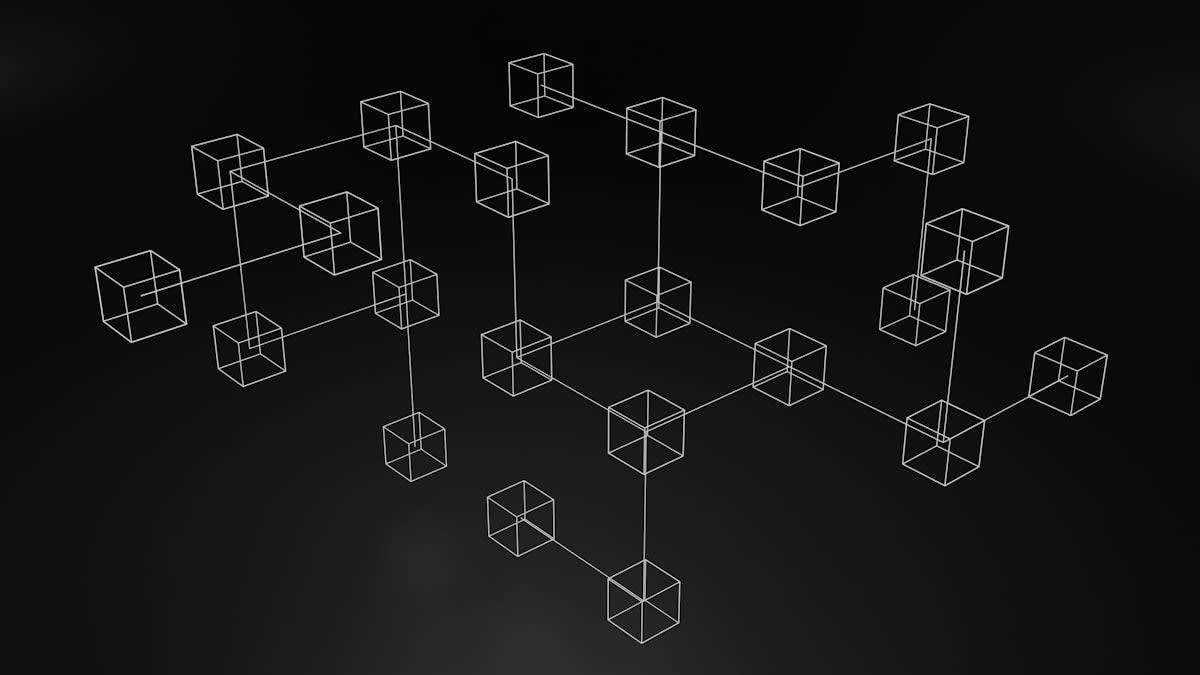
We must ask: what happens when these protocols encounter adversarial environments? The resilience of a swarm is its greatest asset, but its openness is a liability. If an attacker can inject a 'poison' rule into a few units, the emergent behavior of the entire swarm could be steered toward a catastrophic failure. The next frontier of swarm research is not better coordination, but cryptographically secured consensus—ensuring that the local rules being followed are authentic and untampered.
The immediate 'so what' for the industry is clear. Any company still investing heavily in centralized control architecture is building a legacy system. The competitive advantage has shifted to those who can design the most efficient local interaction rules. The goal is no longer to control the robot, but to curate the environment and the ruleset that allow the robot to control itself.
Ultimately, robotic swarm protocols are solving the coordination problem by embracing chaos. By accepting that we cannot know the exact position and intent of every unit at every microsecond, we gain the ability to deploy fleets of unprecedented scale. The silence of these protocols—the fact that they happen in the background without a master conductor—is exactly why they are the most disruptive force in autonomous systems today.