AI Executive Summary
"This article analyzes the paradigm shift from hard-coded robotics to Embodied AI via VLA models. It highlights the strategic transition of labor from a mechanical problem to a data optimization challenge, redefining industrial competitive advantage."
For decades, the robotics industry operated under a delusion of precision. Engineers spent thousands of hours writing explicit scripts for every single millimeter of a robotic arm's movement, treating the physical world as a static grid. If a component on a conveyor belt shifted by two centimeters, the entire system failed because the robot lacked the cognitive flexibility to perceive the error and adjust. This was not a failure of hardware, but a failure of imagination; we were trying to solve fluid physical problems with rigid mathematical constants.
The emergence of Vision-Language-Action (VLA) models represents a violent departure from this legacy. Instead of separating perception, planning, and execution into discrete modules, VLAs collapse them into a single token stream. A robot no longer sees a 'cylinder at coordinates X, Y, Z'; it understands the semantic concept of a 'soda can' and associates that concept with the motor commands required to grasp it. This shift means that the bottleneck for automation has moved from the mechanical engineer's workbench to the data scientist's GPU cluster.
The End of Hard-Coded Motion
Consider the architecture of models like RT-2. By training on both web-scale text-image data and robotic trajectory data, these systems acquire a form of common sense that was previously impossible. When told to 'pick up the dinosaur,' a VLA-powered robot can identify a toy dinosaur it has never seen before, not because it was programmed with a dinosaur-specific CAD model, but because it understands what a dinosaur is from the internet. The physical action is simply the final token in a long chain of semantic reasoning.
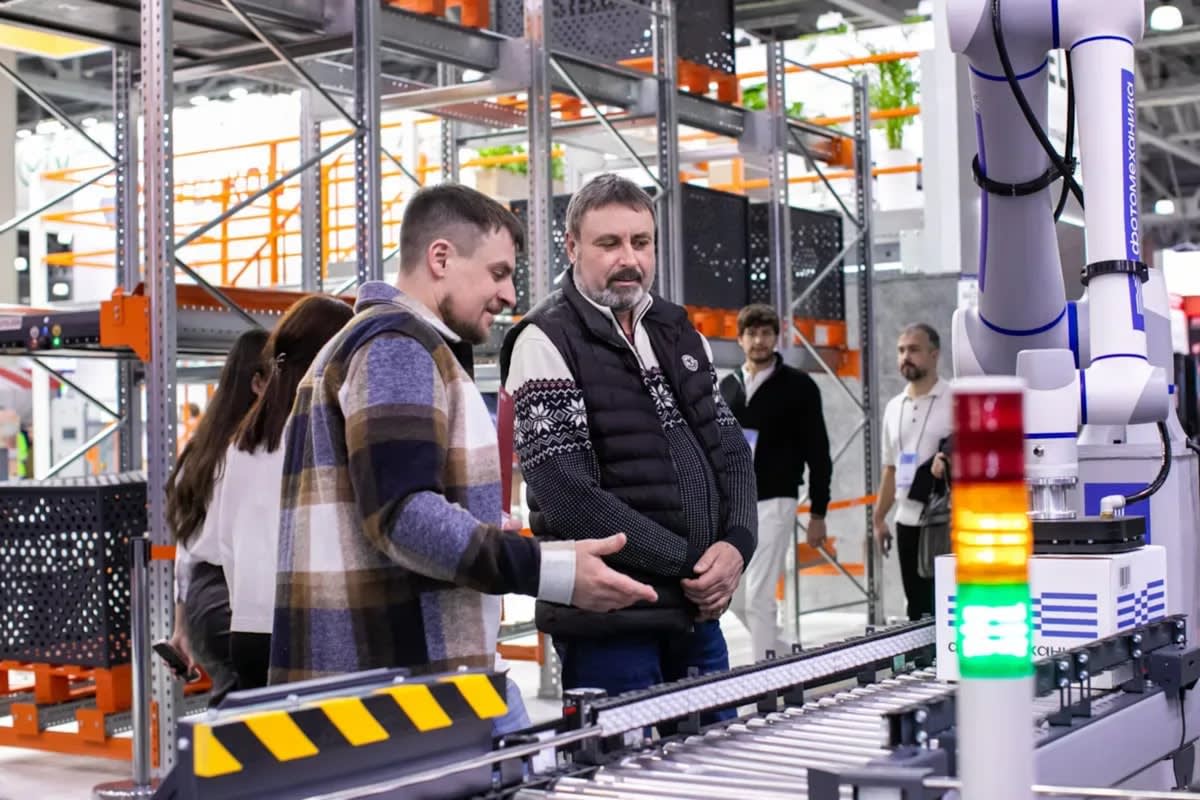
Why does this matter for the global economy? Because it solves the 'long tail' problem of robotics. In traditional automation, the last 5% of edge cases—the weirdly shaped box, the spilled liquid, the misplaced tool—required 95% of the engineering effort. VLAs handle these anomalies through generalization. By treating physical movement as a language, the robot can 'infer' the correct motion for an unfamiliar object based on its similarity to known entities in its massive training set.
"We are witnessing the transition from robotics as a branch of mechanical engineering to robotics as a branch of large-scale model optimization."— Industry Lead, Embodied AI Research
This transition creates a new hierarchy of value. The competitive advantage is no longer the robot's grip strength or the precision of its servos, but the diversity and quality of the action-dataset it was trained on. We are moving toward a world where 'labor' is a downloadable weight file. A warehouse in Osaka can deploy the same 'sorting intelligence' as a facility in São Paulo, with only minor local fine-tuning for specific hardware constraints.
Does this mean the death of the specialist technician? Not exactly, but it redefines their role. The technician is no longer a coder of paths, but a curator of data. They identify where the model is 'hallucinating' its physical movements and provide corrective demonstrations to refine the model's weights.
The Economic Displacement of Precision
The impact is most visible in regions facing acute demographic collapses. In Japan, where the aging workforce has created a critical void in elder care and logistics, the ability to deploy general-purpose robots that don't require a PhD to program is a macroeconomic necessity. When a robot can understand a natural language command like 'clean up the spilled tea' and execute it across different room layouts, the cost of deployment drops by an order of magnitude.
| Feature | Traditional Robotics | VLA-Driven Robotics |
|---|---|---|
| Programming Logic | Explicit Kinematics (If/Then) | Implicit Semantic Reasoning |
| Generalization | Zero (Task-Specific) | High (Zero-Shot Capabilities) |
| Data Source | Hand-coded Scripts | Web-scale + Trajectory Data |
| Scaling Cost | Linear (More tasks = More code) | Exponential (More data = Better generalist) |
| Failure Mode | System Crash/Hard Stop | Physical Hallucination/Inefficiency |
The table above illustrates a fundamental shift in scaling laws. In the old regime, adding a new capability to a robot required a linear increase in engineering hours. In the VLA regime, adding more diverse data to the foundation model improves the robot's performance across all tasks simultaneously. This is the 'emergent property' of embodied AI: learning how to open a door might actually improve the robot's ability to pick up a fragile glass because both involve understanding spatial constraints and pressure.
In Latin American industrial hubs, this shift allows smaller manufacturers to leapfrog expensive, rigid automation. Instead of investing in multi-million dollar fixed-line assembly, they can deploy flexible VLA agents that adapt to changing product lines in real-time. The capital expenditure shifts from hardware installation to software subscription and data curation.
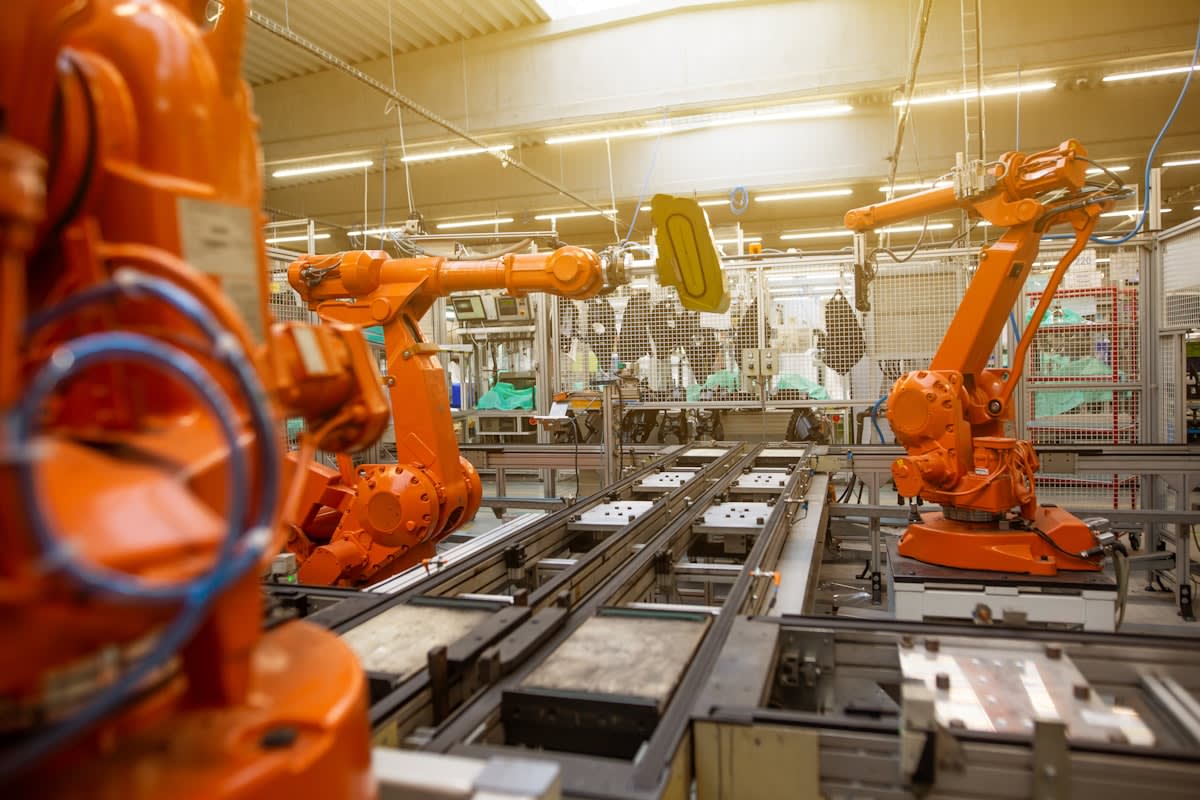
However, this transition is not without friction. The 'sim-to-real' gap remains a stubborn obstacle. While a model might perform flawlessly in a simulated environment, the chaotic nature of the physical world—dust, lighting changes, friction—can cause the model to fail. The solution being pursued is the 'data flywheel': deploying robots in the wild, collecting their failures, and feeding those failures back into the training loop.
Software-Defined Labor
We are entering the era of software-defined labor. When the ability to perform a physical task is decoupled from the specific machine performing it, labor becomes a portable asset. Imagine a 'Skill Store' where a company can purchase a 'Precision Soldering' weight-update for their fleet of robots. The hardware becomes a commodity; the intelligence becomes the product.
The Safety Paradox
The risk of 'physical hallucinations' is the new frontier of safety engineering. Unlike a chatbot making up a fact, a VLA model hallucinating a grip point can result in shattered equipment or human injury.
This necessitates a new layer of 'guardrail' software—deterministic systems that sit on top of the probabilistic VLA model. These guardrails act as a physical firewall, preventing the robot from executing any command that violates basic safety physics, regardless of what the neural network suggests. The tension between the flexibility of the VLA and the rigidity of the safety layer will define the next decade of industrial design.
Ultimately, the convergence of vision, language, and action transforms the nature of work. We are no longer teaching robots how to move; we are teaching them how to understand. Once a machine understands the concept of 'fragility' or 'urgency,' the specific motor commands become trivial. Physical labor is no longer a problem of mechanics; it is a problem of representation.
The winners in this new landscape will not be the companies with the best arms or the fastest wheels. They will be the ones who control the most diverse datasets of human-robot interaction. The physical world is now the training set, and every single movement is a data point in the quest to solve labor via software.