AI Can't Recreate the Thrust Game (But It Can Help You Understand It)
Source Entity
Hacker News
Intelligence Synthesis
AI-Generated Core Insights
A technical discussion explores the limitations of generative AI in perfectly replicating the specific physics and 'feel' of the classic game Thrust, while highlighting its significant potential as a tool for explaining and deconstructing complex legacy code.
The Duality of AI in Software Engineering: Understanding vs. Creation
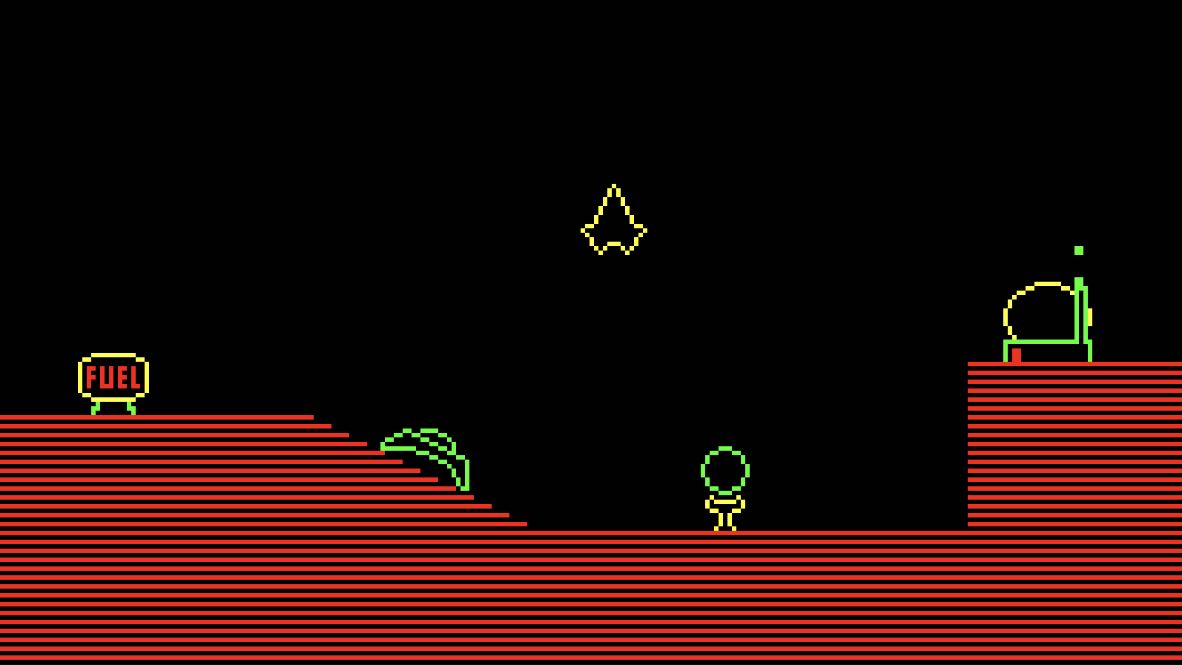
The intersection of generative artificial intelligence and legacy software development has become a focal point for programmers and historians alike. A recent technical discourse has highlighted a nuanced distinction in how Large Language Models (LLMs) interact with classic software, specifically using the 1986 space shooter Thrust as a case study. The core argument posits that while AI currently lacks the ability to autonomously recreate the precise, nuanced mechanics of such games, it serves as an unparalleled tool for deconstructing and explaining the logic that makes those games function.
The Challenge of Replicating 'Feel' and Physics
One of the primary hurdles identified is the gap between syntactically correct code and the emergent 'feel' of a game's physics. For a game like Thrust, the gameplay relies on a specific, often idiosyncratic, implementation of inertia, thrust, and gravity. When an AI attempts to recreate such a system, it often defaults to generalized physics models that lack the specific character of the original. This 'uncanny valley' of game mechanics occurs because AI generates code based on probabilistic patterns rather than a deep, intuitive grasp of how a specific mathematical tweak affects the player's tactile experience.
AI as an Educational Bridge for Legacy Systems
While AI struggles with the creative and precise task of reconstruction, its strength lies in its role as a sophisticated interpreter. For developers looking to understand the low-level assembly or early high-level code used in classic titles, AI can act as a highly efficient translator. It can parse complex, obfuscated logic and provide human-readable explanations of what specific subroutines are achieving. This capability transforms AI from a mere code generator into a powerful pedagogical tool, allowing modern developers to bridge the gap between contemporary high-level languages and the constrained, hardware-specific programming of the 1980s.
Historical Context: The Legacy of Thrust
To understand why this distinction matters, one must consider the historical context of Thrust. Released in an era of extreme hardware limitations, the game's mechanics were a masterclass in optimization. Every line of code had to serve a dual purpose of functionality and performance. Because these games were built around the specific constraints of their era, their logic is often deeply intertwined with the hardware itself. This makes the 'understanding' component of AI even more critical; the AI isn't just explaining code, it is helping developers decode the relationship between software logic and historical hardware architecture.
Future Trends: From Autopilot to Co-Pilot
Looking forward, this discussion suggests that the trajectory of AI in software development will not be one of total replacement, but of augmented intelligence. We are likely to see a shift where AI is less focused on the 'autopilot' generation of entire software suites and more focused on the 'co-pilot' role of debugging, documentation, and logic explanation. The ability to 'understand' a system is a prerequisite for truly mastering it, and as AI models improve their reasoning capabilities, their ability to help humans navigate complex, existing codebases will likely outpace their ability to invent new, perfectly balanced game mechanics from scratch.
Conclusion
In summary, the limitations of AI in recreating the specific essence of Thrust do not diminish its value. Instead, they refine our understanding of where AI excels: in the realm of analysis, explanation, and translation. By acting as a bridge between the complex logic of the past and the development tools of the present, AI is becoming an essential companion for anyone seeking to preserve, understand, or build upon the foundations of software history.