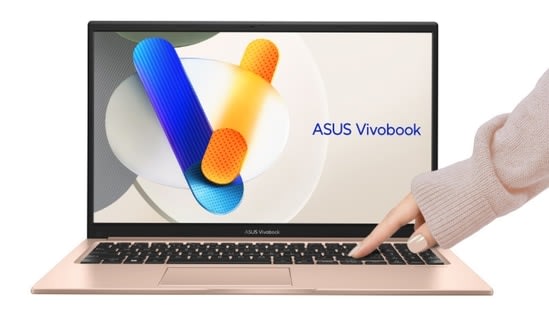
ASUS launches Vivobook 14 and Vivobook 15 AI laptops in India, starting at ₹75,990
Source Entity
Latest News: Today's Latest News Headlines from India & World | Hindustan Times | Hindustan Times
Intelligence Synthesis
AI-Generated Core Insights
ASUS has expanded its AI PC lineup in India with the launch of the Vivobook 14 and Vivobook 15 AI laptops, powered by Intel Core Series 3 processors and starting at ₹75,990.
ASUS Accelerates AI PC Adoption in India with New Vivobook Lineup
ASUS has officially expanded its footprint in the Indian computing market with the introduction of the Vivobook 14 and Vivobook 15 AI laptops. This launch signifies a strategic pivot toward the "AI PC" category, integrating specialized hardware designed to handle machine learning tasks locally on the device. Starting at ₹75,990, these devices are engineered to bridge the gap between standard productivity laptops and high-end workstations, catering to a demographic that requires smarter, more efficient computing capabilities without the extreme cost associated with flagship gaming or professional creative rigs.
Hardware Evolution: The Role of Intel Core Series 3
At the heart of these new machines are the Intel Core Series 3 processors. The transition to this new nomenclature reflects Intel's updated branding and architectural strategy, which focuses heavily on integrated AI acceleration via Neural Processing Units (NPUs). By offloading AI-driven tasks—such as real-time background blur in video conferencing, intelligent noise suppression, and basic generative AI workflows—from the primary CPU and GPU to the NPU, ASUS ensures significantly better battery efficiency and sustained performance. This hardware evolution is critical as software developers increasingly optimize applications for local AI execution to reduce latency and improve privacy by minimizing reliance on cloud-based APIs.
Strategic Market Positioning in the Indian Landscape
The Indian market presents a unique growth opportunity for ASUS. With a massive student population and a rapidly expanding freelance and "gig" economy, there is a surging demand for laptops that offer both longevity and versatility. By pricing the entry-level model at ₹75,990, ASUS is targeting the "prosumer" segment—users who have outgrown budget machines but are not yet ready to invest in ultra-premium enterprise hardware. This pricing strategy positions the Vivobook series as an aspirational yet accessible upgrade for those moving toward machines that can natively handle modern AI-integrated software like Microsoft Copilot and Adobe's AI-powered creative suite, which are becoming standard in both educational and corporate environments.
The Broader Shift Toward Edge AI
This launch is part of a larger global trend where hardware manufacturers are racing to define the standard for the "AI PC." For the past decade, artificial intelligence was primarily a backend service hosted on massive server farms; however, the industry is now shifting toward "Edge AI," where processing happens directly on the user's device. The Vivobook 14 and 15 are not merely iterative hardware updates but entry points into a new ecosystem. As operating systems like Windows 11 continue to integrate AI more deeply into the core user experience, having a dedicated AI-capable processor becomes a necessity rather than a luxury. This move ensures that ASUS users remain compatible with the next wave of software updates that will likely require NPU support for basic system functionality.
Competitive Analysis and Market Dynamics
In the highly competitive Indian laptop market, ASUS faces stiff competition from global giants like HP, Dell, and Lenovo, all of whom are aggressively pushing their own AI-integrated lineups. The Vivobook's competitive advantage typically lies in its balance of aesthetics, portability, and a strong price-to-performance ratio. By utilizing the Intel Core Series 3, ASUS is opting for a balanced approach—providing sufficient power for AI tasks while maintaining a form factor (14 and 15 inches) that appeals to the mobile workforce. The long-term success of these models will depend on how effectively ASUS communicates the tangible, daily benefits of "AI hardware" to the average consumer to move beyond the perception of AI as a marketing buzzword.
Conclusion: Democratizing Intelligent Computing
Ultimately, the launch of the Vivobook 14 and 15 AI laptops in India underscores the industry's commitment to democratizing artificial intelligence. By integrating AI capabilities into the mid-range Vivobook line, ASUS is preparing its user base for a future where AI is an invisible but essential part of every digital interaction. As these devices hit the retail market, they will likely serve as a benchmark for how AI hardware is adopted in emerging economies, signaling a definitive shift from traditional general-purpose computing to an era of intelligent, adaptive personal computing.
Verification Required?