Baruipur lynching: Man ‘seen dragging’ Indrajit Mondal among 2 more arrested
Source Entity
Tanusree Bose
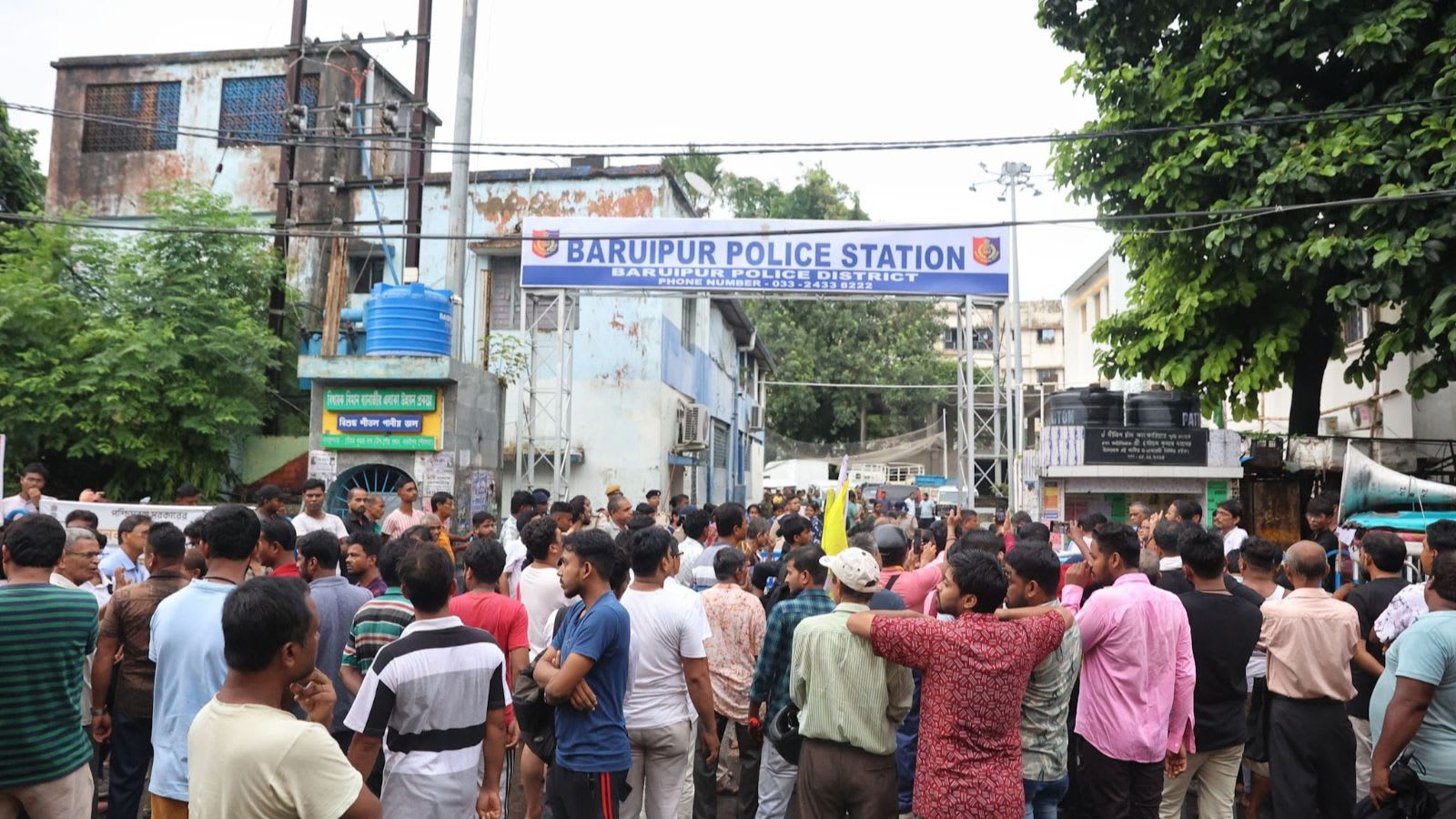
A crowd protests outside the Baruipur police station against the rape and murder of the 11-year-old girl. (Express Photo) The police arrested two more people on Saturday in connection with the incide...
Tragedy and Turmoil: Analyzing the Baruipur Lynching Incident
The events unfolding in Baruipur represent a harrowing intersection of two distinct yet related tragedies: the brutal rape and murder of an 11-year-old girl and the subsequent descent into mob violence resulting in the lynching of Indrajit Mondal. This cycle of violence highlights a volatile atmosphere where extreme grief and anger over a heinous crime against a child transformed into lawless vigilantism. The arrest of three individuals, including a man captured on video dragging Mondal, indicates that law enforcement is now attempting to restore order and hold perpetrators of mob violence accountable, even as the community continues to demand justice for the initial crime.
The Catalyst: A Heinous Crime Against a Child
At the core of this unrest is the rape and murder of an 11-year-old girl, a crime that has understandably shocked the local community and ignited widespread outrage. In many parts of India, crimes against children act as a powerful catalyst for mass mobilization. The emotional weight of such a loss often transcends individual grief, becoming a collective trauma that demands immediate and visible retribution. This specific incident created a powder keg of emotion, leaving the local population in a state of high tension and deep distrust of the pace of the legal system.
The Descent into Mob Justice
The lynching of Indrajit Mondal serves as a grim example of 'instant justice' or vigilantism. When a crowd gathered outside the Baruipur police station, the focus shifted from demanding a legal investigation to executing a perceived punishment. The detail of a man being 'seen dragging' Mondal suggests a level of brutality and public spectacle intended to intimidate and punish. This phenomenon often occurs when citizens feel that the state's machinery is too slow or ineffective, leading them to bypass the judiciary entirely to deliver a swift, albeit illegal, verdict.
Law Enforcement Under Pressure
The Baruipur police find themselves in a precarious position, managing two simultaneous crises: the investigation into a child's murder and the prosecution of a lynching. The protests outside the police station underscore the immense pressure placed on local authorities. When the public perceives a lack of urgency or transparency in the investigation of the girl's murder, the police station often becomes the focal point of anger. The recent arrests of those involved in the lynching are a necessary step to prevent further anarchy, but they may also heighten tensions among a crowd that views the lynching as a form of rightful retribution.
Societal Implications and the Rule of Law
This incident reflects a broader, systemic issue regarding the fragility of the rule of law in semi-urban and rural landscapes. The transition from a protest for justice to an act of murder (lynching) indicates a breakdown in civic order. Historically, such events are linked to a perceived vacuum of authority or a lack of faith in the police's ability to protect the vulnerable and punish the guilty. By taking the law into their own hands, the mob not only commits a crime but also risks targeting the wrong individuals, further complicating the quest for actual justice for the 11-year-old victim.
Future Trends and Preventative Measures
Looking forward, this event suggests that unless there is a significant improvement in the speed of judicial proceedings and the transparency of police investigations in sensitive cases, the trend of vigilantism may persist. To break this cycle, there must be a dual approach: rigorous prosecution of those who commit heinous crimes against children to satisfy the public's need for justice, and equally rigorous prosecution of those who engage in mob violence. The Baruipur case will likely be cited in future discussions regarding the need for better crowd control mechanisms and community policing to prevent grief from evolving into lawlessness.
Summary
The Baruipur incident is a stark reminder of how extreme societal trauma can lead to a total collapse of legal norms. While the initial crime against the young girl was the spark, the lynching of Indrajit Mondal is a secondary tragedy that undermines the very justice the protesters claimed to seek. The ongoing arrests mark the beginning of a legal process to address the violence, but the underlying social anger remains a volatile force.