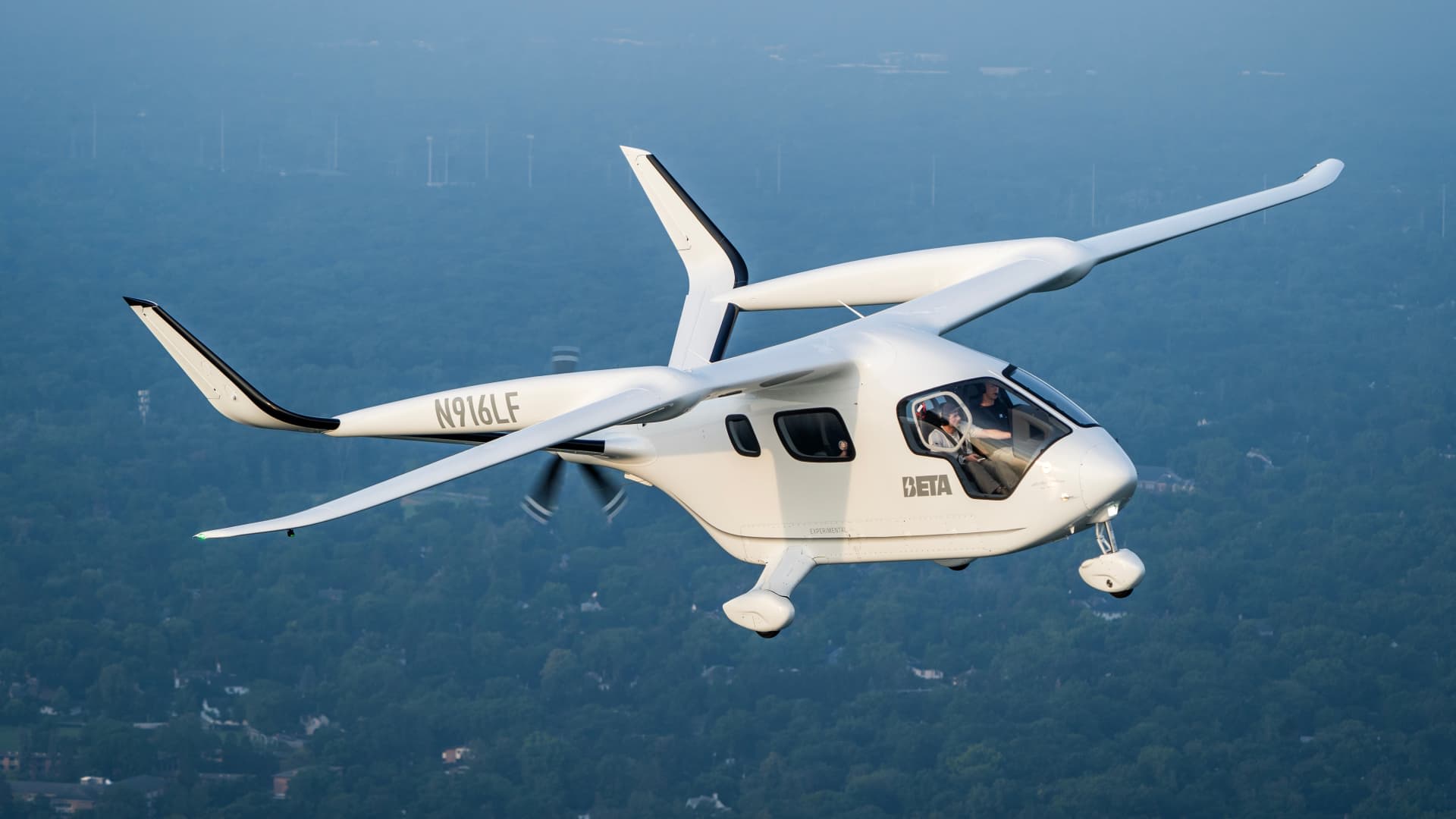
Air taxi company Beta wraps first test flights in U.S. government's pilot program
Source Entity
US Top News and Analysis
Intelligence Synthesis
AI-Generated Core Insights
Electric air taxi developer Beta Technologies has completed its initial test flights as part of a U.S. government pilot program, marking a significant step toward securing FAA certification for commercial passenger operations.
Beta Technologies Advances Electric Aviation Milestones
Beta Technologies has reached a pivotal juncture in the development of urban air mobility by successfully wrapping its first set of test flights within a U.S. government pilot program. This achievement represents more than just a successful flight demonstration; it is a critical validation of the company's engineering capabilities and a strategic alignment with federal oversight bodies. As the aviation industry pivots toward sustainable propulsion, Beta's progress signals a tangible shift from theoretical design to operational reality.
Navigating the Regulatory Gauntlet
The core of the current challenge for Beta and its competitors is the rigorous Federal Aviation Administration (FAA) certification process. Securing this certification is the only pathway to legal commercial passenger operations in the United States. By participating in a government-led pilot program, Beta is effectively utilizing a controlled environment to gather the safety and performance data required by the FAA. This iterative process of testing, analyzing, and refining is essential to ensure that electric Vertical Take-Off and Landing (eVTOL) aircraft meet the same stringent safety standards as traditional commercial airliners.
The Competitive Landscape of eVTOL
As noted in the report, Beta is "one of several" makers racing toward commercialization. The electric air taxi sector has become a high-stakes arena where companies are competing not only on aircraft design but on the speed of regulatory approval. This race is driven by the massive potential of the urban air mobility market, which aims to alleviate ground-level traffic congestion by moving passenger transport to the lower altitudes of the urban canopy. Beta's ability to successfully conclude government tests puts them in a strong position relative to other players in the ecosystem.
Strategic Implications of Government Partnerships
Partnering with the U.S. government for these pilot flights provides Beta with a level of institutional credibility that is difficult to achieve through private testing alone. Such programs often provide access to specialized airspace and infrastructure that are otherwise restricted, allowing for more comprehensive stress-testing of the aircraft's systems. Furthermore, these partnerships often serve as a bellwether for future government procurement, suggesting that the public sector may eventually utilize these electric taxis for logistics, medical transport, or emergency services.
Technical Shift Toward Sustainable Aviation
The transition to electric propulsion is a cornerstone of the broader effort to decarbonize the aerospace industry. By replacing combustion engines with high-density battery systems, Beta is addressing the two primary externalities of urban flight: carbon emissions and noise pollution. The success of these test flights proves that the energy density of current battery technology is becoming sufficient to handle the high-power demands of takeoff and landing, which are the most energy-intensive phases of flight.
Future Projections for Urban Air Mobility
Looking forward, the completion of these test flights suggests a trajectory toward limited commercial launches within the next few years. Once FAA certification is granted, the focus will likely shift from the aircraft themselves to the supporting infrastructure, such as "vertiports" and high-speed charging networks. We can expect a phased rollout, beginning with cargo or medical transport before transitioning to wide-scale passenger commutes, as the public becomes accustomed to the sight and sound of electric aircraft in city skies.
Conclusion
Beta Technologies' completion of its first government-sponsored test flights is a landmark event in the race to modernize urban transport. By successfully navigating the initial stages of a federal pilot program, the company has cleared a significant hurdle toward FAA certification. While the road to full commercialization remains complex, this milestone underscores the viability of electric air taxis and brings the vision of sustainable, three-dimensional urban transit one step closer to reality.