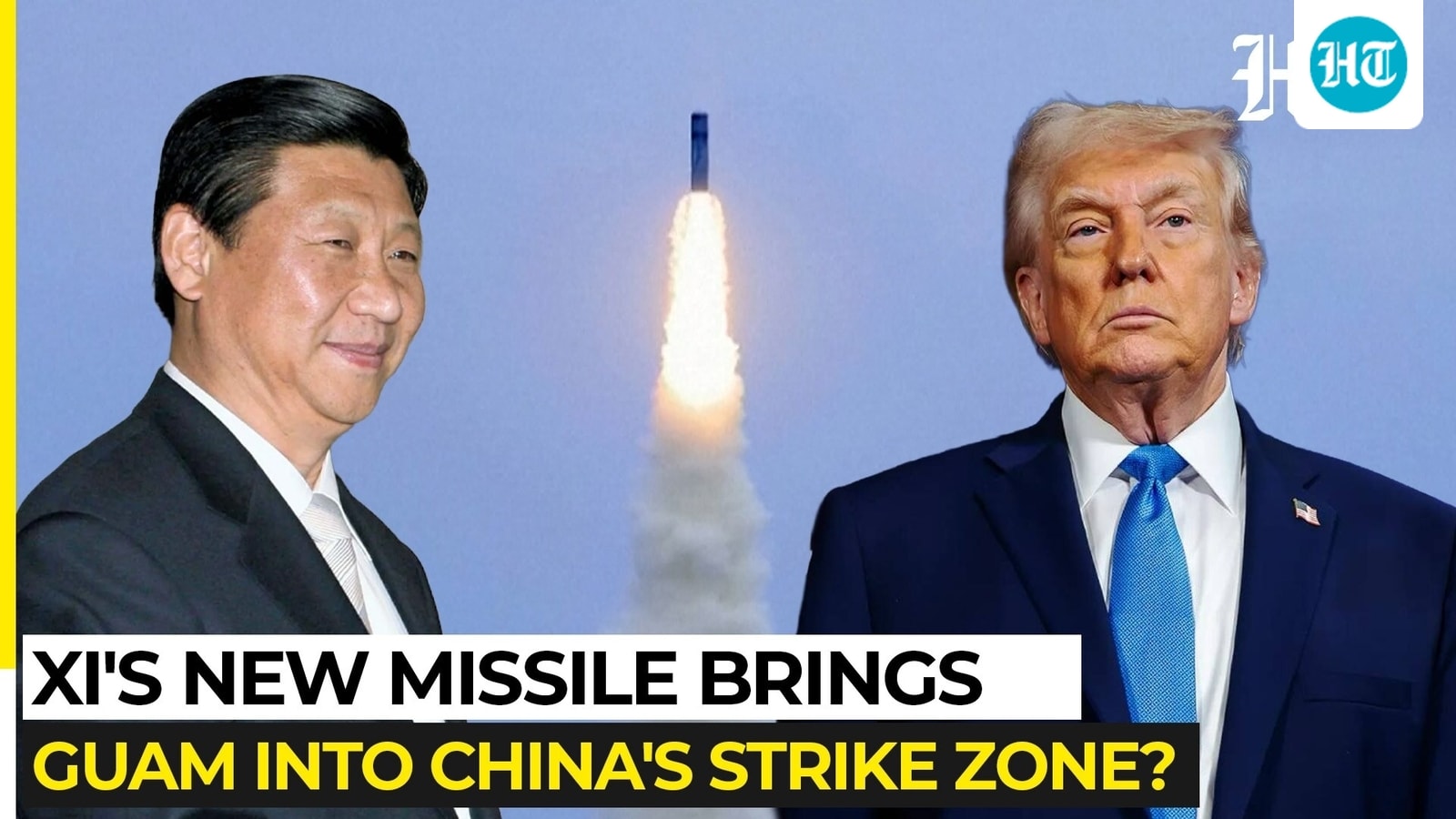
Xi tests missile that can ‘hit US bases’: China preparing to take out Guam before invading Taiwan?
Source Entity
Latest News: Today's Latest News Headlines from India & World | Hindustan Times | Hindustan Times
Intelligence Synthesis
AI-Generated Core Insights
China has conducted a significant test of a submarine-launched ballistic missile, believed to be the JL-3, fired from a Type-094 submarine. This development enhances Beijing's second-strike nuclear capability and increases the strategic threat to key US bases in Guam and Hawaii, specifically in the context of escalating tensions regarding Taiwan.
Strategic Escalation: Analyzing China's JL-3 Missile Test
China's recent test of a submarine-launched ballistic missile (SLBM), widely identified as the JL-3, represents a critical inflection point in the geopolitical struggle for dominance in the Indo-Pacific. By launching the missile from a Type-094 ballistic missile submarine into the South Pacific, Beijing is not merely testing hardware; it is signaling a fundamental shift in its strategic deterrence posture. This move underscores China's ambition to secure a credible 'second-strike' capability, ensuring that even if its land-based assets were neutralized in a first-strike scenario, it could still deliver a devastating nuclear response from the depths of the ocean.
The Technical Edge: Range and Survivability
At the heart of this development is the JL-3 missile's extended range. Unlike previous generations of SLBMs, the JL-3 is designed to strike targets thousands of kilometers away, potentially bringing the entirety of the United States' Pacific territories and mainland assets within reach. The use of the Type-094 submarine as a launch platform is particularly significant because it allows Chinese submarines to operate within the relative safety of 'bastions'—protected areas of the ocean near the Chinese coast—while still maintaining the ability to hit distant targets. This reduces the vulnerability of the submarines to US anti-submarine warfare (ASW) capabilities, effectively enhancing the survivability of China's nuclear triad.
The 'Guam Dilemma' and US Power Projection
One of the most alarming aspects of this test is the direct threat it poses to Guam. As a primary hub for US military logistics and power projection in the Western Pacific, Guam is indispensable for any US military operation in Asia. If Beijing can reliably threaten Guam with sea-based nuclear or conventional strikes, it creates a 'Guam Dilemma' for US planners: the risk to personnel and infrastructure on the island may become so high that the US is deterred from deploying the assets necessary to intervene in a regional crisis. This capability effectively extends China's Anti-Access/Area Denial (A2/AD) strategy from the First Island Chain deep into the Second Island Chain.
Implications for Taiwan and Regional Stability
This missile test cannot be viewed in isolation from the escalating tensions surrounding Taiwan. The strategic logic is clear: by neutralizing or threatening the US bases that would support a defense of Taiwan, China increases the likelihood that the US would hesitate to intervene in a potential invasion. The JL-3 provides the overarching nuclear umbrella that allows China to pursue more aggressive conventional goals in the Taiwan Strait without fearing an immediate and unrestricted US response. This creates a precarious environment where the threshold for conflict is lowered, as Beijing feels more secure in its deterrent capabilities.
Shifting Global Nuclear Dynamics
On a broader scale, the deployment of the JL-3 signals the transition from a bipolar nuclear world (dominated by the US and Russia) to a tripolar one. This shift complicates global arms control and strategic stability. As China expands its sea-based deterrent, it pressures regional allies—such as Japan and South Korea—to reconsider their own security arrangements and potentially seek more advanced missile defenses or even their own nuclear capabilities. The result is a regional arms race that increases the risk of miscalculation and accidental escalation.
Conclusion
In summary, the test of the JL-3 missile is a sophisticated move by Beijing to redefine the security architecture of the Pacific. By enhancing its second-strike capability and threatening critical US bases like Guam and Hawaii, China is systematically reducing the viability of US intervention in its immediate sphere of influence. As these capabilities mature, the focus will likely shift toward how the US and its allies adapt their defensive postures to counter a more potent and elusive Chinese sea-based threat, all while navigating the volatile political landscape of the Taiwan Strait.
Verification Required?