China is catching up to Elon Musk’s reusable rockets
Source Entity
Tim Fernholz
Intelligence Synthesis
AI-Generated Core Insights
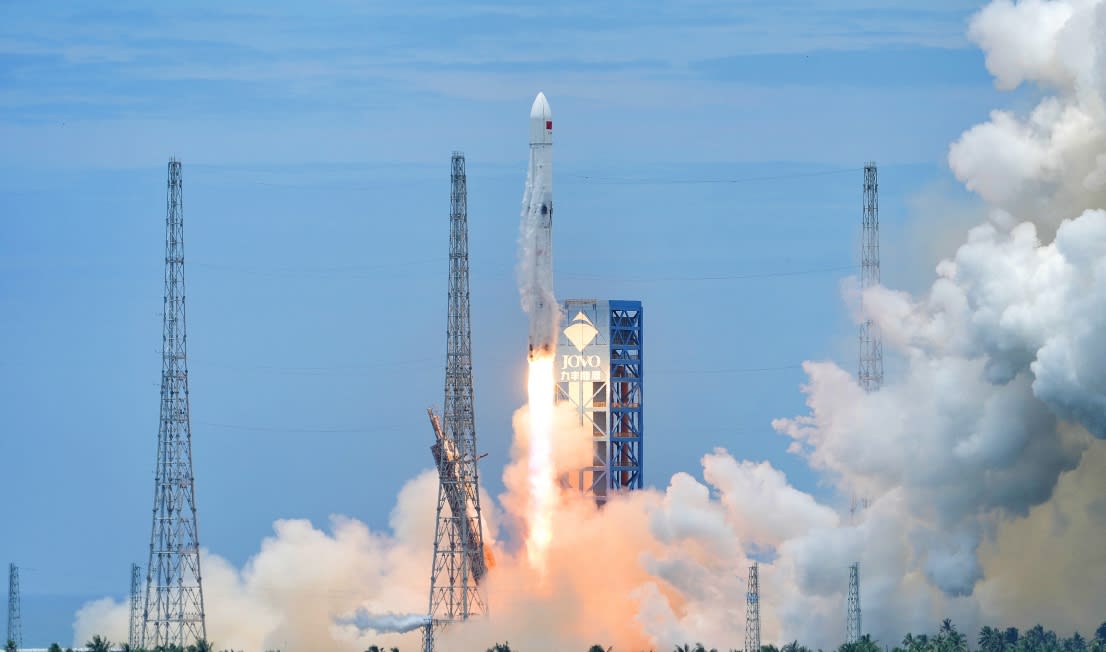
China's state-owned space company has achieved a major milestone by recovering its first orbital rocket booster, signaling a significant advancement in reusable launch technology and narrowing the gap with SpaceX.
China's Leap in Aerospace: The Era of Reusable Rockets
For the past decade, the global aerospace landscape has been dominated by a single paradigm shift: the transition from expendable launch vehicles to reusable ones. Pioneered largely by Elon Musk's SpaceX with the Falcon 9, the ability to land and reuse the first stage of an orbital rocket has drastically lowered the cost of access to space. The recent announcement that China's state-owned space company has successfully recovered its first orbital rocket booster marks a pivotal moment in this technological race, indicating that China is no longer merely observing the reusability trend but is actively implementing it at scale.
The Technical Significance of Booster Recovery
Recovering an orbital booster is an immense engineering challenge that requires precise guidance, navigation, and control (GNC) systems, as well as robust thermal shielding to survive atmospheric reentry. By successfully recovering this booster, China has demonstrated its capability to execute the complex "boost-back" and landing maneuvers necessary for reusability. The first stage of a rocket represents the vast majority of its total cost; therefore, the ability to recover and potentially refurbish this hardware allows for a significant reduction in the cost per kilogram of payload delivered to orbit. This achievement transforms the economics of China's space program, moving it away from the costly "one-and-done" model of the traditional Long March series.
Closing the Gap with SpaceX
While SpaceX currently maintains a lead in terms of flight cadence and proven reliability of reused boosters, China's success suggests a rapid acceleration in their development cycle. The competition is no longer just about reaching orbit, but about the efficiency of reaching orbit. By mirroring the vertical landing or recovery techniques utilized by the West, China is positioning itself to compete in the global commercial launch market. This move is a strategic response to the dominance of the Falcon 9, ensuring that China's state-owned enterprises can offer competitive pricing and launch frequencies for satellite deployments and interplanetary missions.
Strategic Implications for National Ambitions
This milestone is deeply intertwined with China's broader strategic goals, including the expansion of its Tiangong space station and its ambitious plans for lunar exploration and eventual Mars missions. To build a sustainable presence on the Moon, a high-frequency, low-cost transport system is essential. Reusable rockets serve as the "logistical backbone" for such endeavors. By mastering booster recovery, China is creating a scalable infrastructure that can support the heavy-lift requirements of deep-space exploration without bankrupting the national space budget.
Industrialization and the Future of Space Logistics
Beyond the immediate technical win, this event signals the industrialization of space in China. The shift toward reusability necessitates a new ecosystem of refurbishment facilities, specialized transport for recovered boosters, and advanced materials science to ensure hardware can withstand multiple launches. We are likely to see a surge in investment within China's aerospace sector to optimize the turnaround time between flights. The goal is no longer just recovery, but rapid reusflight, which would allow a single booster to fly dozens of times, further disrupting the global launch economy.
Conclusion: A Multi-Polar Space Economy
The recovery of China's first orbital booster is more than a technical feat; it is a geopolitical statement. It signals the emergence of a multi-polar space economy where the United States is no longer the sole provider of low-cost, reusable access to space. As China continues to refine this technology, the resulting competition will likely accelerate innovation across the board, leading to faster advancements in satellite internet constellations, orbital manufacturing, and the human colonization of other celestial bodies. The "Space Race 2.0" has officially entered its most competitive phase: the race for sustainable and affordable orbital logistics.