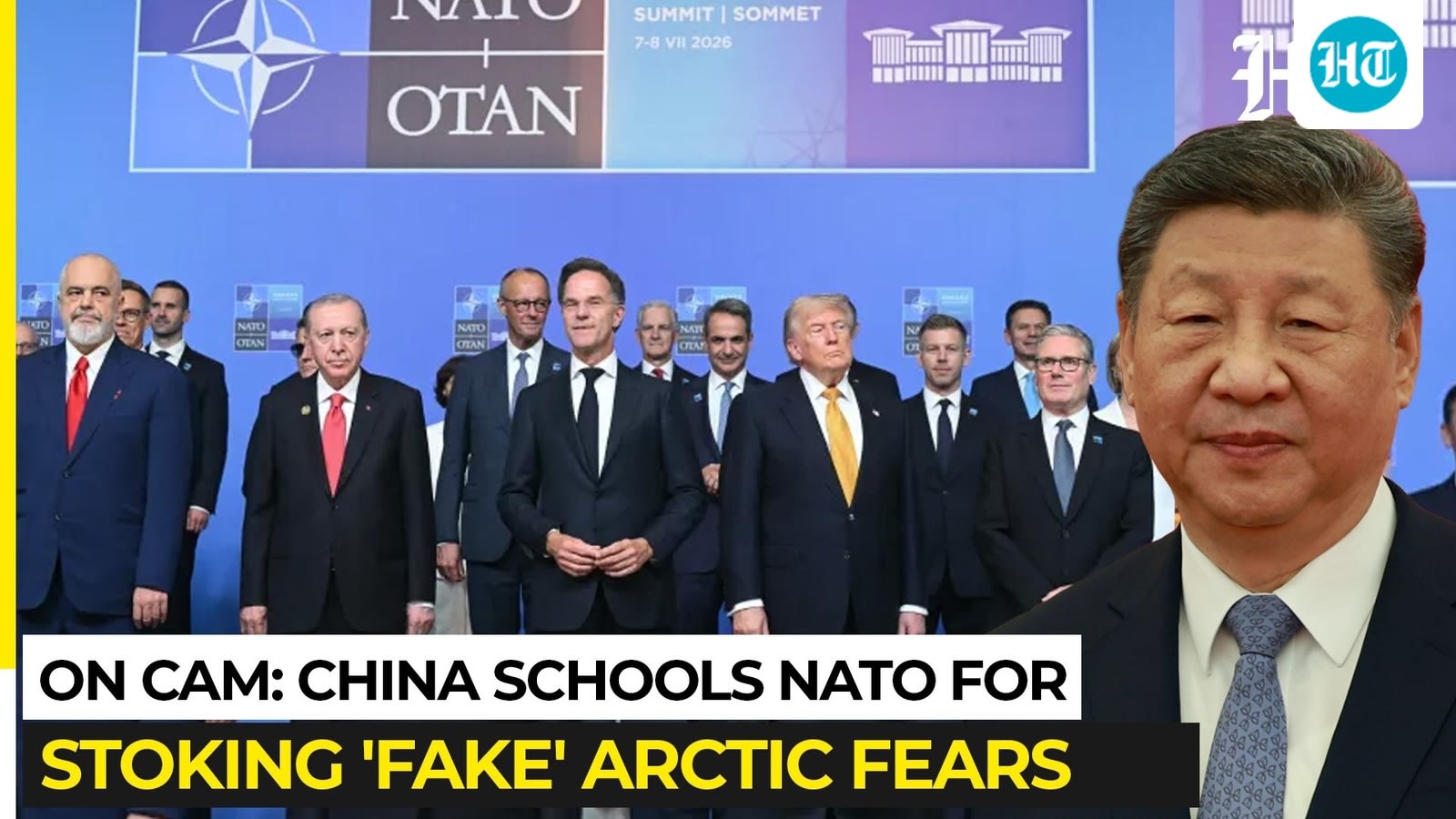
On cam: China schools NATO's Rutte for stoking 'fake' fears about Beijing's arctic expansion |Russia
Source Entity
Latest News: Today's Latest News Headlines from India & World | Hindustan Times | Hindustan Times
Intelligence Synthesis
AI-Generated Core Insights
China has reaffirmed its rejection of the 2016 South China Sea arbitration ruling and dismissed NATO Secretary General Mark Rutte's concerns regarding its Arctic expansion, while signaling a strategic push to strengthen ties with the Global South and the Solomon Islands.
China's Strategic Assertiveness: Navigating the Arctic, South China Sea, and the Global South
China is currently engaged in a multi-front diplomatic effort to redefine its role in global governance and challenge Western narratives regarding its expansionism. Recent statements from the Chinese Foreign Ministry, specifically spokesperson Mao Ning, highlight a coordinated strategy to dismiss international legal rulings that constrain its territorial claims while simultaneously expanding its influence into non-traditional strategic zones like the Arctic and the South Pacific. This approach underscores Beijing's commitment to a 'multipolar' world where its interests are not dictated by Western-led institutions or alliances.
The South China Sea and the Rejection of International Law
Central to this tension is China's steadfast refusal to recognize the 2016 South China Sea arbitration ruling. By labeling the ruling "illegal, invalid and non-binding," Beijing is not merely disputing a legal outcome but is challenging the legitimacy of the Permanent Court of Arbitration. This stance creates a significant diplomatic hurdle for the Philippines and other ASEAN nations. The insistence that the Philippines should not use this ruling to complicate the South China Sea Code of Conduct negotiations suggests that China prefers bilateral or regional frameworks over international legal mandates, allowing it to maintain leverage over smaller neighboring states.
Arctic Expansion and the NATO Friction
The friction between Beijing and NATO, specifically regarding the comments of Secretary General Mark Rutte, reveals a new geopolitical frontier: the Arctic. China's self-identification as a "near-Arctic state" has led to increased investment in infrastructure and research in the region, which NATO views as a security threat. China's dismissal of these "fake fears" is a calculated move to frame its Arctic activities as scientific and commercial rather than military. However, the strategic value of the "Polar Silk Road"—which offers shorter shipping routes between Asia and Europe—makes this a critical point of contention as the ice melts and resources become more accessible.
Pivoting to the Global South and the Pacific
To counter the perceived containment by NATO and US-led alliances, China is doubling down on its relationship with the Global South. The announcement of an upcoming official visit by the foreign minister to the Solomon Islands is a prime example of this strategy. By strengthening ties with Pacific island nations, China seeks to establish strategic footholds in a region traditionally dominated by US and Australian influence. This "Global South" diplomacy allows Beijing to present itself as a partner in development and sovereignty, contrasting its approach with the perceived paternalism of Western powers.
Broader Implications for Global Security
These developments suggest a broader trend of "strategic decoupling" from the rules-based international order established post-WWII. When a global superpower rejects international arbitration and dismisses the security concerns of a major military alliance like NATO, it signals a shift toward a power-based rather than a law-based international system. The overlap of these events—from the South China Sea to the Arctic—indicates that China's ambitions are not isolated but part of a comprehensive global strategy to secure resource access and geopolitical dominance.
Conclusion
In summary, China's current diplomatic posture is one of calculated defiance and strategic expansion. By rejecting the 2016 arbitration ruling, dismissing NATO's Arctic concerns, and courting the Solomon Islands, Beijing is actively reshaping the geopolitical landscape. The coming months will likely see increased tension in the Indo-Pacific and the Arctic as the West attempts to maintain the existing international legal order against China's push for a new, Beijing-centric framework of global influence.
Verification Required?