How China can bring Taiwan to its knees without firing a shot
Source Entity
AYUSH PANDEY
Intelligence Synthesis
AI-Generated Core Insights
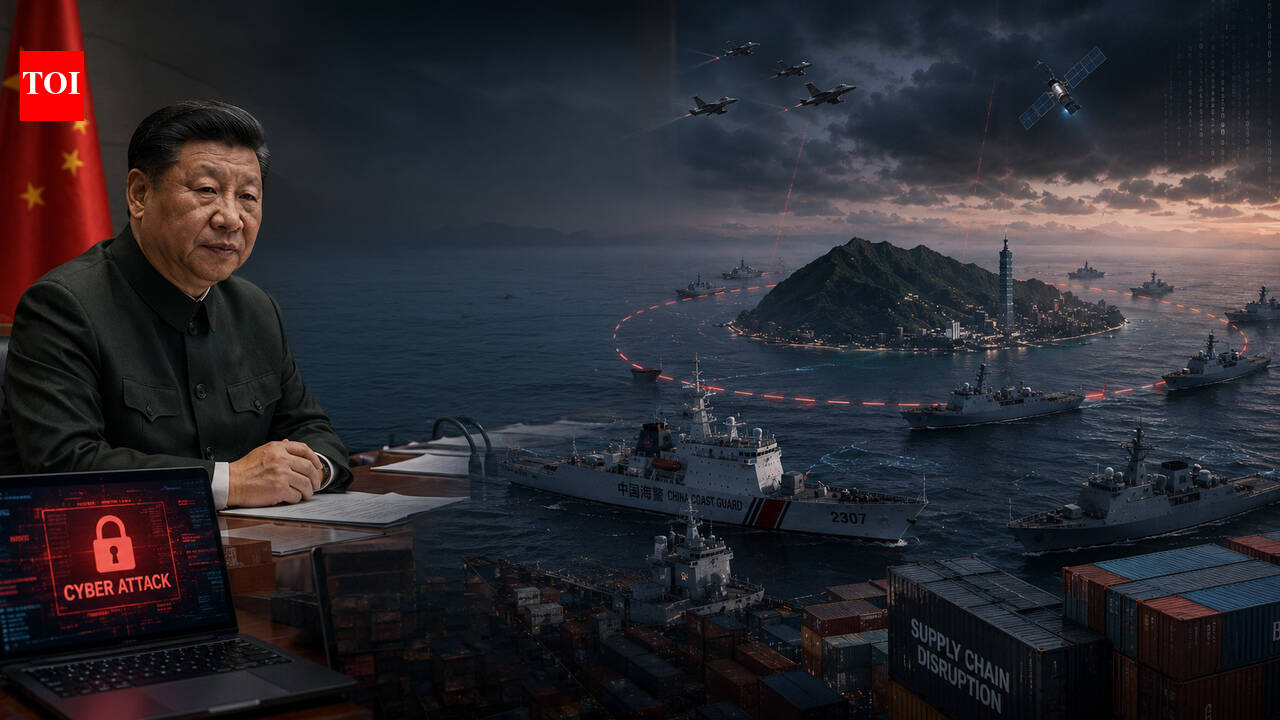
China may employ a 'gray zone' strategy to pressure Taiwan through economic blockades, cyberattacks, and disinformation campaigns, aiming to achieve political goals without initiating a full-scale military conflict.
The Architecture of Coercion: China's Gray Zone Strategy Against Taiwan
In the modern geopolitical landscape, the traditional binary of 'peace' or 'war' is increasingly obsolete. China is reportedly pivoting toward a "gray zone" strategy regarding Taiwan—a sophisticated method of aggression that operates beneath the threshold of open military conflict. By leveraging a combination of naval pressure, cyber warfare, and psychological operations, Beijing aims to isolate Taiwan economically and psychologically, effectively forcing a political surrender without the high cost and international backlash of a full-scale invasion. This approach focuses on attrition and destabilization rather than a decisive kinetic strike.
The Economic Chokepoint: Blockades and Supply Chain Fragility
One of the most potent tools in the gray zone arsenal is the naval blockade. Taiwan is an island nation heavily dependent on maritime trade for essential imports, most notably energy. Because the island relies on liquefied natural gas (LNG) and oil to power its industry and cities, a strategic blockade of key shipping lanes could lead to rapid energy depletion. Beyond energy, such a move would cripple the global semiconductor supply chain, as Taiwan's dominance in high-end chip production means any disruption would create a worldwide economic shockwave. This economic leverage is designed to create internal panic and pressure the Taiwanese government to negotiate from a position of extreme weakness.
The Invisible Front: Cyberattacks and Information Warfare
Parallel to physical blockades is the deployment of cyber and information operations. By targeting critical infrastructure—such as power grids, banking systems, and communication networks—China can induce societal chaos without firing a single bullet. These cyberattacks are often paired with aggressive disinformation campaigns designed to erode public trust in the Taiwanese government and sow division among the population. By manipulating the information environment, the goal is to create a sense of inevitability regarding unification, making the population feel that resistance is futile and that their leadership is incapable of protecting them.
Historical Context and the 'Salami Slicing' Tactic
This strategy is a refinement of what analysts call "salami slicing," where small, incremental actions are taken that are individually too minor to justify a major military response from the international community, but which cumulatively achieve a massive strategic shift. Historically, this has been seen in other territorial disputes in the South China Sea. In the context of Taiwan, the transition from occasional military exercises to a comprehensive gray zone siege represents a shift toward a more permanent state of pressure, designed to exhaust Taiwan's resources and resolve over time.
Taiwan's Response: The Pivot Toward Societal Resilience
In response to these multifaceted threats, Taiwan has begun implementing comprehensive resilience drills. These exercises are no longer focused solely on military defense but on "whole-of-society" survival. This includes stockpiling essential goods, hardening cyber defenses for private sector utilities, and educating the public on how to identify and resist foreign disinformation. By building this societal resilience, Taiwan aims to raise the cost of gray zone operations for Beijing, demonstrating that psychological and economic pressure will not easily lead to a collapse of the island's political will.
Future Trends: The Risk of Miscalculation
Looking forward, the escalation of gray zone tactics increases the risk of accidental conflict. As China pushes the boundaries of what constitutes "below the threshold of war," a single miscalculation during a blockade or a cyber-operation could trigger an unintended military clash. Furthermore, the international community, particularly the United States, faces the challenge of defining how to respond to non-kinetic aggression. The future of the Taiwan Strait will likely be defined by this tension: China's attempt to squeeze the island into submission versus Taiwan's ability to maintain a resilient, open society under extreme pressure.
Summary
China's potential gray zone strategy represents a shift toward hybrid warfare, utilizing economic blockades and cyber-psychological operations to isolate Taiwan. While this avoids the risks of a direct invasion, it creates a precarious environment of constant pressure. Taiwan's focus on resilience is a critical counter-measure, but the overarching stability of the region remains fragile as both sides test the limits of strategic coercion.