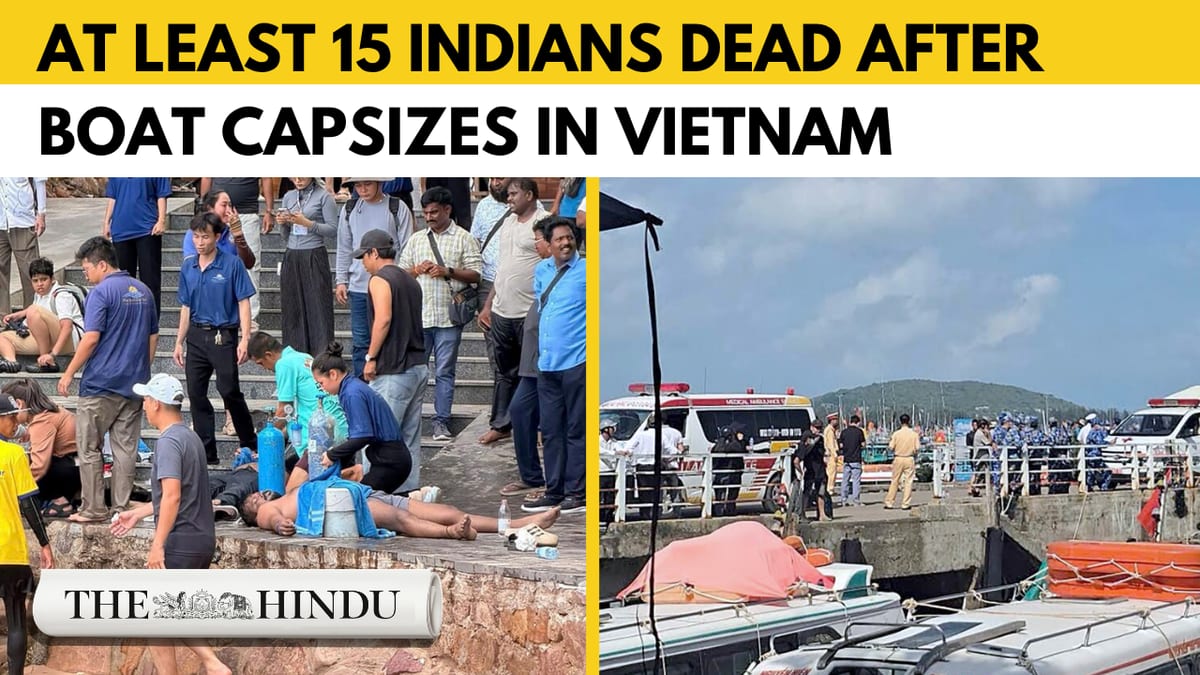
Watch: Boat carrying Indians capsizes in Vietnam; search under way
Source Entity
India Latest News: Top National Headlines Today & Breaking News | The Hindu
Intelligence Synthesis
AI-Generated Core Insights
A speedboat carrying 32 Indian tourists and four crew members capsized near Hon May Rut Ngoai island, Phu Quoc, Vietnam, on July 11, resulting in at least 15 deaths and multiple injuries.
Tragedy at Sea: Analysis of the Phu Quoc Boat Capsizing
On July 11, a devastating maritime accident occurred near the scenic Phu Quoc Island in Vietnam, where a speedboat transporting a group of Indian tourists capsized. The vessel, which was carrying a total of 36 individuals—32 Indian nationals and four crew members—overturned near Hon May Rut Ngoai island. Initial reports confirm a harrowing toll, with at least 15 lives lost and several others injured. This incident highlights the precarious nature of high-speed tourist transport in archipelago regions and the immediate risks associated with maritime excursions.
Safety Protocols and Operational Failures
The capsizing of a vessel carrying over 30 passengers suggests a potential failure in safety protocols or an imbalance in load distribution. In many tourism-heavy regions, speedboats are often pushed to their maximum capacity to accommodate large tour groups, which can compromise stability, especially when navigating the choppy waters surrounding smaller islets like Hon May Rut Ngoai. An expert analysis of such accidents typically points toward three primary catalysts: sudden adverse weather shifts, mechanical failure, or operator error. The fact that such a significant number of passengers were on a single speedboat raises critical questions regarding the vessel's weight limit and the presence of functional life-saving equipment for every soul on board.
The Surge of Indian Tourism in Vietnam
This tragedy occurs against a backdrop of rapidly growing tourism ties between India and Vietnam. Phu Quoc, known for its pristine beaches and luxury resorts, has become a premier destination for Indian travelers seeking tropical getaways. The increase in visitor volume often puts pressure on local infrastructure and tour operators to scale services quickly, sometimes at the expense of rigorous safety audits. This event serves as a grim reminder that as tourism corridors expand, the scaling of safety regulations must keep pace with the volume of arrivals to prevent avoidable loss of life.
Search, Rescue, and Recovery Logistics
The geography of the area around Hon May Rut Ngoai complicates search and rescue (SAR) operations. The proximity to smaller islands can create unpredictable currents and underwater hazards that hinder the recovery of bodies and the rescue of survivors. The coordination between the Vietnamese Coast Guard, local maritime authorities, and the Indian consulate is paramount in these hours. Efficient SAR operations in these contexts require not only specialized diving equipment but also a rapid response framework that can manage the chaos of a mass-casualty event in a remote aquatic environment.
Diplomatic and Legal Implications
In the aftermath of this disaster, the focus will inevitably shift toward accountability and diplomatic coordination. The Indian government will likely seek a transparent investigation into whether the tour operator adhered to Vietnamese maritime law and if the vessel was seaworthy. Potential legal battles may emerge regarding the liability of the travel agencies involved—both in India and Vietnam. Such incidents often lead to a temporary dip in tourist confidence, necessitating a strong official response from the Vietnamese tourism board to reassure international travelers that safety standards are being overhauled.
Conclusion and Future Outlook
The loss of 15 Indian lives in the waters of Phu Quoc is a profound tragedy that underscores the necessity for stricter maritime oversight. Moving forward, it is predicted that Vietnam may introduce more stringent certification requirements for tour boats and mandatory safety briefings for foreign tourists. To prevent a recurrence, a transition toward larger, more stable catamarans or the implementation of stricter passenger-to-crew ratios may become the new industry standard. The ultimate goal must be a synthesis of tourism growth and uncompromising safety to ensure that the beauty of Vietnam's islands does not come at a fatal cost.
Verification Required?