INS Mahendragiri commissioned: Is India’s navy now unstoppable with this stealth beast?
Source Entity
Latest News: Today's Latest News Headlines from India & World | Hindustan Times | Hindustan Times
Intelligence Synthesis
AI-Generated Core Insights
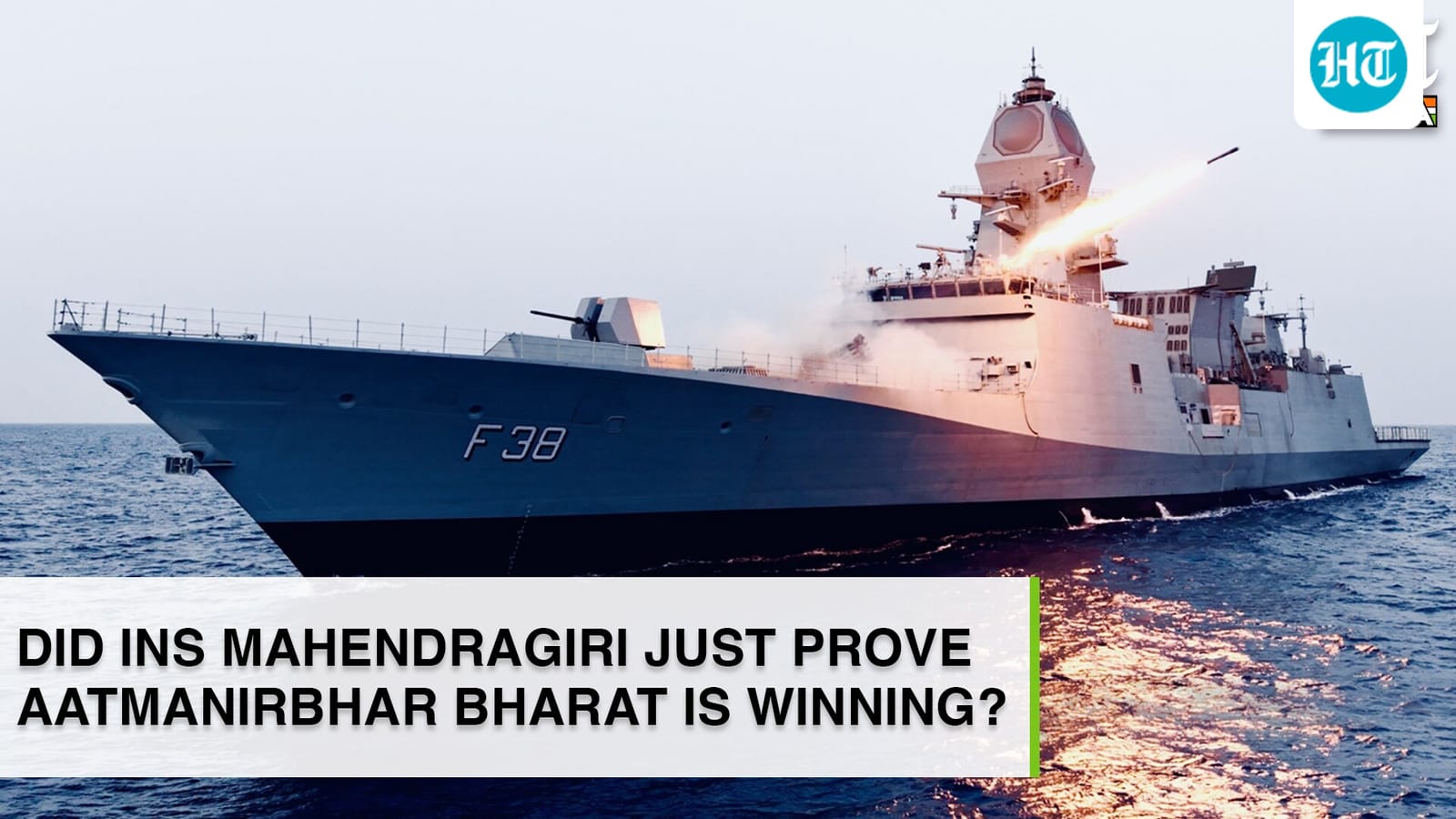
The Indian Navy has commissioned the INS Mahendragiri, the sixth Project 17A Nilgiri-class stealth frigate, at Visakhapatnam. Built by Mazagon Dock Shipbuilders with over 75% indigenous content, the warship enhances India's maritime security and Indo-Pacific presence through advanced anti-air, anti-surface, and anti-submarine capabilities.
Strengthening the Seas: The Commissioning of INS Mahendragiri
The commissioning of the INS Mahendragiri at Visakhapatnam marks a significant milestone in India's naval modernization program. As the sixth vessel of the Project 17A Nilgiri-class, this stealth frigate represents a leap forward in the Indian Navy's operational capabilities. The ceremony, attended by Defence Minister Rajnath Singh, not only celebrates the addition of a potent warship to the fleet but also underscores the strategic intent of India to maintain a dominant and secure maritime environment in the volatile Indo-Pacific region.
A Triumph of Indigenous Engineering
One of the most critical aspects of the INS Mahendragiri is its adherence to the 'Aatmanirbhar Bharat' (Self-reliant India) vision. With over 75% indigenous content, the ship is a testament to the synergy between the Indian Navy’s Warship Design Bureau and Mazagon Dock Shipbuilders. By reducing reliance on foreign OEMs (Original Equipment Manufacturers), India is insulating its defense supply chain from geopolitical instabilities and ensuring that the intellectual property of its naval architecture remains domestic. This shift toward indigenization is not merely about cost-saving but about achieving strategic autonomy in the design and maintenance of high-tech naval assets.
Stealth Capabilities and Multi-Domain Warfare
Technologically, the INS Mahendragiri is designed as a 'stealth beast,' utilizing advanced radar-cross-section (RCS) reduction techniques to make it harder for enemy sensors to detect. This stealth profile is complemented by a comprehensive suite of weaponry tailored for multi-domain warfare. The frigate is equipped for anti-air, anti-surface, and anti-submarine warfare, allowing it to operate effectively in a variety of combat scenarios. In an era where hypersonic missiles and advanced subsurface drones are becoming common, the ability of the Nilgiri-class to detect and neutralize threats across these three dimensions is essential for fleet survival and mission success.
Strategic Implications for the Indo-Pacific
The deployment of the INS Mahendragiri is timed amidst shifting power dynamics in the Indo-Pacific. As a net security provider in the region, India requires a blue-water navy capable of projecting power far from its shores. The addition of this advanced frigate enhances India's ability to conduct maritime patrols, protect sea lines of communication (SLOCs), and respond rapidly to crises. By bolstering its presence with stealth-capable vessels, India can more effectively counter regional maritime assertions and ensure the freedom of navigation in critical corridors like the Malacca Strait and the South China Sea.
Historical Evolution and Industrial Impact
Historically, the Indian Navy relied heavily on imported platforms or licensed versions of foreign designs. The Project 17A program represents an evolution from the earlier Project 17 frigates, incorporating lessons learned from previous deployments and integrating modern digital combat systems. The industrial impact of this project extends beyond the Navy; it stimulates a vast ecosystem of small and medium enterprises (SMEs) that provide components for the ship's construction. This industrialization of the defense sector creates a sustainable cycle of innovation and employment, positioning India as a potential exporter of naval technology in the future.
Future Trends in Indian Naval Doctrine
Looking ahead, the commissioning of the INS Mahendragiri suggests a trend toward a more agile, technologically advanced, and indigenous fleet. The Indian Navy is likely to continue integrating AI-driven combat management systems and unmanned aerial vehicles (UAVs) into its frigate classes to enhance situational awareness. As India continues to expand its fleet of stealth frigates and aircraft carriers, the focus will likely shift toward integrated network-centric warfare, where ships like the Mahendragiri act as critical nodes in a larger, synchronized defense grid.
Conclusion
In summary, the INS Mahendragiri is more than just a new ship; it is a symbol of India's growing maritime ambition and industrial maturity. By blending stealth technology with high indigenous content, India has strengthened its naval shield and sword. As the vessel begins its operational duties, it will play a pivotal role in safeguarding India's sovereign interests and maintaining stability across the Indo-Pacific waters.
Verification Required?