Malayalam gets a cosy space in Australian public library
Source Entity
India Latest News: Top National Headlines Today & Breaking News | The Hindu
Intelligence Synthesis
AI-Generated Core Insights
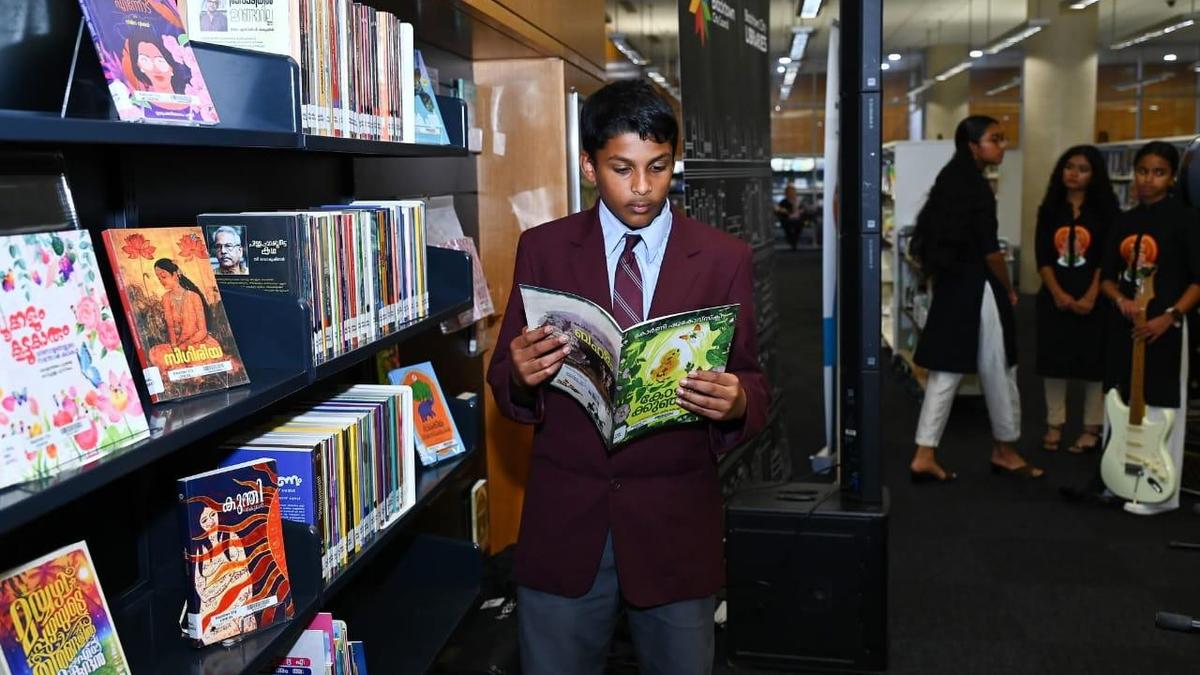
The Max Webber Public Library in Sydney has launched a dedicated Malayalam section featuring 450 titles, responding to the needs of the local Keralite diaspora and making Malayalam the seventh Indian language represented in the facility.
Bridging Cultures: The Significance of Malayalam Literature in Sydney
The recent introduction of a dedicated Malayalam section at the Max Webber Public Library in the suburbs of Sydney represents a significant milestone in the cultural integration of the Indian diaspora in Australia. By incorporating 450 titles in Malayalam, the library is not merely adding books to its shelves but is actively acknowledging the linguistic and cultural identity of the Keralite community. This move comes as a direct response to consistent demand from the community, illustrating a proactive approach by local governance to ensure that public infrastructure evolves alongside the demographics of the region.
The Role of the Keralite Diaspora in Australia
To understand the impact of this initiative, one must consider the historical context of migration from Kerala to Australia. The 'Malayalee' community has long been recognized for its high literacy rates and professional contributions, particularly in the healthcare, engineering, and information technology sectors. As these professionals settle permanently in Sydney and other Australian cities, there is often a growing tension between integrating into Western society and preserving ancestral roots. For the first generation, native literature provides a psychological anchor; for the second and third generations, these library resources serve as a critical tool for language acquisition and cultural reclamation.
Libraries as Instruments of Social Inclusion
The fact that Malayalam is now the seventh Indian language to be represented at the Max Webber Public Library highlights a broader trend of linguistic pluralism within Australian public services. Libraries have traditionally functioned as the 'great equalizers' of society, and by diversifying their collections, they transition from being simple repositories of information to becoming inclusive community hubs. This expansion suggests that the library administration recognizes the specific intellectual and emotional needs of the Indian community, treating their native languages not as barriers to integration, but as assets that enrich the overall cultural fabric of the suburb.
Psychological and Educational Implications
For the Keralite diaspora, seeing their native script in a prominent public institution provides a powerful sense of validation. Language is inextricably linked to identity, and the availability of 450 titles ensures a breadth of material—ranging from classical poetry to contemporary prose—that can stimulate intellectual discourse within the community. This accessibility reduces the reliance on expensive imports or limited digital copies, making the joy of reading in one's mother tongue a shared, public experience rather than a private, isolated one.
Broader Trends in Multiculturalism
This development mirrors a wider global trend where developed nations are shifting from 'assimilation' (where migrants are expected to shed their original culture) to 'multiculturalism' (where diverse identities are encouraged to coexist). Australia's commitment to this model is evident in the way local libraries are adapting. The success of the Malayalam section is likely to serve as a blueprint for other libraries across New South Wales and other states, potentially leading to the introduction of other regional Indian languages or dialects as diaspora populations continue to grow and organize.
Conclusion: A Future of Linguistic Diversity
In summary, the opening of the Malayalam section at the Max Webber Public Library is a testament to the enduring strength of the Keralite community's cultural ties. By bridging the gap between Sydney and Kerala through literature, the library is fostering an environment of mutual respect and curiosity. Looking forward, this initiative will likely encourage more community-led cultural programs, such as reading circles or storytelling sessions, further cementing the library's role as a cornerstone of multicultural harmony in the Sydney suburbs.
Verification Required?