Twin pest threat hits cotton crop as acreage shrinks to record low
Source Entity
Latest News: Today's Latest News Headlines from India & World | Hindustan Times | Hindustan Times
Intelligence Synthesis
AI-Generated Core Insights
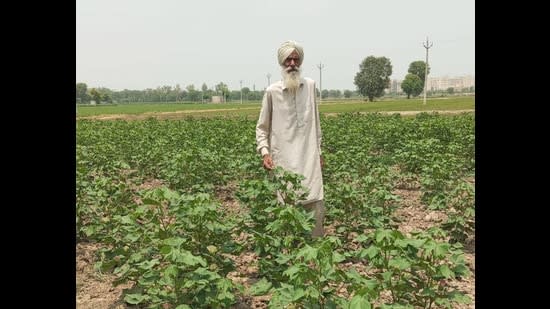
Cotton farmers in Punjab are facing a severe crisis as whitefly and pink bollworm infestations emerge amid record-low crop acreage and unfavorable weather patterns characterized by high humidity and delayed monsoons.
The Crisis in Punjab's Cotton Belt: A Perfect Storm of Pests and Climate
Punjab's agricultural sector is currently grappling with a precarious situation as the cotton crop—a vital commercial asset for the region—faces a dual onslaught from devastating pests. The emergence of whitefly and pink bollworm infestations has sent shockwaves through the farming community, especially as these outbreaks coincide with a period where cotton acreage has plummeted to record lows. This convergence of biological threats and shrinking production capacity creates a high-risk environment for the regional economy, threatening the livelihoods of thousands of small-scale farmers who depend on this fiber crop.
The Biological Threat: Whitefly and Pink Bollworm
The current infestation is particularly dangerous because it involves two distinct but equally destructive pests. The whitefly, a sap-sucking insect, not only weakens the plant by draining its nutrients but also acts as a vector for various plant viruses that can lead to total crop failure. Simultaneously, the pink bollworm attacks the heart of the cotton plant—the boll—feeding on the seeds and rendering the cotton lint unusable. When these two pests strike concurrently, the plant's resilience is pushed to its limit, often leading to a drastic reduction in yield quality and quantity. The synergy of these pests ensures that both the vegetative growth and the reproductive output of the crop are compromised.
Climatic Catalysts and Environmental Stress
The proliferation of these pests is not an isolated biological event but is deeply rooted in recent climatic anomalies. The report highlights that humid weather and delayed monsoon conditions have created an ideal breeding ground for these insects. Typically, a timely monsoon helps regulate temperatures and can naturally disrupt certain pest life cycles; however, a delay creates a window of high humidity and warmth that accelerates the reproduction of whiteflies and bollworms. This weather-driven surge puts farmers in a reactive position, where they must battle an exponentially growing pest population before the primary growing season has even stabilized.
The Significance of Record-Low Acreage
Adding to the severity of the pest threat is the fact that cotton acreage in Punjab has shrunk to a record low. This trend is indicative of a broader systemic shift in the region's agriculture, where farmers may be pivoting away from cotton due to previous years of instability, soil degradation, or the lure of more stable crops. However, this shrinkage creates a dangerous economic paradox: as the total volume of cotton produced decreases, the impact of any single infestation becomes proportionally more devastating. With fewer acres under cultivation, the region's overall cotton output is already fragile; a significant percentage loss due to pests could lead to a critical shortage in the local supply chain.
Socio-Economic Implications for Rural Punjab
The economic fallout of this crisis extends beyond the farm gate. Cotton is a primary raw material for the textile industry, and a collapse in Punjab's production could drive up local prices and disrupt downstream processing units. For the farmers, the cost of combating these pests—through expensive chemical pesticides and labor-intensive monitoring—often outweighs the potential profit from the harvest, especially when yields are already low. This creates a cycle of debt and financial instability, potentially accelerating the abandonment of cotton farming in favor of other crops, further eroding the biodiversity of the regional agricultural landscape.
Future Outlook and Mitigation Strategies
To mitigate these risks, there is an urgent need for a transition toward Integrated Pest Management (IPM) and the adoption of more resilient, pest-resistant seed varieties. The current crisis underscores the vulnerability of monoculture-heavy systems to climatic shifts. Future trends suggest that unless there is a concerted effort to synchronize planting schedules with updated weather forecasts and provide farmers with biological control agents, the cotton sector in Punjab may continue its decline. Strengthening the agricultural extension services to provide real-time warnings about humidity-driven pest surges will be critical in preventing future outbreaks from reaching this level of severity.
Summary
In conclusion, the current situation in Punjab is a stark reminder of how climatic instability can amplify biological threats. The combination of whitefly and pink bollworm infestations, exacerbated by delayed monsoons and high humidity, is hitting a cotton sector that is already at its lowest point in terms of acreage. Without immediate intervention and a long-term strategy to address crop resilience and climate adaptation, the region risks a permanent decline in its cotton production capacity.
Verification Required?