Unsung Hero| Meet Rahul Bavaji, the conservationist educating tribal children in Karnataka
Source Entity
Atiya Firdos
Intelligence Synthesis
AI-Generated Core Insights
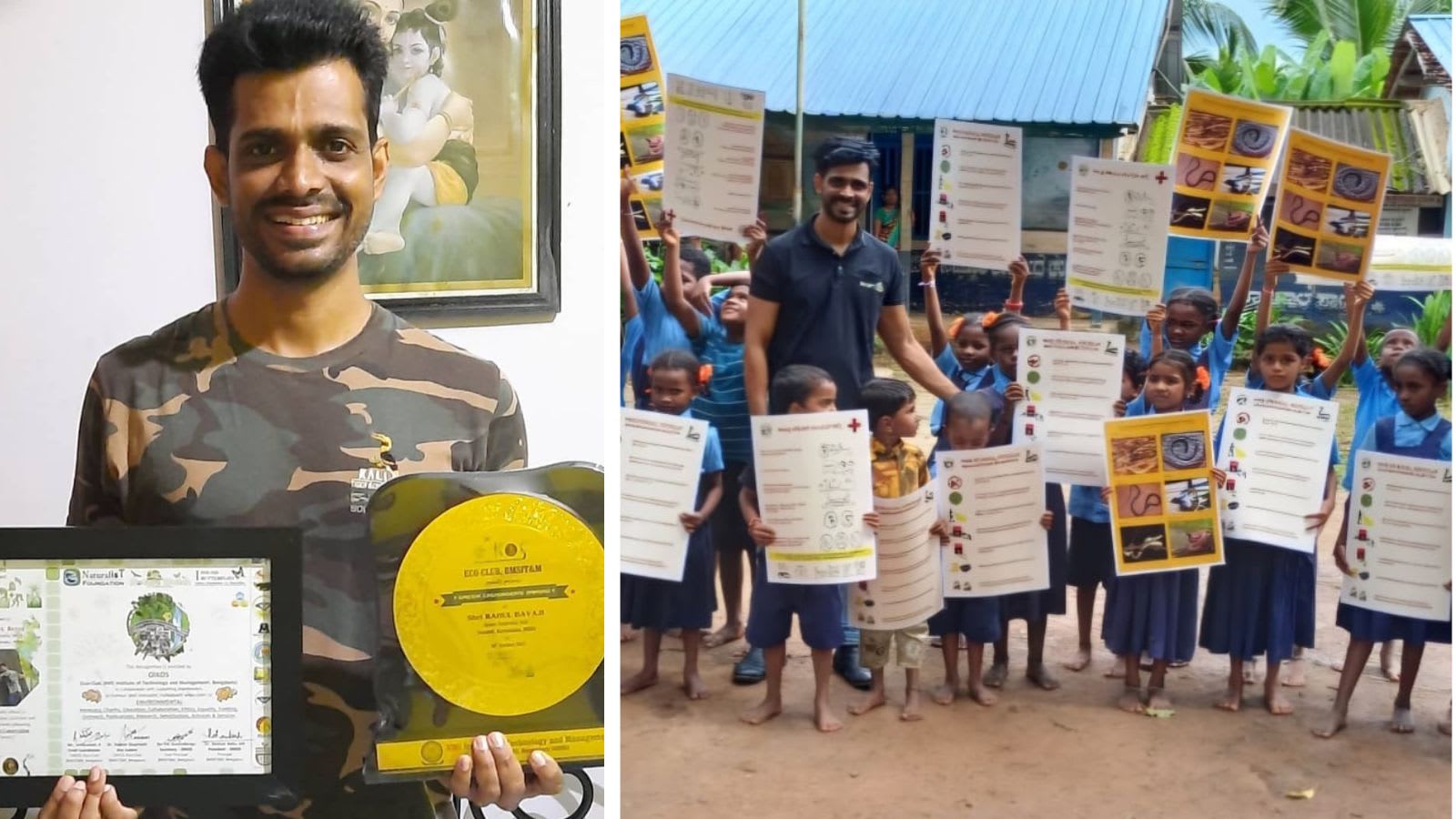
Conservationist Rahul Bavaji is making a significant social impact in Karnataka's Kali Tiger Reserve by providing educational support and guidance to nearly 300 tribal children, bridging the gap between wildlife conservation and community development.
The Intersection of Conservation and Literacy: The Impact of Rahul Bavaji
In the heart of Karnataka’s Kali Tiger Reserve, a profound synergy between environmental stewardship and social empowerment is unfolding. Rahul Bavaji, a dedicated conservationist, has emerged as a pivotal figure for the tribal communities residing within the reserve. By focusing his efforts on the education of nearly 300 tribal children, Bavaji is addressing a critical void in the region's social infrastructure. His arrival at the start of every academic year is not merely a routine visit but a catalyst for hope and academic continuity for children who exist on the margins of the formal education system.
Overcoming the Barriers of Geographical Isolation
Education in protected wildlife areas often faces systemic hurdles. Tribal populations in reserves like Kali frequently deal with geographical isolation, limited infrastructure, and a historical disconnect from state-run educational frameworks. For these children, the journey to a classroom is often fraught with physical and social obstacles. Bavaji’s intervention serves as a bridge, ensuring that these students are not only enrolled but are motivated to remain in school. By acting as a mentor and facilitator, he mitigates the risk of early school dropout rates, which are historically high among forest-dwelling communities due to economic pressures and lack of accessibility.
The Strategic Link Between Education and Conservation
From an analytical perspective, Bavaji’s work represents a sophisticated approach to conservation known as 'community-led stewardship.' There is an intrinsic link between the literacy of local inhabitants and the preservation of biodiversity. When tribal children are educated, they are better equipped to navigate the legalities of forest rights and are more likely to adopt sustainable practices that coexist with wildlife. By empowering the youth, Bavaji is effectively creating a future generation of local guardians who can advocate for the Kali Tiger Reserve using both traditional indigenous knowledge and modern scientific understanding, thereby reducing human-wildlife conflict.
Socio-Economic Implications for Tribal Welfare
Beyond the ecological benefits, the educational push led by Bavaji has deep socio-economic implications. In rural Karnataka, literacy is the primary vehicle for escaping generational poverty and accessing government welfare schemes. For the tribal children of the Kali Tiger Reserve, basic education provides the tools necessary to engage with the broader economy and claim their rights under the Forest Rights Act. This empowerment is crucial in preventing the exploitation of tribal communities by external actors and ensures that the benefits of conservation—such as eco-tourism or sustainable harvesting—are shared equitably with those who live closest to the land.
Historical Context and the Role of Individual Agency
Historically, the approach to wildlife reserves in India often involved the displacement of indigenous people or the strict exclusion of human activity to protect fauna. However, modern conservation philosophy has shifted toward an integrated model. Rahul Bavaji's efforts mirror this global shift, recognizing that humans are a part of the ecosystem rather than an intrusion upon it. His role as an 'unsung hero' highlights the immense power of individual agency in filling the gaps left by bureaucratic delays in government educational outreach. His work underscores a transition from top-down governance to grassroots empowerment.
Future Trends in Community-Based Conservation
Looking forward, the model implemented by Bavaji is likely to become a blueprint for other protected areas across India and the Global South. We can expect a trend where 'conservationists' are no longer defined solely by their ability to protect animals, but by their ability to uplift the humans living alongside them. The integration of mobile classrooms, digital literacy, and indigenous curriculum within tiger reserves will likely increase, ensuring that conservation is not seen as a barrier to development, but as a driver for it.
Conclusion
Rahul Bavaji’s commitment to the children of the Kali Tiger Reserve is a testament to the fact that true conservation is impossible without social justice. By ensuring that 300 tribal children have a path to education, he is securing both the future of the community and the health of the forest. His work demonstrates that the most effective way to protect the wild is to invest in the people who call the wild their home.