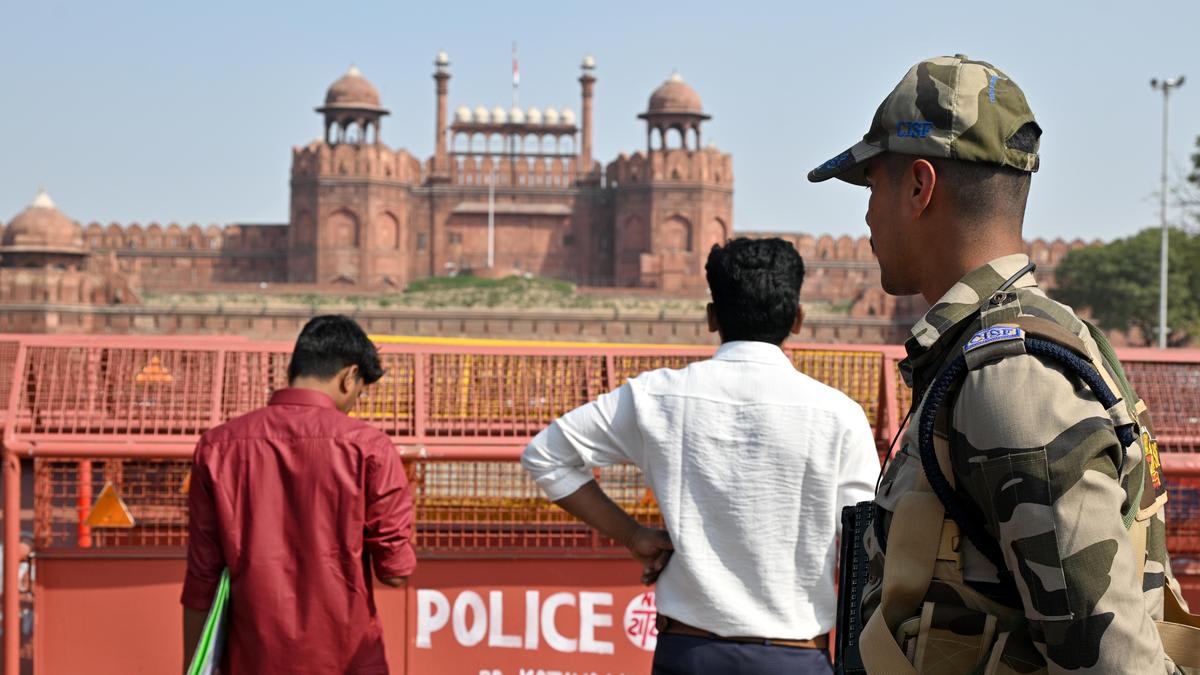
Security tightened at Red Fort after bomb threat call; no suspicious objects found
Source Entity
India Latest News: Top National Headlines Today & Breaking News | The Hindu
Intelligence Synthesis
AI-Generated Core Insights
Delhi Police increased security at the historic Red Fort after a bomb threat call was routed from Mumbai. A comprehensive search of the premises yielded no suspicious objects, confirming the threat as a hoax.
Security Alert at Red Fort: Analysis of the Bomb Threat Incident
In a sudden escalation of security measures, the Red Fort in Delhi was placed on high alert following a bomb threat call. The incident highlights the persistent vulnerabilities of high-profile national landmarks and the critical nature of inter-city police coordination. While the situation was resolved without the discovery of any hazardous materials, the event underscores the psychological impact and operational strain caused by security hoaxes in major metropolitan areas.
Inter-State Coordination and the Communication Chain
One of the most notable aspects of this incident is the routing of the threat. The call was initially received by the Mumbai police control room before being forwarded to the Delhi Police. This trajectory suggests a deliberate attempt by the caller to distance themselves from the target or to complicate the tracking process. Such inter-state coordination between the Mumbai and Delhi police forces is a standard but vital protocol, ensuring that intelligence is shared rapidly across state lines to prevent potential catastrophes. The speed with which the information was transferred demonstrates a functional emergency communication network, yet it also reveals how easily remote actors can trigger massive security mobilizations in distant cities.
Security Protocols and Operational Response
Upon receiving the alert, the Delhi Police and associated security agencies immediately 'tightened' security. In the context of a site as massive and historically significant as the Red Fort, this typically involves the deployment of bomb disposal squads, K9 units for scent detection, and a rigorous sweep of all entry and exit points. The Red Fort, being a UNESCO World Heritage site and a focal point for national celebrations, requires a multi-layered security apparatus. The fact that no suspicious objects were found indicates that the security sweep was comprehensive, providing a necessary validation of the site's safety for the thousands of tourists and citizens who visit daily.
The Symbolic Significance of the Red Fort
To understand why a threat to the Red Fort is treated with such gravity, one must consider its symbolic weight. The fort is not merely a tourist attraction; it is the site where the Prime Minister of India hoists the national flag every Independence Day. It represents Indian sovereignty and historical resilience. Because of this, any threat—regardless of its validity—is viewed through the lens of national security. The potential for a high-visibility attack at such a location makes the security response necessarily aggressive and exhaustive, as the political and social cost of a failure would be catastrophic.
The Pattern of Security Hoaxes
This incident fits into a broader, troubling trend of 'bomb threat hoaxes' aimed at public infrastructure. These calls are often designed to create panic, test the response times of security forces, or distract law enforcement from other activities. While the lack of a physical device in this case confirms it as a hoax, the resource drain is significant. Diverting specialized units and manpower to clear a landmark like the Red Fort incurs a high operational cost and can lead to 'alarm fatigue' among security personnel if such incidents become too frequent.
Conclusion and Future Outlook
In summary, while the threat to the Red Fort was found to be baseless, the incident serves as a reminder of the constant vigilance required to protect national monuments. The seamless transition of information from Mumbai to Delhi prevented any delay in the security response. Moving forward, law enforcement agencies will likely continue to refine their digital forensics to track the origins of such hoax calls more effectively, aiming to deter future attempts to disrupt public order through psychological warfare.
Verification Required?