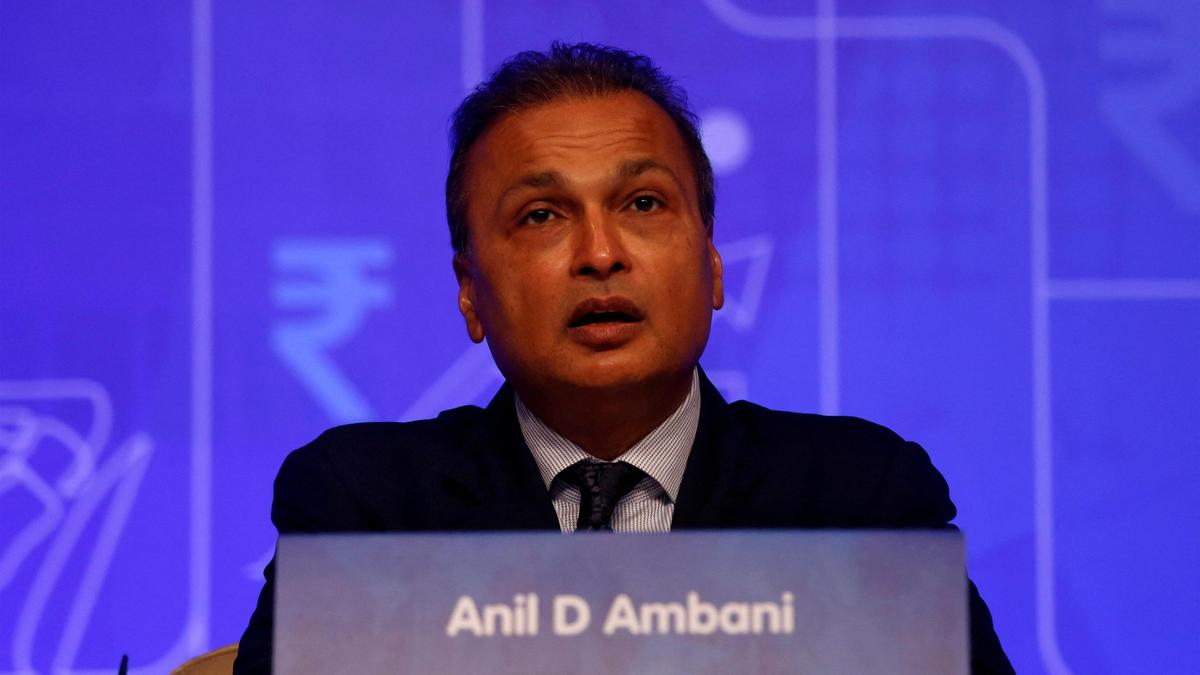
Reliance Anil Ambani Group case: ED attaches assets worth ₹1,021 crore
Source Entity
India Latest News: Top National Headlines Today & Breaking News | The Hindu
Intelligence Synthesis
AI-Generated Core Insights
The Enforcement Directorate (ED) has attached assets worth ₹1,021 crore in legal proceedings against the Reliance Anil Ambani Group, raising the total attachments under the Prevention of Money Laundering Act (PMLA) to ₹20,367 crore and under FEMA to ₹77.86 crore.
Enforcement Directorate Escalates Action Against Reliance Anil Ambani Group
In a significant escalation of its ongoing financial investigations, the Enforcement Directorate (ED) has attached assets worth ₹1,021 crore belonging to the Reliance Anil Ambani Group. This latest action is not an isolated event but part of a systemic crackdown on the group's financial dealings. The sheer scale of the current attachment underscores the intensity of the probe and the ED's commitment to recovering funds potentially linked to illicit activities. This move signals a tightening noose around the group's remaining liquid and fixed assets as the agency continues to trace the flow of capital.
Understanding the Legal Framework: PMLA vs. FEMA
To fully grasp the implications of this news, it is essential to distinguish between the two legal frameworks cited: the Prevention of Money Laundering Act (PMLA) and the Foreign Exchange Management Act (FEMA). The PMLA is a stringent criminal law designed to prevent money laundering and provide for the confiscation of property derived from scheduled offenses. The fact that the total attachments under PMLA have reached a staggering ₹20,367 crore suggests that the ED is investigating serious allegations of fund diversion and the layering of illicit wealth.
In contrast, the ₹77.86 crore attached under FEMA pertains to regulations governing foreign exchange transactions. While FEMA is generally viewed as a civil regulatory framework rather than a criminal one, these attachments indicate suspected irregularities in how the group handled international capital flows, cross-border investments, or repatriation of funds. Together, these two prongs of investigation suggest a comprehensive audit of both domestic and international financial movements within the group.
The Magnitude of Financial Seizures
The cumulative figure of over ₹20,000 crore in PMLA attachments is one of the largest in the history of corporate investigations in India. Such a massive valuation indicates that the ED is not merely looking at a single transaction but is likely unraveling a complex web of shell companies, inter-corporate deposits, and diverted loans. For the Reliance Anil Ambani Group, which has already faced significant financial distress and debt crises over the last decade, these attachments further deplete its ability to settle outstanding liabilities or restructure its remaining business interests.
Broader Implications for Corporate Governance
This case serves as a critical case study in the evolving landscape of Indian corporate governance. The aggressive pursuit of high-profile industrialists by the ED reflects a broader trend toward increasing accountability for the 'promoter' class in India. Historically, large conglomerates often operated with a degree of opacity regarding inter-company transfers; however, the current regulatory environment is increasingly intolerant of such practices. The Anil Ambani case highlights the risks associated with aggressive leverage and the subsequent legal perils when those financial structures are scrutinized for potential money laundering.
Future Trends and Legal Trajectory
Looking forward, it is probable that the ED will continue to identify and freeze further assets as they trace the paper trail of the group's historical transactions. The legal battle is expected to move into a more intensive phase in the appellate tribunals and higher courts, where the group will likely challenge the validity of these attachments. However, the sheer volume of assets already seized provides the government with significant leverage. We can expect this case to set a precedent for how the Indian state handles the insolvency of large-scale promoters when criminal financial elements are suspected.
Conclusion
The attachment of ₹1,021 crore is a stark reminder of the ongoing legal turmoil surrounding the Reliance Anil Ambani Group. With total seizures crossing the ₹20,000 crore mark under PMLA, the situation has evolved from a corporate debt crisis into a high-stakes legal battle over financial integrity. As the ED continues its probe, the outcome will not only determine the fate of the group's remaining assets but will also reinforce the regulatory boundaries for corporate financial conduct in India.
Verification Required?