Tamil Nadu government seeks assistance from Union government for MRTS revamp in Chennai
Source Entity
India Latest News: Top National Headlines Today & Breaking News | The Hindu
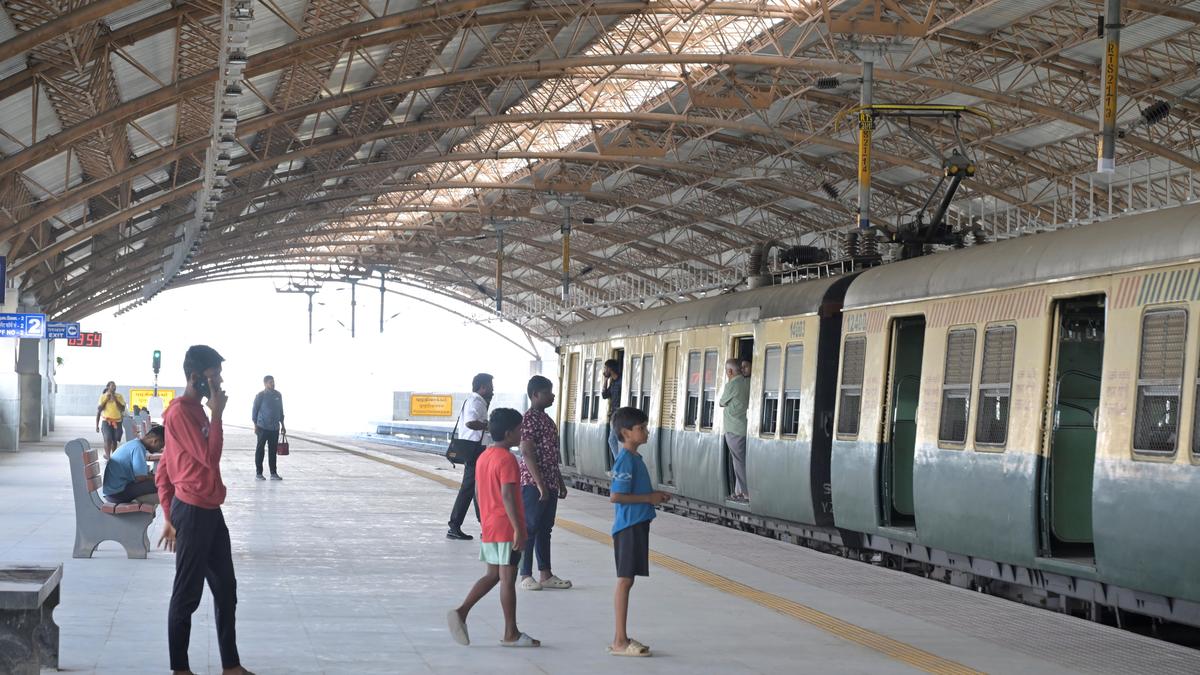
₹6,600-crore project is aimed at transforming MRTS to Chennai Metro standards by refurbishing stations and upgrading trains; T.N. urges Union govt. to consider plan as ‘Central sector’ project
Revitalizing Urban Mobility: The Proposed Transformation of Chennai's MRTS
The Tamil Nadu government's recent proposal to seek assistance from the Union government for the revamp of the Mass Rapid Transit System (MRTS) in Chennai marks a strategic effort to modernize the city's aging transit infrastructure. With a projected investment of ₹6,600 crore, the initiative aims to elevate the MRTS from its current state to the high-efficiency standards of the Chennai Metro. This move is not merely a cosmetic upgrade but a comprehensive overhaul designed to integrate the city's disparate transit modes into a seamless, world-class network.
The Scope of the ₹6,600-Crore Overhaul
At the heart of this proposal is the desire to bring the MRTS on par with Metro standards. This involves a two-pronged approach: the refurbishment of existing stations and the upgrading of the rolling stock. By modernizing stations, the government aims to improve passenger amenities, safety, and accessibility, while upgrading trains will likely focus on speed, frequency, and energy efficiency. The request for the Union government to categorize this as a 'Central sector' project is a critical financial maneuver, suggesting that the state views this as a project of national urban importance, thereby seeking a larger share of funding from the central treasury.
Historical Context and the Need for Parity
The MRTS was envisioned as a backbone for Chennai's commuter movement, yet it has historically struggled with inconsistent ridership and maintenance issues compared to the more recent and polished Chennai Metro Rail Limited (CMRL). For years, the MRTS has functioned as a hybrid between a suburban railway and a metro, often lacking the prestige and efficiency of the latter. This proposed revamp is an attempt to erase that disparity, ensuring that commuters using the MRTS experience the same level of comfort and reliability as those on the Metro lines, thereby redistributing the passenger load across the city's transit arteries.
Implications for Urban Congestion and Connectivity
From an urban planning perspective, transforming the MRTS into a Metro-standard system has profound implications for Chennai's traffic management. Chennai is one of India's most congested metropolises, and a high-capacity, reliable rail system is the most viable solution to reduce dependency on private vehicles. By improving the quality of the MRTS, the government can encourage a shift in commuter behavior, potentially reducing the volume of cars and two-wheelers on the roads. Furthermore, this upgrade will likely facilitate better 'last-mile connectivity,' making it easier for passengers to transition between the MRTS, the Metro, and the city's bus networks.
Strategic Alignment with National Urban Goals
By urging the Union government to treat this as a 'Central sector' project, Tamil Nadu is aligning its local needs with national goals of sustainable urban development. The central government has previously emphasized the importance of 'Smart Cities' and integrated transport. If the Union government approves this funding, it would signal a commitment to the 'Transit-Oriented Development' (TOD) model, where high-density urban growth is concentrated around high-quality transit hubs. This would not only boost the economy of the areas surrounding the MRTS stations but also set a precedent for other cities in India looking to upgrade legacy rail systems.
Future Trends: Toward a Multimodal Transit Ecosystem
Looking ahead, the successful implementation of this revamp could lead to the creation of a truly multimodal transit ecosystem in Chennai. We can expect the integration of common ticketing systems (like the National Common Mobility Card) and synchronized scheduling between the MRTS and other rail networks. As the system evolves, the potential for increased commercial development around revamped stations—such as retail hubs and office complexes—will likely grow, transforming the MRTS corridors into vibrant economic zones rather than just transit paths.
Conclusion
In summary, the Tamil Nadu government's bid for a ₹6,600-crore revamp of the Chennai MRTS is a forward-looking step toward solving the city's mobility challenges. By seeking Union assistance to bring the system up to Metro standards, the state is prioritizing long-term sustainability and passenger experience. While the financial approval from the Union government remains the primary hurdle, the potential rewards—reduced congestion, improved commuter satisfaction, and enhanced urban economic growth—make this a vital project for the future of Chennai.
Verification Required?