Sunlight on demand? US approves plans to build 60-foot mirror in space
Source Entity
TOI WORLD DESK
Intelligence Synthesis
AI-Generated Core Insights
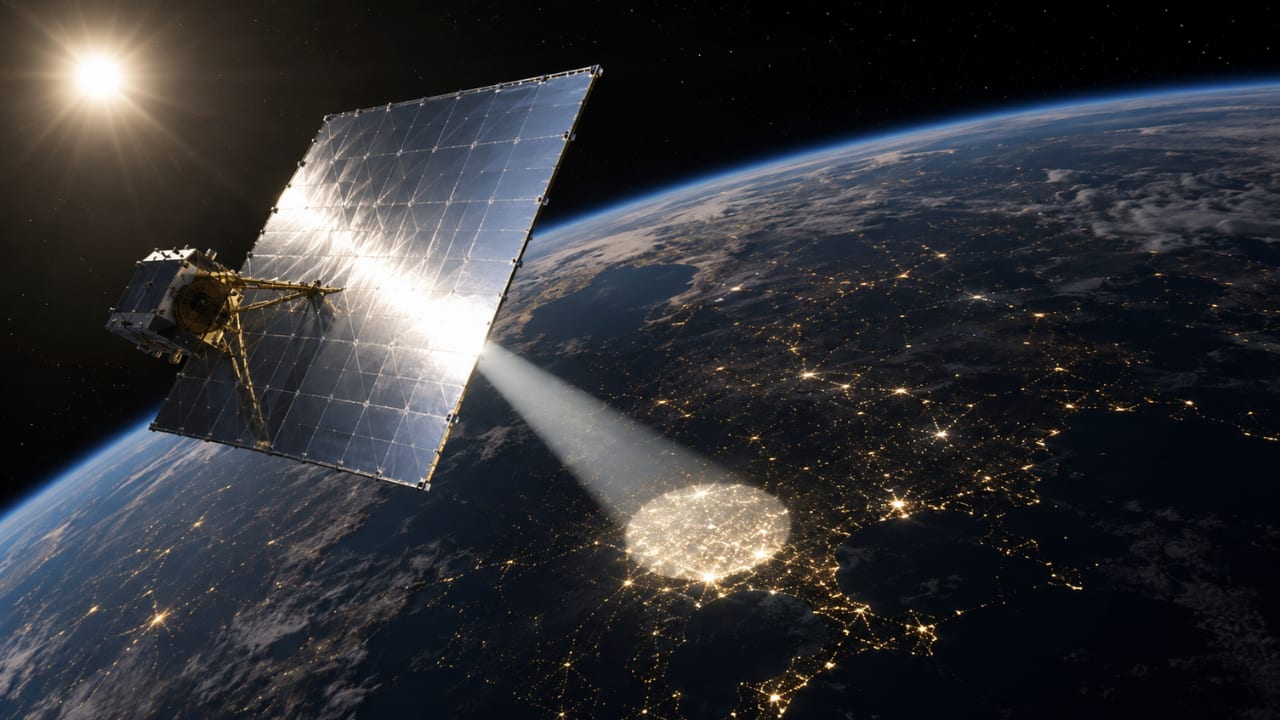
The United States has approved a massive plan to deploy a constellation of space-based mirrors, beginning with 1,000 satellites by 2028 and scaling to 50,000 by 2035, to provide 'sunlight on demand' via orbital light redirection.
The Dawn of Orbital Light Management
The recent approval of a massive US initiative to deploy a constellation of space-based mirrors marks a pivotal moment in the intersection of aerospace engineering and global energy management. The plan, which involves the deployment of 60-foot mirrors designed to redirect solar radiation, represents a leap from theoretical space-based solar power (SBSP) to a scalable, industrial-grade orbital infrastructure. By aiming to deploy 1,000 larger satellites by 2028 and eventually scaling to a staggering 50,000 satellites by 2035, the project seeks to transform how humanity interacts with solar energy, moving from passive collection on Earth to active redirection from orbit.
A Phased Roadmap to Megascale Infrastructure
The strategic rollout of this project is characterized by an aggressive, multi-stage deployment schedule. The initial phase, targeting 1,000 satellites by 2028, serves as a critical proof-of-concept to test the stability, precision, and communication protocols of the 60-foot mirror units. If successful, the subsequent expansion to 50,000 satellites by 2035 would represent one of the largest man-made structures in human history. This exponential growth suggests a move toward a 'mesh' of mirrors capable of providing highly localized, 'on-demand' sunlight to specific terrestrial regions, potentially mitigating the intermittency issues traditionally associated with solar power.
Technical Mechanisms and Energy Implications
At the core of this technology is the ability to manipulate light at a distance. By utilizing large-scale reflective surfaces, the constellation could theoretically provide illumination or concentrated thermal energy to specific areas on Earth during nighttime or through thick cloud cover. This 'sunlight on demand' could revolutionize agricultural productivity in low-light regions, support deep-sea research, or provide emergency energy boosts to disaster-stricken areas. Historically, such concepts have been relegated to science fiction, but the recent US approval signals that the economic and technical feasibility of managing solar flux from orbit has reached a tipping point.
Scientific Concerns and Environmental Risks
Despite the potential benefits, the scientific community has raised significant alarms regarding the unintended consequences of such a massive orbital presence. One primary concern is the impact on the Earth's atmosphere and ecosystem; redirecting concentrated sunlight could create localized 'hot spots,' potentially disrupting weather patterns or sensitive biological cycles. Furthermore, the sheer density of a 50,000-satellite constellation poses an unprecedented risk of the 'Kessler Syndrome'—a cascade of orbital collisions that could render near-Earth space unusable. There are also profound concerns regarding light pollution and the impact of these mirrors on astronomical observations, which could effectively blind terrestrial telescopes.
Geopolitical and Economic Context
The approval of this plan also carries heavy geopolitical weight. The ability to control and redirect solar energy is not merely a technological feat but a tool of significant strategic power. As nations race to secure dominance in the 'New Space' economy, the control of orbital assets that can influence terrestrial energy supplies could become a new frontier for international tension. Economically, this shift could disrupt traditional energy markets, transitioning the focus from fossil fuel extraction to the management of orbital infrastructure and high-tech satellite maintenance.
Conclusion: A High-Stakes Technological Leap
In summary, the US plan to build a massive space-mirror constellation is a high-stakes gamble on the future of energy and space utilization. While the promise of 'sunlight on demand' offers a revolutionary solution to energy scarcity and light management, the environmental and orbital risks are equally monumental. The decade leading up to 2035 will be a critical period of testing, regulation, and scientific scrutiny as humanity attempts to master the ability to direct the very light that sustains life on Earth.