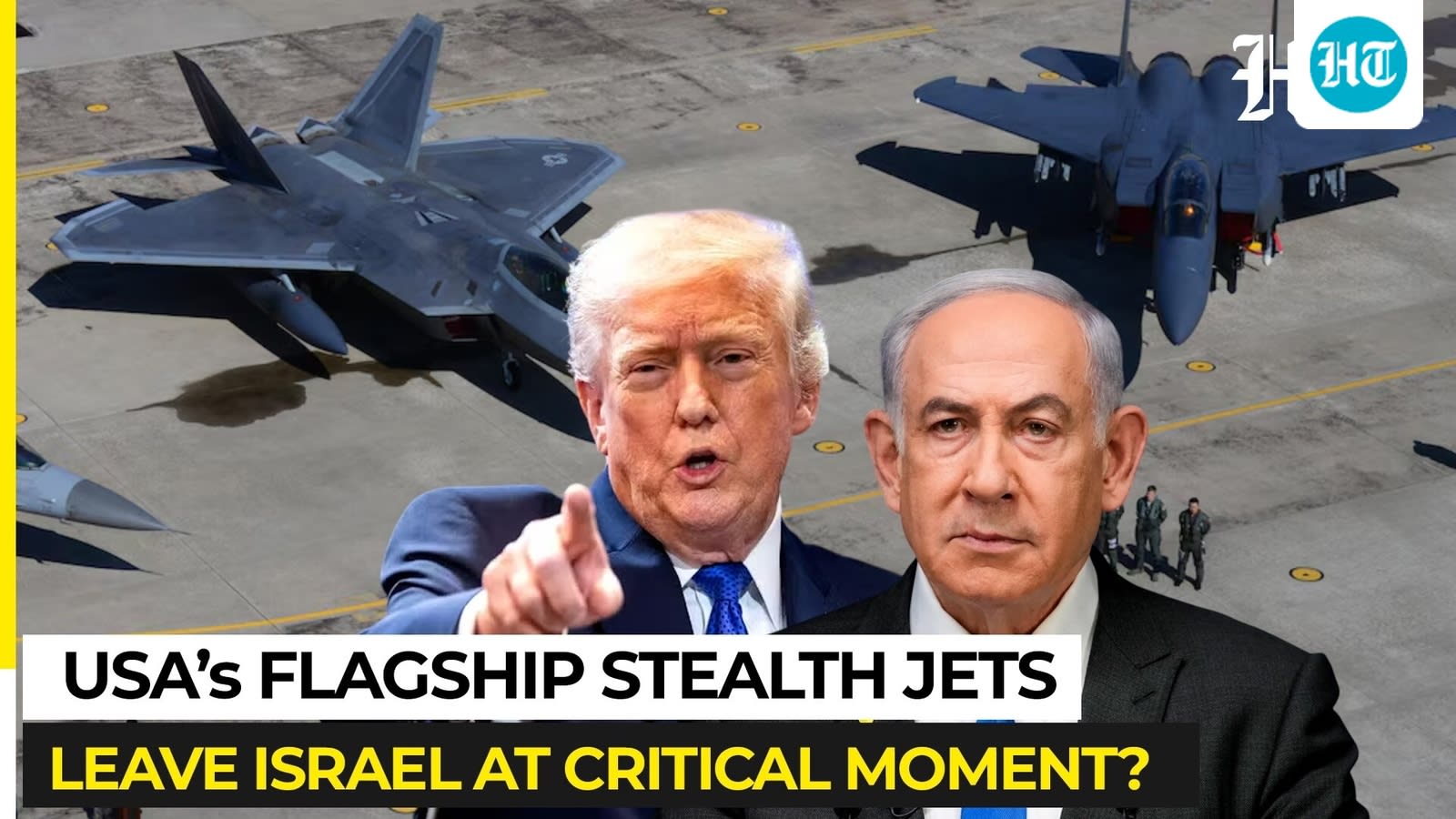
Trump restarts Iran war but pulls F-22 raptors out of Israel; abandons US support for Netanyahu?
Source Entity
Latest News: Today's Latest News Headlines from India & World | Hindustan Times | Hindustan Times
Intelligence Synthesis
AI-Generated Core Insights
The U.S. Air Force has repositioned F-22 Raptor stealth fighters from Israel's Ovda Air Base to RAF Fairford in the United Kingdom following a deployment focused on operations against Iran.
Strategic Realignment: The Withdrawal of F-22 Raptors from Israel
Recent military movements involving the U.S. Air Force have sparked significant geopolitical debate following the reported withdrawal of F-22 Raptor stealth fighters from Israel's Ovda Air Base. These advanced aircraft, which represent the pinnacle of American air superiority, were repositioned to RAF Fairford in the United Kingdom. While the official designation for this move is 'post-campaign force adjustments,' the timing and location of the movement suggest a complex shift in the U.S. military's posture in the Middle East, specifically regarding its containment and engagement strategies toward Iran.
The Role of the F-22 in the Iranian Theater
To understand the gravity of this movement, one must consider the capabilities of the F-22 Raptor. As a fifth-generation stealth fighter, the Raptor is designed to penetrate contested airspace and eliminate enemy aircraft and surface-to-air threats before the U.S. forces are even detected. Their deployment to Ovda Air Base in late February was a clear signal of intent, providing a high-readiness deterrent and a strike capability directed at Iranian interests. The presence of these jets in Israel served as a force multiplier for regional allies and a stark warning to Tehran that the U.S. was prepared to execute high-precision operations if tensions escalated further.
Analyzing the Shift to RAF Fairford
The decision to move these assets to RAF Fairford in the UK indicates a transition from an active, forward-deployed combat posture to a strategic reserve or rotational phase. RAF Fairford has historically served as a critical staging ground for U.S. bomber and fighter operations due to its vast infrastructure and strategic location. By pulling the Raptors back to the UK, the U.S. may be attempting to lower the immediate temperature of the conflict while maintaining the ability to redeploy rapidly. This movement suggests that the specific 'campaign' objectives for which the jets were deployed in February have either been met or have transitioned into a period of monitoring.
Geopolitical Implications for the U.S.-Israel Alliance
A central point of contention arising from this movement is the perceived impact on the relationship between the U.S. and the Israeli government under Benjamin Netanyahu. The headline's speculation regarding the 'abandonment' of support reflects a broader anxiety over the consistency of U.S. military commitments. However, military analysts often view such movements as routine logistical rotations rather than political statements. While the physical absence of the F-22s from Israeli soil may be interpreted by critics as a waning of support, it is more likely a reflection of the U.S. military's need to maintain fleet readiness and avoid overextending assets in a single theater.
Future Trends and Regional Stability
Looking forward, the repositioning of these assets suggests a move toward a 'flexible deterrence' model. The U.S. is likely to avoid a permanent, high-profile stealth presence in Israel to prevent the appearance of an imminent, large-scale invasion of Iran, which could trigger an uncontrolled regional war. Instead, the U.S. will likely rely on a combination of naval presence and rotating air assets. The key trend to watch will be whether the U.S. replaces the F-22s with other capabilities or leaves a vacuum that might encourage Iranian aggression, potentially forcing a rapid return of stealth assets to the region.
Conclusion
In summary, the movement of F-22 Raptors from Ovda Air Base to the UK is a calculated military adjustment following a period of heightened tension with Iran. While the move has been framed by some as a political withdrawal of support for Israel, the operational reality points toward a post-campaign realignment. The U.S. continues to balance the need for a credible deterrent against Iran with the logistical necessity of rotating its most advanced aerial assets to maintain global readiness.
Verification Required?