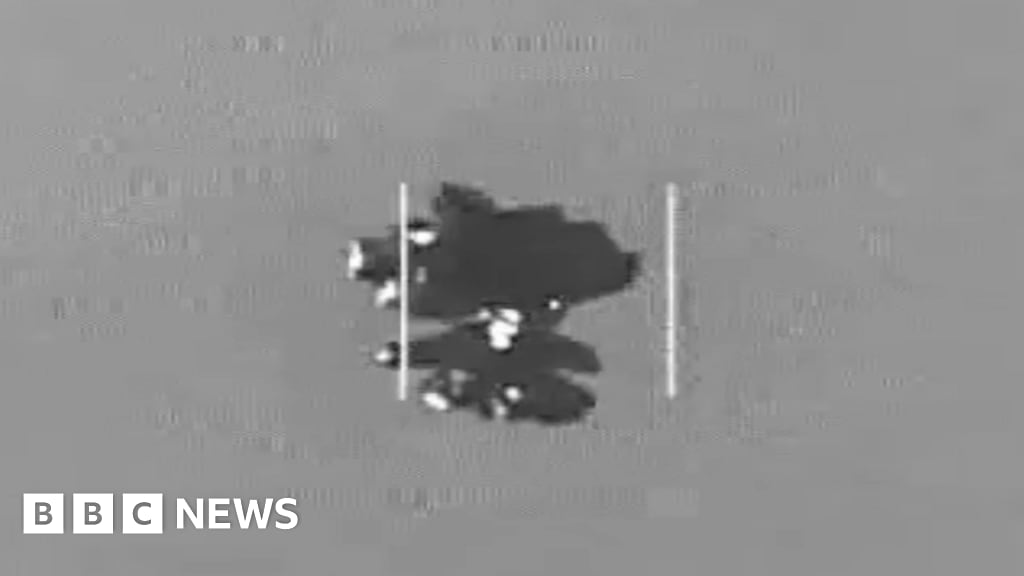
US declassifies even more UFO videos
Source Entity
BBC News
Intelligence Synthesis
AI-Generated Core Insights
The US government has released a fourth installment of declassified UFO/UAP videos, signaling a continued commitment to transparency by promising to release unresolved cases on a rolling basis.
Transparency and the Unknown: Analyzing the US Government's Latest UFO Declassifications
The United States government has once again stepped into the spotlight of global curiosity by publishing a fourth installment of declassified videos featuring unresolved UFO cases. This move is not an isolated incident but part of a broader, strategic shift in how the Department of Defense and intelligence communities handle Unidentified Anomalous Phenomena (UAP). By promising to release further files on a rolling basis, the government is transitioning from a historical posture of systemic denial toward a framework of incremental transparency. This shift suggests a recognition that public trust is paramount, especially as legislative pressure for disclosure increases.
The Strategic Shift in Disclosure
Historically, the study of UFOs was shrouded in secrecy and often dismissed as fringe science or the result of mass hysteria. However, the current approach—marked by the release of these 'unresolved' cases—indicates a move toward scientific rigor. By labeling these cases as 'unresolved,' the government is effectively admitting that there are aerial phenomena that defy current technological explanations. This admission is critical because it moves the conversation away from the sensationalism of 'alien encounters' and toward a legitimate national security concern: the identification of unknown platforms in restricted airspace.
National Security and Adversarial Technology
While the public often focuses on the extraterrestrial implications of these videos, the core driver for these declassifications is likely national security. From an expert geopolitical perspective, 'unresolved' cases often refer to objects that exhibit flight characteristics—such as instantaneous acceleration or hypersonic speeds without visible propulsion—that could indicate advanced technology from adversarial nations. By releasing this data, the US government may be attempting to crowdsource analysis from the wider scientific community or signal to adversaries that their stealth capabilities are being monitored and documented, even if they are not yet fully understood.
The Role of the 'Rolling Basis' Release
The promise to release files on a 'rolling basis' is a tactical communication strategy. Instead of a single, overwhelming 'data dump' that could lead to chaotic interpretations and conspiracy theories, a phased release allows the government to control the narrative and provide context as the information emerges. This method also keeps the issue in the public consciousness, demonstrating a perceived commitment to openness while allowing the government to vet sensitive intelligence sources and methods before any specific video is made public.
Historical Context and Public Perception
This trend of declassification follows decades of tension between the government and UFO researchers. From the early days of Project Blue Book to the more recent testimonies before Congress, the demand for truth has only grown. The current administration's willingness to release these videos reflects a changing cultural zeitgeist where the stigma surrounding UAPs has diminished. This normalization allows military pilots and radar operators to report sightings without fear of professional ridicule, which in turn provides the government with a more comprehensive dataset of these unresolved anomalies.
Future Trends in UAP Disclosure
Looking forward, it is probable that the 'rolling basis' of releases will eventually lead to a more formalized public archive of UAP data. We can expect a greater integration of civilian scientific research and military data, potentially leading to the creation of a standardized classification system for anomalous phenomena. As more videos are released, the focus will likely shift from whether these objects exist to what they are, driving innovation in sensor technology and aerospace engineering as the US seeks to match or exceed the capabilities displayed in these unresolved videos.
Summary
The release of the fourth installment of UFO videos marks a significant milestone in the US government's effort to modernize its approach to UAPs. By prioritizing transparency and acknowledging the existence of unresolved cases, the government is addressing both national security vulnerabilities and public demand for honesty. This ongoing process of declassification suggests a future where the study of the unknown is treated as a legitimate scientific and strategic priority rather than a clandestine secret.