
AI Executive Summary
"This article analyzes the strategic pivot from centralized hub-and-spoke diagnostic models to decentralized, photonics-based bedside sensing. It examines the economic and geopolitical divergence between Nigeria's hub manufacturing and East Africa's distributed infrastructure, highlighting a shift toward systemic resilience in healthcare."
Nairobi clinics are discarding their sample couriers. These logistics chains used to dictate the pace of patient care. Photonics now enables diagnosis at the bedside. Results that once took days arrive in minutes.
The 15-Minute Diagnostic Threshold
Ultra-sensitive biosensors now utilize bound-state-in-the-continuum (BIC) metasurfaces to detect tumor extracellular vesicles. Nature reports this process takes only 15 minutes for a few tens of vesicles. Such speed removes the necessity for cold-chain transport to a central facility. Centralized labs are essentially high-overhead warehouses for biological waste.
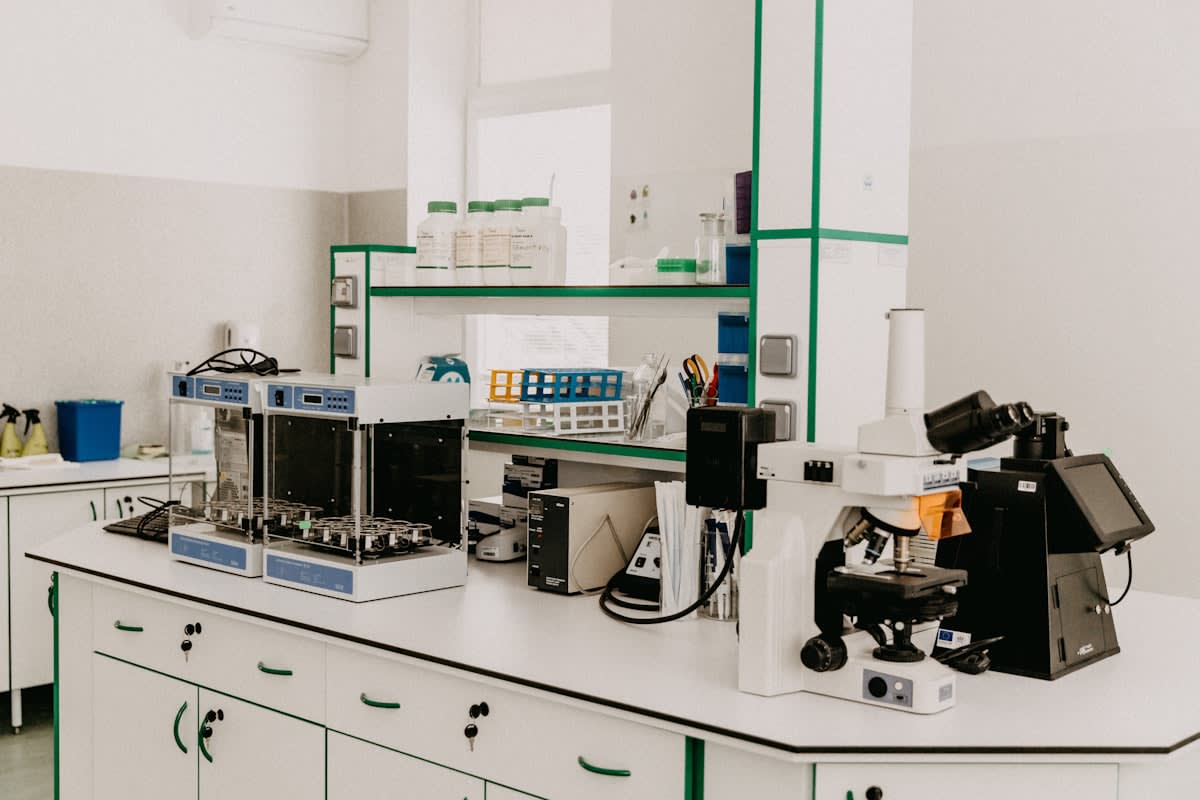
Contrast this with the traditional model. Nigeria is currently pushing a different path via Codix Bio, which aims to be a regional manufacturing hub. International partners like UNITAID and PATH are backing this centralized production approach. Local manufacturing reduces dependence on imports but keeps the diagnostic process tied to a hub.
Regional Divergence
The divergence is clear: Nigeria is building bigger hubs, while East Africa is attempting to kill the hub entirely.
Quantum sound devices are the next frontier. McGill University researchers discovered a way to generate controllable quantum sound waves, or phonons, at temperatures near absolute zero. Future phonon lasers will likely drive the next generation of medical diagnostics. Medical sensing will move from chemical reactions to pure physical oscillations.
The Delta: July 2025 vs. July 2026
Economic incentives for centralized labs have collapsed. Hardware costs for photonics chips have plummeted while accuracy increased. Cost per test is no longer tied to the physical movement of a specimen. Latency is now a software problem, not a traffic problem.
| Metric | Centralized Lab (2025) | Photonics Bedside (2026) |
|---|---|---|
| Turnaround Time | 24-72 Hours | 15 Minutes |
| Transport Cost | High (Cold-Chain) | Zero |
| Infrastructure | Industrial Facility | Handheld Device |
| Sample Stability | Degrades during transit | Analyzed in situ |
Logistics were the primary failure point in Nairobi's health system. Samples often degraded in the heat of transit. Traffic congestion in the city center added unpredictable delays. Time was the enemy of the patient.
Diagnostic Turnaround Time Reduction
Executive Insight
+18.4%
YTD Growth
Compare the current deployment to twelve months ago. Last year, point-of-care tests were rudimentary and lacked sensitivity. This year, Q-modulated biosensors provide laboratory-grade precision in the field. Data proves that decentralization is no longer a luxury but a physical reality.
Second-Order Effects on Healthcare Infrastructure
Specialized lab technicians are seeing their roles evaporate. Patients no longer need to travel to a city center for a biopsy or blood screen. Small clinics are becoming the primary diagnostic nodes. Logistics companies specializing in bio-transport are facing a revenue cliff.
"Codix Bio has the potential to evolve beyond serving the Nigerian market and become a major manufacturing platform for multiple countries."— Dr. Michael Adekunle Charles, CEO of Roll Back Malaria
Strategic complements in photonics are rewriting the investment thesis for health tech. Research from Springer Nature indicates that photonics is no longer an add-on but a core requirement. Photonics hardware allows for scalable sensing without increasing the footprint. Hardware is shrinking while capability expands.
Physical constraints are the only remaining hurdles. Thermal management for quantum devices still requires extreme cooling, as seen in the McGill research. Cold-chain requirements are moving from the sample to the sensor. Precision requires stability.

Global manufacturing trends show a push toward African autonomy. Manufacturing hubs like Codix Bio aim to reduce the reliance on imported diagnostic kits. Africa is building the capacity to produce the chips that will eventually replace the labs. Dependence is being engineered out of the system.
Professional training is the new bottleneck. CNN reports that businesses in East Africa are pioneering new ways to train surgeons and medical staff. Specialists must now operate high-tech photonics equipment in rural settings. Accessibility depends on skill, not just hardware.
Long-term infrastructure investment is redirecting. Real estate for massive central labs is becoming a stranded asset. Capital is flowing into distributed networks of micro-clinics. Assets are moving from the center to the edge.
Integration with digital health records is the final step. Data from a 15-minute photonics scan can be uploaded instantly to the cloud. Local doctors receive global expert consultation in real-time. Localized testing enables globalized expertise.
Final analysis suggests the central lab is a relic. Speed is the only metric that matters in critical care. Photonics provided the tool to achieve it. Outcomes are improving because the distance between the patient and the answer has reached zero.