Keyword Tag
#industry 4.0
Discover 15 curated intelligence briefings related to this specific topic.

The Programmable Ledger is Cannibalizing the Bond Market
The shift toward Real World Asset (RWA) tokenization is no longer a pilot project for fintech enthusiasts. From the EU's MiCA regulatory framework to the tokenization of private infrastructure equity in Hong Kong, a systemic migration of value is occurring that threatens to render traditional sovereign debt instruments obsolete.

The Bio-Foundry Breakout: From Synthetic Cells to Global Supply Chains
This week, the leap from theoretical synthetic biology to industrial reality accelerated. While the University of Minnesota creates the first synthetic cell to divide, global giants like PepsiCo and innovators in Hong Kong and Thailand are scaling bio-based manufacturing to millions of acres and international markets.
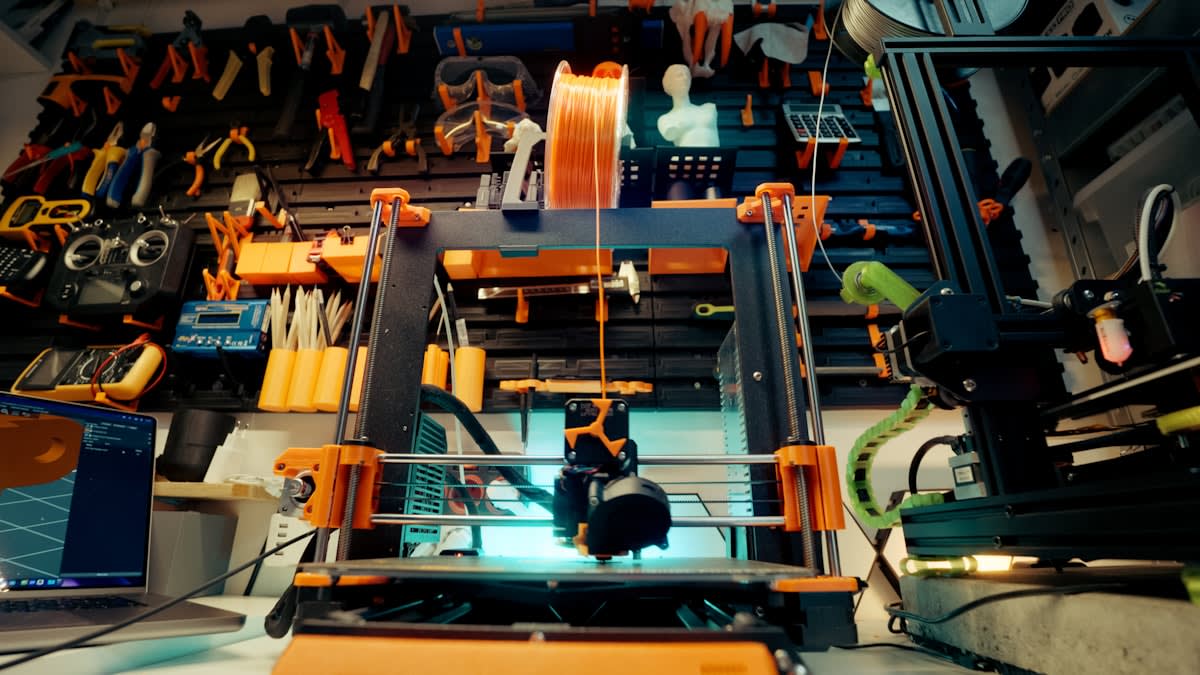
The Death of the Monolith: How Distributed Production is Dismantling the Mega-Factory
The industrial gospel of economies of scale is failing. From the reshoring of semiconductors in Northern America to the rise of additive medical manufacturing, a new era of distributed production is replacing the rigid mega-factory with agile, localized micro-hubs.
Hard-Wired Proximity Erases Edge Lag
Latency is a physical wall. For Pune's industrial hubs, the solution isn't a cloud update; it is a brutal commitment to hardware, private spectrum, and specialized technical staffing.
Photonics Kill The Central Lab Model
High-signal analysis of how Q-modulated biosensors and phonon lasers are dismantling the traditional centralized laboratory infrastructure in East Africa as of July 2026.

MEMBRANE DISTILLATION AND BIOREACTOR EXPANSION SECURE HIGH-PURITY API STANDARDS
The pharmaceutical industry has reached a critical inflection point in July 2026. Peptistar's scaling of Asahi Kasei's FO-MD system and Bora Pharmaceuticals' acquisition of MacroGenics' Rockville operations signal a move toward heat-free concentration and consolidated biologics hubs.

Stablecoins Obsolete the ACH Network
With on-chain volumes hitting $7.5 trillion, the financial plumbing is being rewritten by AI-native platforms and legacy giants fighting for a validator seat.
Hardware Overhang Dictates the AI Endgame
While markets chase 75% rallies, the Bank for International Settlements warns of a looming hangover. The real battle is not in the code, but in the subsea cables and satellite constellations fighting for a dwindling return.
Is Your Encryption Already Obsolete?
Forget the hype. Transitioning to quantum-safe systems is a multi-year engineering grind plagued by hardware constraints, regulatory deadlines, and the threat of gray-zone orbital espionage.

Does Scaling Infrastructure Mask Systemic Fragility?
From Lagos refineries to the American power grid, a pattern emerges: the obsession with volume obscures a deeper, more volatile instability in core systems.

Is the biological script finally being rewritten?
Recent breakthroughs in June 2026 reveal a decisive move from managing chronic disease to active cellular restoration, scaling across 1,300 active gene therapy programs globally.

Is Hardware Obsession Masking a Procurement Crisis?
While India and the broader APAC region pour billions into nuclear energy, rail, and aerospace, a systemic failure in procurement and grid design threatens to neutralize the capital surge.

Kill the Encryption Clock
Federal mandates are no longer suggestions. With deadlines set for 2030 and 2031, CISOs must move from theoretical research to operational migration to protect against cryptographically relevant quantum computers.

The Great Recentre: Why the Global Capital Hegemony Isn't Breaking
While contrarians bet on the decline of Western financial dominance, current data reveals a paradoxical intensification of centralization. We analyze the systemic shifts in US asset flows, EU pension reforms, and Australian payment regulations.

Closing the Readiness Gap: A Blueprint for the AI-Driven Economy
India holds the world's strongest economic capacity for an AI-driven future, yet ranks 74th in workforce readiness. Here is how to bridge that divide.