
AI Executive Summary
"This article analyzes the convergence of laboratory synthetic biology and industrial-scale deployment. It highlights how programmable biology is transforming global supply chains and national economic strategies to decouple growth from environmental decay."
The era of synthetic biology as a laboratory curiosity is over. In a single sequence of breakthroughs this week, we have moved from the theoretical possibility of engineered life to the tangible reality of bio-industrialization. While the academic world marvels at a synthetic cell that can divide, the commercial world is already deploying these biological principles across millions of acres of farmland and into the global tableware supply chain. Why does this matter right now? Because we are witnessing the transition from 'discovery' to 'deployment,' where the code of life is being treated as software for the physical world.
The Blueprint of Life: SpudCell's Arrival
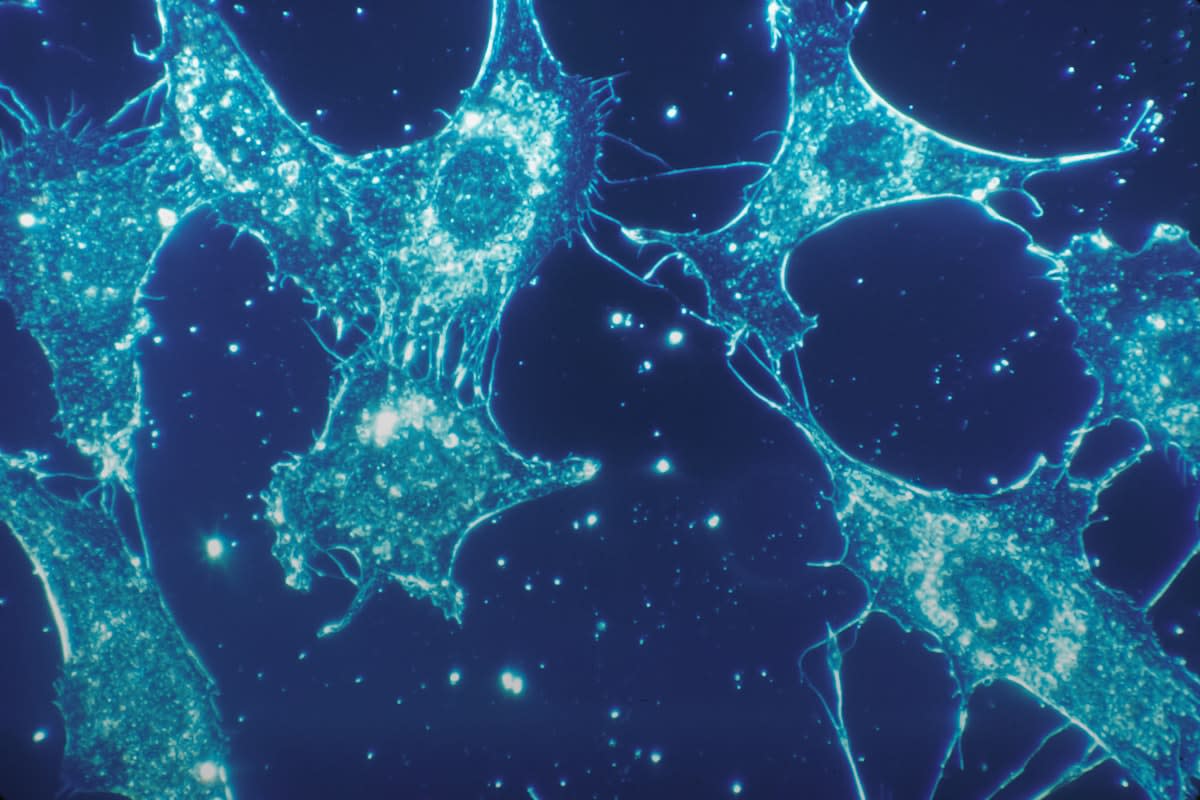
At the University of Minnesota, researchers have achieved a milestone that sounds like science fiction: the creation of SpudCell. This is not a modified existing cell, but a synthetic entity built from scratch using nonliving chemical components. By combining liposomes, DNA, and 36 commercial enzymes to stand in for protein synthesis, the team watched as an artificial cell grew, copied its own DNA, and split into two. This marks the first time researchers have observed a fully synthetic cell complete a full division cycle, proving that the fundamental mechanics of life can be replicated without a biological progenitor.
"We can engineer it."— University of Minnesota Researchers
The Definition of Life
Despite the breakthrough, SpudCell is not 'alive' in the traditional sense. It cannot survive independently, but it can perform the basic functions of a living cell, acting as a programmable chassis for future biological engineering.
The mechanics of the split were particularly ingenious, utilizing a technique borrowed from physicist Reinhard Lipowsky. By attaching protein tags to the membrane, the researchers forced proteins to crowd together, bending the membrane until it pinched in two. This level of precision suggests that we are no longer just guessing how biology works; we are designing the physical constraints that force biological outcomes. If we can program a cell to divide, we can program it to produce specific molecules, medicines, or materials at a scale previously unimagined.
But the laboratory is only the starting point. The real story is how these biological blueprints are being scaled into industrial foundries across the globe. We are seeing a convergence where the ability to engineer a cell in Minnesota mirrors the ability to engineer a supply chain in Hong Kong or a farming ecosystem in the United States.
The Asian Pivot: Bio-Manufacturing in Hong Kong and Thailand
In Hong Kong, Periplast (Global) Limited is translating bio-innovation into a direct assault on plastic waste. Their new zro% brand has unveiled periamyl, a high-performance, 100% natural material derived from corn starch. Unlike previous iterations of bio-plastics, periamyl is designed to be heat-formable and completely free of microplastics. This is not a localized experiment; it is an international expansion developed through a rigorous collaboration between researchers and engineers across Germany, Switzerland, and Hong Kong.
The strategic positioning of periamyl is a response to a global tightening of environmental regulations. By offering a definitive alternative to petroleum-based plastics and Polylactic Acid (PLA), Periplast is targeting international markets that can no longer tolerate the ecological cost of single-use items. This represents a shift in the 'bio-foundry' mindset: moving away from niche luxury eco-products toward high-performance, scalable industrial materials that can actually replace the incumbents.
Simultaneously, Thailand is integrating these biological shifts into its national economic identity. The government is doubling down on the Bio-Circular-Green (BCG) economic model, viewing green manufacturing not just as an environmental necessity, but as a primary growth driver. With a target of achieving net-zero emissions by 2050, Thailand is steering massive investment toward low-carbon products to meet a surging global demand for sustainable exports.
Thailand's Strategic Shift Toward BCG Manufacturing
Executive Insight
+18.4%
YTD Growth
This regional focus reveals a critical trend: the bio-economy is becoming a tool for geopolitical and economic resilience. Whether it is Thailand's national export strategy or Hong Kong's push for plastic-free tableware, the goal is the same—decoupling economic growth from environmental degradation through the precise application of biological engineering.
Corporate Scaling: The 4.7 Million Acre Laboratory
While startups and governments build the infrastructure, corporate giants are providing the scale. PepsiCo has transformed its supply chain into a massive exercise in regenerative biology. As part of its 2030 Positive Agriculture goals, the company has expanded sustainable, restorative, and protective farming practices to 4.7 million acres worldwide. This is biological engineering applied at the landscape level, focusing on nature restoration and the resilience of the food system.
| Metric | Current Status | 2030 Target |
|---|---|---|
| Sustainably Sourced Ingredients | 70% | 90% |
| Regenerative Acreage | 4.7 Million Acres | Scaling Phase |
| Community Support | 224,000 People | Expanding |
The human element of this boom is often overlooked, but the data is telling. Since 2021, PepsiCo's agricultural shifts have supported approximately 224,000 people across its supply chains and communities. This proves that the transition to a bio-based economy is not a zero-sum game where technology replaces people. Instead, it is an adaptation where regenerative practices create new forms of stability and livelihood for farmers globally.
When we connect the dots—from the 36 enzymes in a Minnesota lab to the 4.7 million acres of a global food giant—a clear pattern emerges. We are moving into an era of 'precision biology' where the distance between a lab discovery and a global product is shrinking. The 'Delta' here is speed. Twelve months ago, synthetic cells were a theoretical goal; today, they are dividing in a dish while bio-based materials are entering the Hong Kong market.
Is this the beginning of a new industrial revolution? The evidence suggests yes. By treating biological systems as programmable assets, we are creating a world where materials are grown rather than mined, and where the economy is circular by design. The bio-foundry boom is not just about better plastics or more efficient farms; it is about a fundamental shift in how humanity interacts with the material world.